


2026 Top Automatic Can Seamer Types for Global Buyers
Choosing the right automatic can seamer is rarely a simple equipment purchase. Global buyers must compare production speed, container dimensions, closure quality, maintenance access, and local service support. Automatic Can Seamers can protect product freshness, but only when their operating conditions match the can and lid design.
This guide examines leading seamer types for modern food, beverage, and industrial packaging lines. Rotary machines suit high-volume operations, where multiple heads close cans continuously. Inline systems may offer simpler layouts and practical changeovers for smaller or varied production runs. Vacuum seamers can help selected products reduce oxygen exposure, although performance depends on the filling process and package requirements.
Real purchasing decisions involve more than catalog capacity. A machine rated at 300 cans per minute may perform differently with thin aluminum, steel containers, irregular fills, or frequent format changes. Small details matter. Check seam inspection methods, tooling availability, electrical standards, operator training, and response times for spare parts. These points often determine long-term reliability more than headline speed.
The discussion also considers manufacturer experience, documented testing, and after-sales support. Buyers should request sample runs and verify seam measurements before signing a contract. No single design fits every factory. A high-speed machine may be inefficient for a growing business with limited technical staff. Likewise, a lower-cost model may create hidden expenses through difficult cleaning or delayed maintenance. This overview offers a practical comparison, while recognizing that final selection requires careful testing and site-specific judgment.
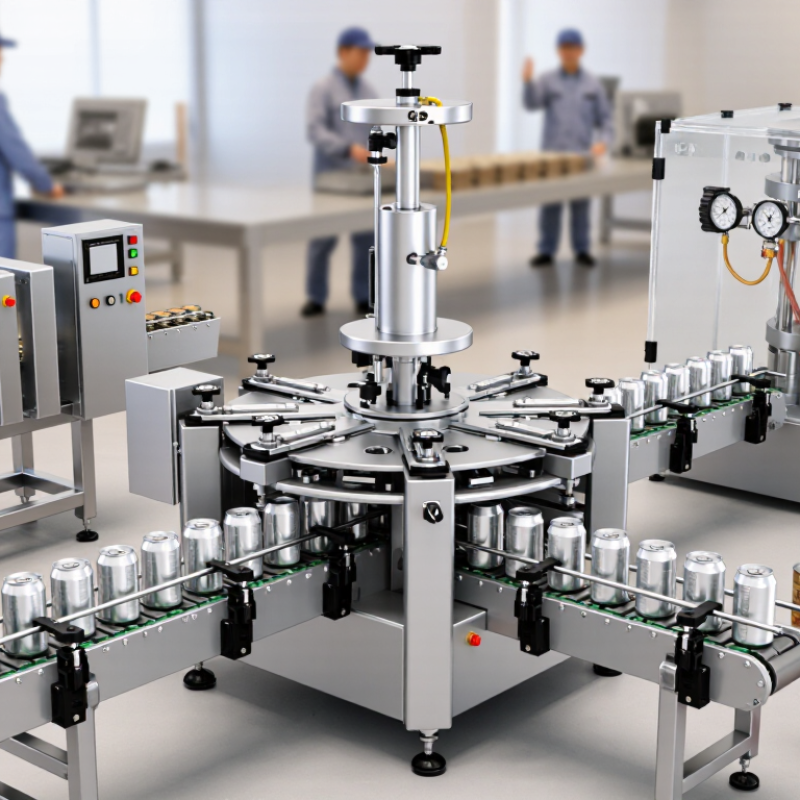
What Is an Automatic Can Seamer and How Does It Work?
An automatic can seamer closes filled metal cans with a controlled double seam. The lid sits on the can flange, then a chuck holds both parts firmly. Seaming rolls shape the metal through two operations. The first roll creates interlocking hooks. The second roll compresses the seam and reduces leakage risk.
Cans usually enter through a conveyor, timing screw, or star wheel. A sensor checks position before the chuck descends. The machine then controls speed, pressure, and seam timing. Operators inspect seam height, thickness, countersink, and hook formation. Visual checks help, but they are not enough. A seam teardown often reveals defects that the eye misses. In my experience, early setup trials rarely perform perfectly. Small changes in lid curl or can flange size can alter the result.
Rotary seamers suit high-speed lines with steady can flow. Inline machines offer simpler layouts and easier access for smaller production rooms. Vacuum seamers remove air before closing, which can support product quality where oxygen control matters. Buyers should compare output, can diameter range, changeover time, seam inspection, and cleaning access. PMMI’s 2024 packaging machinery report identifies labor availability and automation as continuing investment drivers. The UNEP Food Waste Index 2024 estimated 1.05 billion tonnes of food waste in 2022, reinforcing the value of dependable packaging. Still, machine speed should never replace verified seam integrity.

Main Automatic Can Seamer Types Available in 2026
In 2026, global buyers can choose among rotary, inline, vacuum, and atmospheric automatic can seamers. Rotary seamers handle high-speed production, often reaching several hundred cans per minute. They work well for uniform metal cans and established packaging lines. Inline seamers use a simpler flow and suit small or medium factories with limited floor space. Vacuum seamers remove air before closing, helping protect sensitive food from oxidation. Atmospheric models are more economical, but they may offer less control for oxygen-sensitive products.
Machine selection should match can diameter, height, material, and filling speed. A reliable seamer must control first-operation and second-operation seam pressure precisely. Operators should inspect seam thickness, overlap, countersink, and can integrity during production. Digital monitoring can record faults, but sensors do not replace physical seam checks. A faster machine is not always better. In practice, poor changeover design can create costly delays. Buyers should request sample trials using their actual cans, lids, and product conditions.
How to Compare Can Seamer Capacity, Compatibility, and Automation
For global buyers, automatic can seamer capacity means more than advertised cans per minute. Compare rated output with the speed achieved during continuous production. A rotary seamer may suit high-volume lines, while an intermittent model can offer gentler handling and easier changeovers. Ask for results using your actual can diameter, height, lid profile, and product temperature. Small differences matter.
Compatibility depends on the complete container system. Check steel or aluminum specifications, flange dimensions, lid curl, and allowable seam thickness. Request double-seam measurements, including overlap, tightness, and hook dimensions. A machine that accepts one can format may need new chucks, lifters, or guides for another. Confirm spare-part availability and local technical support before signing.
Automation should reduce variation, not simply add screens. Useful features include automatic lid feeding, jam detection, seam monitoring, recipe storage, and controlled speed adjustment. Data logging can help trace defects during audits or maintenance. However, more sensors also mean more calibration work. A polished demonstration may hide difficult cleaning access or slow format changes. Test the machine with production-speed samples, inspect seams in a qualified laboratory, and leave room for cautious capacity estimates.
Key Features Global Buyers Should Evaluate Before Purchase
For global buyers, choosing an automatic can seamer begins with the container, not the machine name. Rotary seamers suit steady, high-volume lines, while inline systems may offer simpler access and changeovers. Confirm can diameter, height, material, and lid profile with measured samples. Small differences affect chuck fit and seam pressure. Do not guess.
During factory evaluations, inspect seam consistency at startup, after speed changes, and near maximum output. Ask for double-seam measurements, teardown photos, and test records from comparable containers. Check controls, sensor accuracy, guarding, emergency stops, and access for cleaning. A reliable seamer should reject faulty lids without stopping every good can. Noise matters too. Excessive vibration can signal poor alignment or weak support. Request a realistic trial using your product, fill level, and operating temperature.
Evaluate changeover time as carefully as rated speed. Ten minutes saved daily can outweigh a higher purchase price. Review motor efficiency, compressed-air demand, spare-part availability, and technician response in your destination market. Food-contact materials should have traceable specifications and suitable documentation for local requirements. Ask how calibration is verified after maintenance. I would not trust impressive samples alone; they may represent ideal settings. One overlooked issue is operator training. Clear manuals, multilingual guidance, and practical training reduce avoidable seam defects. Leave room for learning. No installation stays perfect forever.
2026 Top Automatic Can Seamer Types for Global Buyers
Typical nominal throughput varies by seamer architecture, can diameter, product characteristics, and the number of operating heads. Buyers should evaluate seam integrity, container compatibility, changeover time, cleanability, control systems, and after-sales support in addition to speed.
Indicative industry ranges are represented by midpoint values; actual machine specifications vary by configuration and application.
How to Select the Right Automatic Can Seamer for Your Production Line
Selecting the right automatic can seamer starts with the container, not the advertised speed. Can diameter, height, metal thickness, and product viscosity determine the suitable seaming head and chuck design. Rotary seamers fit high-volume lines, while inline models often suit frequent format changes. A compact line may need fewer heads and simpler access.
According to PMMI’s 2024 State of the Industry report, automation remains a major response to labor shortages and production pressure. The report also highlights flexibility as an important investment factor. Meanwhile, Fortune Business Insights estimates the global metal cans market could grow from about USD 58.7 billion in 2023 to USD 77.2 billion by 2032. Demand is expanding, but every factory has different constraints.
Check the seam overlap, hook dimensions, vacuum performance, and leak-test results during trials. Ask for measured output, not only the rated cans per minute. A line rated at 300 cans per minute may deliver less after changeovers, inspection stops, and rejected containers. This is where many buyers misjudge capacity.
Consider sanitation, tool access, guarding, spare-part availability, and operator training. Automatic systems should support documented quality checks and repeatable settings. Electronic monitoring can record seam pressure, speed, and stoppage causes. Useful, but not magic.
I would test the seamer with your actual cans and product. Catalog samples can hide problems. Run several shifts if possible, because early results may look better than daily production. Also calculate total ownership cost over five years, including tooling, maintenance, compressed air, electricity, and downtime. A cheaper machine may become expensive when changeovers remain slow.
Article Source:
Siemensstraße 13-15
47608 Geldern
NRW Deutschland
Mail: sale@atmmachinesolutions.com
Head office:
+49 (0) 2831 91021-20
Fax:
+49 (0) 2831 91021-99
SUPPORT and INFO
from 3 p.m. to 6 p.m:
+49 (0) 2831 91021-60
( please ring for a long time )
Monday to Friday
8.00 – 12.30
and 13.00 – 15.00
Visit / collection by appointment only!
➣ Sign up for our newsletter
Benefit from a 20% discount, don’t miss any events and always stay up to date.
To access the actual content, click on the button below. Please note that data will be passed on to third-party providers.
More information