


2026 Top RFID Tags for Asset Tracking for Global Buyers
Choosing the right Rfid Tags For Asset Tracking can improve visibility across warehouses, factories, hospitals, and transport networks. Global buyers need more than a low unit price. They must compare read range, memory, mounting method, environmental resistance, and system compatibility. A tag that performs well on cardboard may fail on metal equipment or liquid containers.
This 2026 guide examines leading RFID tags through practical purchasing criteria. It considers passive UHF, HF, and specialized on-metal designs. It also reviews adhesive strength, temperature tolerance, waterproof construction, and print quality. These details matter when tags face dust, vibration, outdoor rain, or repeated handling. In real projects, installation quality often affects performance as much as the tag itself. Small placement errors can create missed reads.
Reliable selection requires evidence. Buyers should request test samples, supplier specifications, and application data before placing large orders. Independent certifications and documented quality controls can support more confident decisions. However, no tag fits every asset. That is worth remembering. A premium tag may be unnecessary for short-term cartons, while a cheap label may fail on expensive machinery. Regional frequency requirements, data protection expectations, and reader compatibility also deserve careful review. Product descriptions can sound convincing, but field testing tells a different story. This comparison aims to help international purchasers narrow their options with clearer judgment, fewer surprises, and a more realistic view of total tracking costs.
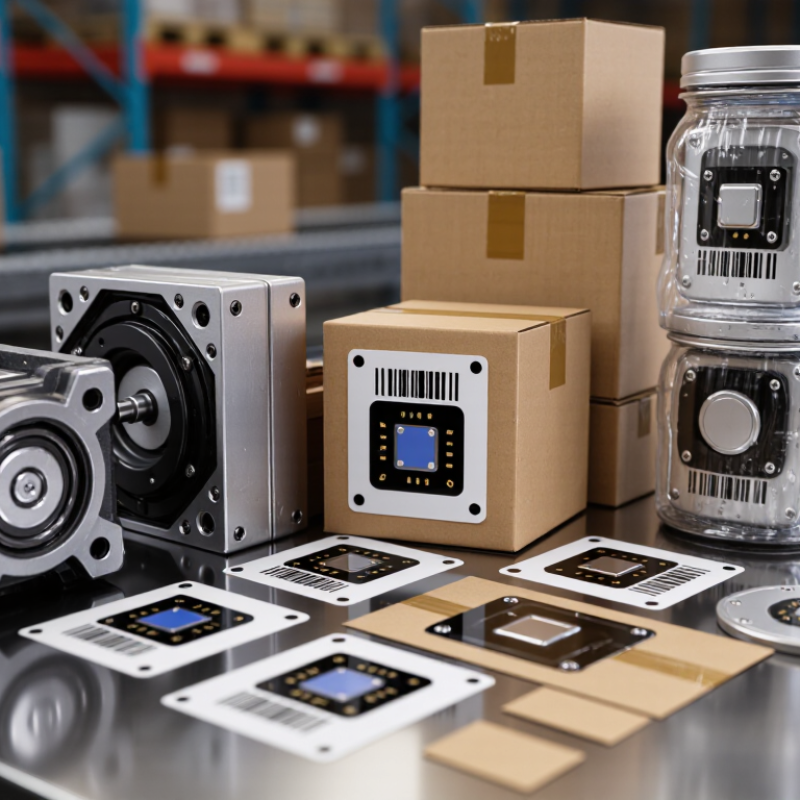
RFID Tags for Asset Tracking: Definition, Purpose, and Core Functions
RFID tags are small identification devices attached to tools, equipment, pallets, or returnable containers. Each tag stores a unique digital identity. A reader sends radio energy, and the tag returns its stored data. Unlike printed labels, RFID can support faster, non-line-of-sight identification. This matters when assets sit inside bins, move through loading doors, or become covered by dust.
The purpose is practical: improve asset visibility, reduce manual counting, and record movement across locations.
MarketsandMarkets’ 2024 RFID analysis estimates the global RFID market will grow from about 14.5 billion dollars in 2023 to 24.8 billion dollars by 2028. That growth reflects wider adoption in logistics, manufacturing, healthcare, and retail operations. Still, a tag alone does not create reliable tracking. Readers, antennas, software, and disciplined workflows must work together.
Core functions
Core functions include identification, location updates, movement history, exception alerts, and maintenance records. Passive tags suit many low-cost items because they require no internal battery. Active tags provide longer read ranges, but they add cost and maintenance. Tag performance can change near metal, liquids, or dense materials. Testing under real warehouse conditions remains essential. I have seen projects focus too heavily on read distance. That can be a mistake. Data accuracy, attachment strength, and correct scanning points often matter more. GS1 implementation guidance also stresses consistent identity structures and data handling, which support reliable exchange between trading partners.

How RFID Asset Tracking Systems Work Across Global Supply Chains
RFID asset tracking connects physical items with digital supply-chain events. A passive tag stores a unique identifier, usually an electronic product code. Fixed readers capture that identifier as assets pass through dock doors, conveyors, or storage zones. Handheld readers support exception checks and cycle counts.
The RAIN Alliance reported approximately 46 billion RAIN RFID inlays shipped globally in 2023, showing strong adoption across logistics and manufacturing. Yet tag volume does not guarantee visibility. Materials matter. Metal containers, dense liquids, and stacked pallets can weaken signals or create missed reads. Real warehouses are messier.
A reader sends raw observations to edge software. Middleware removes duplicate reads, checks time and location, and links the event to an asset record. The cleaned data can then enter warehouse, transport, and enterprise systems. GS1’s EPCIS 2.0 framework helps trading partners exchange events such as shipping, receiving, and commissioning. This creates a shared movement history across borders and facilities.
Auburn University’s RFID Lab has repeatedly shown that controlled read environments can achieve very high inventory accuracy. Field performance still depends on tag placement, reader tuning, worker habits, and network reliability. That gap deserves attention. A global buyer should test tags on actual cartons, tools, returnable containers, and metal equipment before large deployment. The best system is not the one with the most readers. It is the one producing trustworthy events at the moments decisions are made.
Key RFID Tag Types and Selection Criteria for Different Assets
Asset tracking succeeds when tag design matches the object, not when every item receives the same label. For metal cabinets, use on-metal RFID tags with a tuned backing layer. The backing reduces signal loss against steel surfaces. For plastic containers, standard adhesive inlays often provide a lower-cost option. Test them after cleaning, stacking, and exposure to dust and moisture. Small details matter.
Cables, tools, and garments need different choices. A rugged hard tag suits tools facing drops, oil, and repeated handling. Sew-in or heat-sealed tags work better for uniforms and washable textiles. For returnable pallets, choose durable tags with strong attachment points. Outdoor assets need weather-resistant housings and stable performance across temperature changes. Passive UHF tags support long-range portal reads, while high-frequency tags help with close-range confirmation. The right frequency depends on readers, materials, and workflow.
Selection should begin with a field trial, not a spreadsheet. Measure read rates from several angles, including blocked and crowded positions. Record missed reads beside distance, surface type, and tag orientation. I have seen a low-cost tag fail on a steel cart, while a larger tag worked reliably. That result was useful, but not universal. Adhesive failure, damaged labels, and reader placement still need review. Use encoded IDs, controlled data access, and documented replacement procedures. Leave room for mistakes. Perfect tests rarely exist.
2026 Top RFID Tags for Asset Tracking: Typical Read Range by Tag Type
Read range is a practical starting point for selecting RFID tags. Passive LF and HF tags suit close-range identification, passive UHF tags support portals and warehouse tracking, while active tags are designed for longer-range location monitoring.
Typical ranges vary with reader power, antenna design, tag orientation, mounting surface, interference, and local radio regulations. UHF values represent commonly used 860–960 MHz systems; active RFID ranges depend strongly on infrastructure and site conditions.
2026 Comparison of Leading RFID Tags for International Buyers
For international buyers in 2026, RFID tag selection depends on the asset, environment, and reading distance. Passive UHF tags suit warehouses, pallets, tools, and returnable containers. They can support fast portal reading across several meters. HF and NFC tags work better for close-range checks, mobile devices, and item authentication. Active tags offer longer ranges, but they require batteries, maintenance, and stronger cost controls.
Tag construction often matters more than the chip. Metal equipment needs an on-metal design with a spacer layer. Outdoor assets need resistance to water, dust, vibration, and temperature changes. A tag rated for general indoor use may fail on a steel rack or a sun-heated vehicle. Buyers should compare memory capacity, EPC compatibility, adhesive performance, and expected read rates. Test samples are essential.
Real testing reveals uncomfortable details. I have seen a tag perform well on cardboard but become unreliable near liquid-filled containers. A longer read range is not always better. It may increase unwanted reads in crowded areas. International projects also need consistent encoding, documented quality checks, and regional frequency compatibility. Supplier claims deserve practical verification. Compare read performance, delivery stability, customization support, and replacement procedures. Small differences become expensive across thousands of assets. A perfect specification rarely survives the first warehouse trial.
2026 Top RFID Tags for Asset Tracking for Global Buyers - 2026 Comparison of Leading RFID Tags for International Buyers
| Tag Category | Frequency & Standard | Typical Read Range | User Memory | Ingress Protection | Operating Temperature | Recommended Mounting | Best-Fit Assets | Relative Cost |
|---|---|---|---|---|---|---|---|---|
| General-purpose UHF label Printable disposable tag | 860–960 MHz EPC UHF Class 1 Gen 2 / ISO 18000-63 | Up to 10 m with fixed readers; typically 2–5 m with handheld readers | 96–128-bit EPC; optional 0–512-bit user memory | Usually IP-rated only after application to a protected surface | Approximately −20°C to +70°C | Smooth cardboard, plastic, wood, or painted metal with a suitable inlay | Boxes, tools, documents, returnable packaging, and indoor equipment | Low |
| On-metal UHF tag Foam-backed industrial label | 860–960 MHz EPC UHF Class 1 Gen 2 / ISO 18000-63 | Typically 3–12 m, depending on metal surface, orientation, and reader power | 96–128-bit EPC; commonly 0–512-bit user memory | Commonly IP65–IP68 when sealed | Approximately −40°C to +85°C | Directly on steel, aluminum, machinery, racks, or metal containers | Industrial tools, IT equipment, machinery, warehouse racks, and reusable containers | Medium |
| Rugged hard-shell UHF tag Encapsulated asset tag | 860–960 MHz EPC UHF Class 1 Gen 2 / ISO 18000-63 | Up to approximately 10–15 m in favorable conditions | 96–128-bit EPC; optional user memory varies by chip | Typically IP67–IP68 | Approximately −40°C to +85°C | Screws, rivets, industrial adhesive, or cable ties | Outdoor machinery, pallets, vehicles, construction assets, and heavy equipment | Medium–High |
| High-temperature UHF tag Ceramic or heat-resistant tag | 860–960 MHz EPC UHF Class 1 Gen 2 / ISO 18000-63 | Approximately 2–8 m, subject to enclosure and metal conditions | 96–128-bit EPC; user memory may be limited or unavailable | Often IP67–IP68 after sealing | Approximately −40°C to +200°C; specialized versions can be higher | Bonding, welding, or mechanical fixing to metal surfaces | Painted parts, sterilization equipment, automotive components, and heat-exposed tools | High |
| LF animal and access tag Low-frequency passive tag | 125–134.2 kHz ISO 11784/11785 or compatible LF formats | Usually within 5–20 cm | Typically a fixed identification number; limited writable memory | Commonly IP67 or higher for injectable and sealed formats | Approximately −25°C to +85°C | Collar, key fob, glass capsule, or close-range reader housing | Animals, small access tokens, and applications requiring short-range identification | Low–Medium |
| HF/NFC asset tag Short-range smart tag | 13.56 MHz ISO/IEC 14443 or ISO/IEC 15693 | Typically 1–10 cm for NFC; up to about 1 m for some HF systems | Typically 48 bytes to 8 KB, depending on chip family | Available in sealed IP67–IP68 formats | Approximately −25°C to +85°C | Adhesive, molded housing, plastic card, or embedded placement | Medical equipment, maintenance instructions, authentication points, and smartphone-readable assets | Medium |
| Battery-assisted UHF tag Extended-range active-assisted tag | 860–960 MHz UHF RFID with an internal battery | Approximately 20–100 m, depending on system design and environment | Often 128-bit EPC plus configurable memory | Commonly IP65–IP67 | Approximately −20°C to +60°C | Industrial adhesive, screws, brackets, or mounting plates | Large yards, shipping containers, vehicles, and widely distributed high-value assets | High |
| Textile and laundry tag Flexible washable tag | 860–960 MHz or 13.56 MHz Protocol depends on deployment | Approximately 1–8 m for UHF; shorter for HF | Usually fixed ID; optional EPC or small user-memory area | Typically IP67 or higher after encapsulation | Approximately −20°C to +85°C; wash-cycle rating is application-specific | Sewn into fabric, heat-sealed, or inserted into a textile pocket | Uniforms, linens, rental garments, reusable bags, and soft inventory | Medium |
Global Purchasing, Compliance, and Deployment Considerations for RFID Tags
For global buyers, RFID tag selection starts with the asset, not the catalog. Metal tools, plastic totes, textile rolls, and liquid containers need different tag constructions. In field trials, read distance often changes near shelving, conveyors, and dense cartons. Test tags on the actual asset. A laboratory result is not enough. Choose frequency and memory capacity according to destination markets, reader infrastructure, and tracking workflow. Shortlist suppliers that provide material declarations, test reports, lot traceability, and stable production samples.
Purchasing teams should verify radio-frequency requirements in every intended country before mass orders. Import documentation, labeling rules, restricted substances, waste obligations, and privacy controls may differ by region. Ask for current declarations, not recycled files from an older project. Data protection also matters when tags connect assets to employees, customers, or locations. Use access controls and limited data fields. Keep records. It is easy to overlook the tag adhesive. Yet adhesive failure can create lost inventory and repeated installation costs. Temperature, humidity, chemicals, impact, and cleaning methods deserve documented testing.
Deployment works best with a measured pilot. Place tagged assets across receiving, storage, maintenance, and dispatch. Record missed reads, collision points, installation time, and battery needs for active tags. Passive tags may reduce maintenance, but they cannot solve every environment. Calibrate reader power carefully; excessive power can increase unwanted reads. Train operators with simple placement guides and photographs. One weakness remains: buyers often compare unit price before lifecycle cost. That approach can fail. Review replacement rates, software integration, customs delays, and local support. A practical specification should allow revision after the first real shipment.
Article Source:
Siemensstraße 13-15
47608 Geldern
NRW Deutschland
Mail: sale@atmmachinesolutions.com
Head office:
+49 (0) 2831 91021-20
Fax:
+49 (0) 2831 91021-99
SUPPORT and INFO
from 3 p.m. to 6 p.m:
+49 (0) 2831 91021-60
( please ring for a long time )
Monday to Friday
8.00 – 12.30
and 13.00 – 15.00
Visit / collection by appointment only!
➣ Sign up for our newsletter
Benefit from a 20% discount, don’t miss any events and always stay up to date.
To access the actual content, click on the button below. Please note that data will be passed on to third-party providers.
More information