


Why Choose a Pneumatic Bending Machine?

In modern metal fabrication, production speed matters, but consistent results matter more. A Pneumatic Bending Machine uses compressed air to apply controlled force during bending operations. This design can support repeatable bends, cleaner workflows, and easier operation on suitable materials. The machine’s value becomes clear on a busy workshop floor. Sheets move from the cutting table to the bending station with fewer interruptions. Operators can often control the cycle through simple foot pedals or hand controls. That matters.

Professional fabricators usually assess more than advertised pressure ratings. They examine frame strength, tooling compatibility, air consumption, bend accuracy, and maintenance access. They also confirm that the workshop compressor can maintain stable pressure during repeated cycles. A weak air supply may produce uneven angles and unnecessary downtime. Small details matter. A clean die helps. Correct lubrication helps too. Manufacturer instructions and applicable workplace standards should guide installation, training, guarding, and routine inspection.

Still, a Pneumatic Bending Machine is not automatically the best solution for every project. It may struggle with thick plate, complex forming, or demanding high-force applications. Manual adjustments can also slow production when operators lack experience. I have seen capable machines deliver poor results because material thickness was measured carelessly. That lesson is easy to overlook. Reliable purchasing decisions should combine operator feedback, test bends, service availability, and documented machine specifications. The right machine should fit the work, not merely look impressive in a catalog. Used properly, it offers practical value. But not blindly.

Why Choose a Pneumatic Bending Machine?

What Is a Pneumatic Bending Machine?

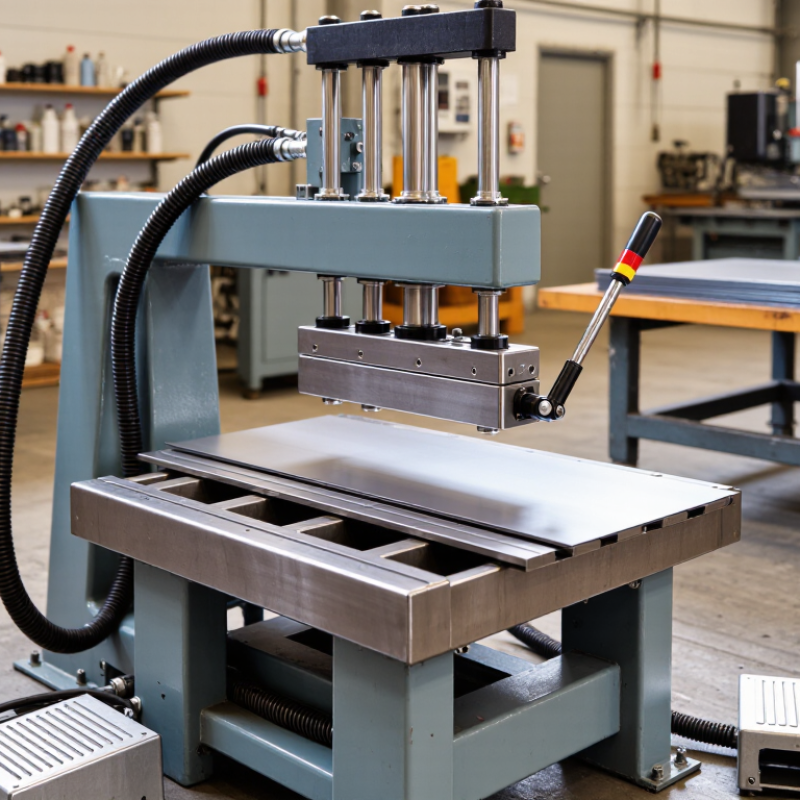
A pneumatic bending machine is a forming tool that bends sheet metal with compressed air. An air compressor drives one or more cylinders, which push a punch toward a die. The sheet sits between these working surfaces. When pressure rises, the punch creates a controlled angle without relying on a large electric motor. That simple action suits light fabrication, repair shops, and short production runs.

In practical use, an operator sets the pressure, stroke, and back gauge before placing the sheet. A foot pedal or control button starts the cycle. The machine then repeats the movement with steady timing. This consistency helps produce brackets, covers, channels, and small enclosures with clean edges. I would still check the first piece with an angle gauge. Material hardness, thickness, and springback can change the result.

Pneumatic models often run quietly and need less floor space than hydraulic equipment. They also offer quick setup and manageable maintenance. However, their force is limited by air pressure and cylinder size. Heavy plate may require another machine. Compressed air leaks can reduce performance. That weakness is easy to overlook. A reliable installation needs dry air, guarded tooling, emergency stops, and scheduled inspections. Operators should keep hands outside the die area and follow the machine manual. The choice becomes practical when speed, moderate force, and repeatable bends matter more than extreme capacity.

How Does a Pneumatic Bending Machine Work?

Why Choose a Pneumatic Bending Machine?

How Does a Pneumatic Bending Machine Work?

A pneumatic bending machine uses compressed air to create controlled bending force. Air enters a cylinder and pushes a piston forward. The piston moves the ram, while a punch presses sheet metal into a lower die. A foot pedal or control valve starts the stroke. Pressure, cylinder size, and tooling determine the available force. The result is a repeatable bend when the material and settings match.

In daily operation, I watch the sheet settle against the back gauge before starting the cycle. Small alignment errors can create a visible angle difference. The machine bends quickly, but materials react differently. Stainless steel may need more force than mild steel. Thin aluminum can mark easily. Springback also changes the final angle. A test piece is often wiser than trusting a chart. I still check the first bend by measurement. It is not magic.

Tips: Set the regulator gradually and inspect hoses for leaks. Keep the die clean and use suitable guards. Never place fingers near the punch. Listen for hissing air. That sound deserves attention. Follow the machine manual and workplace safety requirements.

Why Choose a Pneumatic Bending Machine?

A pneumatic bending machine converts compressed-air pressure into linear cylinder force. The chart shows the theoretical pushing force produced by a 63 mm bore cylinder at common operating pressures.

How it works: When compressed air enters the cylinder, pressure acts on the piston area and generates force. Higher air pressure produces greater bending force, while the actual machine output may be slightly lower because of friction, valve losses, and tooling efficiency.

What Materials and Tasks Can It Handle?

A pneumatic bending machine is useful when sheet metal work demands steady pressure and repeatable movement. It commonly handles mild steel, aluminum, and thinner stainless steel sheets. Thin sheet responds well. The actual capacity depends on air pressure, machine throat depth, tooling, and material thickness. A machine rated for light fabrication should not be treated like a heavy plate press.

Typical tasks include forming mounting brackets, electrical enclosures, duct sections, trays, covers, and narrow channels. It can also create simple hems and angled folds when the tooling matches the job. Aluminum bends easily but may mark under poorly aligned dies. Stainless steel usually needs more force and careful setup. Surface scratches can appear quickly.

A clean bend starts with accurate measurements and a small test piece. Operators should check the air line, die alignment, and back gauge before production. Consistency improves when pressure settings remain stable. Not every job fits. Complex profiles, deep boxes, or thick plate may require another forming method. That limitation matters. A rushed setup can produce uneven angles, springback, or damaged edges, so experienced operators adjust gradually rather than trusting the first result.

Why Choose a Pneumatic Bending Machine? - What Materials and Tasks Can It Handle?

Practical capabilities vary according to air pressure, cylinder capacity, machine design, tooling, bend length, material temper, and required bend angle.
Material Typical Sheet Thickness* Suitable Bending Tasks Performance Level Important Considerations
Mild Steel 0.8–3.0 mm Angle bends, channels, flanges, brackets, panels, and simple boxes Very suitable The required force increases with thickness, bend length, and narrower die openings.
Stainless Steel 0.6–2.0 mm Enclosures, equipment covers, trim parts, channels, and precision flanges Suitable with higher force Stainless steel generally requires more bending force and careful tooling to reduce surface marks and springback.
Aluminum Alloys 0.8–4.0 mm Lightweight frames, covers, trays, ducts, channels, and decorative panels Very suitable Use clean or coated tooling when appearance matters; softer grades can be easier to mark or deform.
Copper and Brass 0.5–2.5 mm Electrical covers, clips, decorative components, terminals, and small formed parts Suitable Protective tooling and controlled pressure help prevent scratches, dents, and excessive surface distortion.
Galvanized Steel 0.6–2.0 mm Ventilation ducts, cable trays, roofing flashings, cabinets, and mounting channels Suitable Avoid excessive localized pressure that could damage the zinc coating and reduce corrosion protection.
Pre-Painted Sheet 0.5–1.5 mm Electrical cabinets, appliance panels, signage parts, covers, and light enclosures Suitable with protection Use suitable die surfaces, protective films, and controlled clamping to limit coating damage.
Perforated or Expanded Sheet 0.8–2.0 mm Screens, guards, partitions, ventilation panels, and lightweight structural sections Conditionally suitable Support the sheet evenly and verify that the hole pattern does not collapse or distort during bending.
Thin Spring Steel 0.3–1.0 mm Clips, retaining strips, small brackets, and formed reinforcement parts Limited suitability High springback may require over-bending, specialized tooling, and test samples for dimensional control.
Common Production Tasks Depends on material and machine capacity V-bending, channel forming, edge bending, flanging, box forming, and light hemming Efficient for repeat work Pneumatic actuation offers fast cycling and straightforward operation, making it practical for light- to medium-duty production.
Tasks Requiring Caution Outside the rated capacity Deep forming, thick plate bending, complex multi-axis profiles, and highly precise large-part forming Usually not recommended These applications may require greater force, programmable control, longer tooling, or a hydraulic or servo-electric press brake.

*Thickness ranges are general reference values for light- and medium-duty pneumatic bending applications, not universal machine ratings. Always confirm the required tonnage using the material grade, bend length, inside radius, die opening, and machine specifications.

What Are Its Main Advantages in Production?

Why Choose a Pneumatic Bending Machine?

What Are Its Main Advantages in Production?

A pneumatic bending machine can make production faster, cleaner, and easier to control. Its compact drive system needs fewer mechanical parts than many hydraulic alternatives. Operators can adjust pressure and stroke quickly for repeated sheet-metal work. That matters when a workshop changes between brackets, covers, and small enclosures during one shift. Short setup times reduce idle hours. They also support smaller production batches.

The U.S. Department of Energy’s Compressed Air Sourcebook reports that compressed-air leaks may waste 20–30% of compressor output. Therefore, leak checks and pressure control directly affect operating costs. A well-maintained pneumatic system can deliver consistent bending force with less oil-related maintenance. It also produces a cleaner work area around finished parts. In practical production assessments, repeatability often improves when operators use fixed stops and simple pressure settings. Small details matter.

There is a limitation. Pneumatic force may not suit very thick plates or heavy forming operations. The machine must match the material, bend length, and required tonnage. The European Commission’s energy-efficiency guidance also stresses that compressed-air systems need correct sizing and regular maintenance. Oversized compressors can waste energy. Poorly adjusted valves can reduce accuracy. This is where some purchasing decisions go wrong. A pneumatic bending machine offers speed and flexibility, but only when the complete air system supports it.

What Factors Should Guide Your Equipment Choice?

Why Choose a Pneumatic Bending Machine?

What Factors Should Guide Your Equipment Choice?

Choosing a pneumatic bending machine should begin with the workpiece, not the machine’s appearance. Check the material type, thickness, bend angle, and required production volume. A thin aluminum sheet needs different pressure control than a thick steel component. Measure your air supply carefully. Insufficient pressure can cause uneven bends, delayed cycling, and unnecessary wear. Accuracy matters too. If parts must fit within tight tolerances, ask about tooling stability, repeatability, and angle adjustment.

Your operators’ experience should also guide the decision. A simple control system may reduce training time, while advanced settings can support complex work. Consider the working environment. A busy workshop may need a durable machine designed for frequent cycles, not occasional fabrication. Maintenance access is often overlooked. Inspecting valves, seals, hoses, and lubrication points should not require dismantling half the machine. That would become frustrating quickly.

Tips: Test the machine with your actual material and tooling. Record pressure, cycle time, noise, and bend consistency. Ask for maintenance schedules and operator training details. Do not judge performance from one perfect sample. Real production includes temperature changes, rushed setups, and occasional mistakes. I would also leave room in the budget for tooling and air-system upgrades. Many buyers focus on purchase price, then discover their compressor cannot support the machine reliably. That detail can change the entire calculation.


Kontaktbox-Frau

  • CNC-STEP – Quick contact