



10 Best ATEX Water Tanks for Global Buyers
Choosing the right Atex Water Tank involves more than comparing volume and price. Global buyers must examine hazardous-area requirements, construction materials, certification records, and installation conditions. A tank may look suitable in a catalog yet fail to match the surrounding Zone classification. Details matter.
This guide reviews 10 Best ATEX Water Tanks for Global Buyers, focusing on practical performance rather than attractive specifications alone. Each option is assessed through factors such as corrosion resistance, structural strength, hygienic water storage, grounding provisions, inspection access, and compatibility with pumps or monitoring equipment. Experience from industrial sites shows that small details, including gasket quality and outlet positioning, can affect long-term reliability. A poorly placed connection may complicate maintenance beside a process line.
The term “ATEX” also requires careful interpretation. In many projects, ATEX compliance applies to equipment installed in potentially explosive atmospheres, not automatically to every water tank body. Buyers should confirm the complete system, including sensors, mixers, electrical accessories, and installation methods. Certification must come from appropriate, traceable documentation. Local engineers should verify the final selection against site conditions and applicable regional requirements.
No ranking is universally perfect. Tank performance can change with climate, water chemistry, transport distance, and maintenance discipline. Some models offer excellent durability but limited customization. Others provide flexible fittings but need stronger installation oversight. This review highlights those trade-offs, helping procurement teams compare credible options with clearer expectations. The best choice is rarely the cheapest one. It is the tank that remains safe, serviceable, and dependable after delivery.
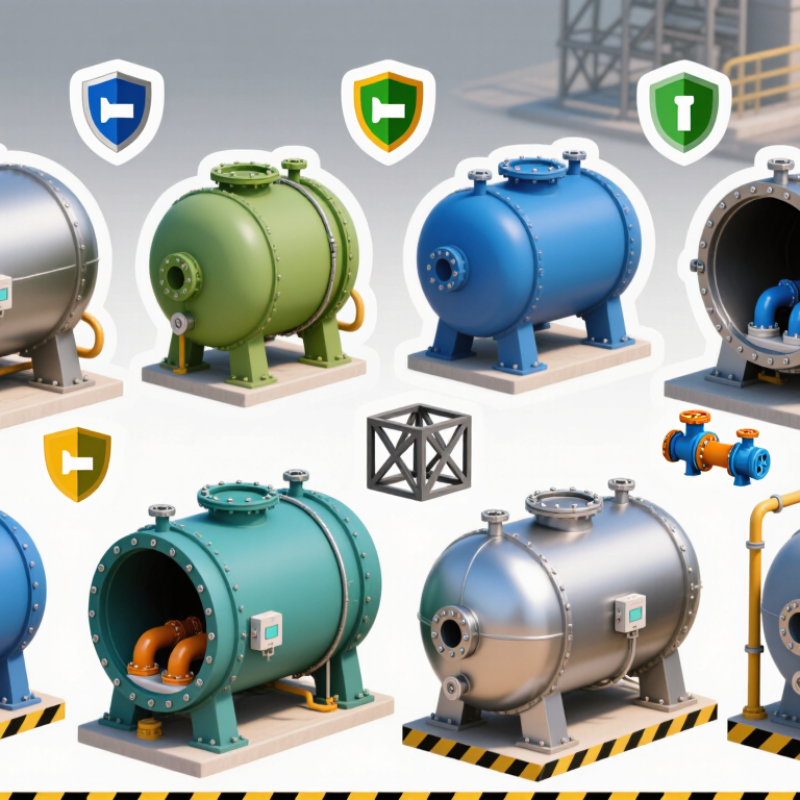
What Makes an ATEX Water Tank Suitable for Hazardous Areas
An ATEX water tank is suitable for hazardous areas only when its complete system matches the site’s explosion-risk assessment. The water may not ignite, but vapour, dust, or gas around the tank can. The European Commission’s 2023 ATEX Guidelines stress correct equipment selection for classified zones. A tank should therefore have documented suitability for the specified Zone 0, 1, 2, 20, 21, or 22 environment.
Look closely at every component. Conductive or dissipative materials can reduce static accumulation. Bonding points need practical access, not decorative labels. Pumps, level sensors, mixers, valves, and cable glands must carry suitable Ex markings and temperature classes. IEC 60079 practices also support proper earthing, ingress protection, and ignition-source control. A grounded metal frame beside an unprotected plastic fitting is not a complete solution.
Design details matter during real operation. Check pressure, vacuum, overflow, cleaning chemicals, ultraviolet exposure, and winter temperatures. The European Commission guidelines also separate product conformity from workplace zoning, so a certificate alone cannot replace a site assessment. The ILO’s 2023 safety report estimated 2.93 million work-related deaths globally in 2019, reminding buyers that paperwork and maintenance are safety controls. Honestly, many specifications remain too vague. Ask for certificates, drawings, inspection intervals, and test records before purchase. Local engineers should verify the final installation.
10 Best ATEX Water Tanks for Global Buyers - What Makes an ATEX Water Tank Suitable for Hazardous Areas
| No. | Tank Configuration | Typical Capacity Range | Common Construction Material | Typical Installation | Potential Hazardous-Area Application | Key ATEX-Relevant Features | Typical Temperature Range | Recommended Verification Before Purchase |
|---|---|---|---|---|---|---|---|---|
| 1 | Vertical Atmospheric Storage Tank | 5,000–500,000 L | Carbon steel, stainless steel, or polyethylene | Outdoor or indoor fixed installation | Process water, emergency water, utility water, and fire-water storage near classified areas | Bonding and earthing of conductive components; conductive accessories; sealed cable entries; non-sparking access hardware where required | Typically 0°C to 50°C for water service; confirm material limits | Zone classification, tank vent design, static-control measures, materials compatibility, and documentation for every electrical accessory |
| 2 | Horizontal Cylindrical Tank | 1,000–100,000 L | Carbon steel, stainless steel, or rotational-moulded polyethylene | Ground-level outdoor installation or skid-mounted systems | Water storage at fuel terminals, chemical plants, and industrial utility areas | Low centre of gravity; equipotential bonding; protected instrumentation; appropriate venting and overflow routing | Typically 0°C to 50°C for water service | Confirm hazardous-zone boundaries, grounding continuity, nozzle and gasket materials, and the certification status of pumps, sensors, and panels |
| 3 | Double-Wall Water Tank | 2,000–200,000 L | Steel or stainless steel with a secondary containment wall | Indoor or outdoor fixed installation | Sites requiring additional spill control or separation from nearby hydrocarbon-handling operations | Secondary containment; leak-detection provision; reduced environmental exposure; bonded metallic layers | Typically 0°C to 50°C for water service | Verify inter-wall monitoring, drain arrangements, earthing of both walls, and whether the leak detector is certified for the assigned zone |
| 4 | Flexible Fabric Water Bladder Tank | 1,000–500,000 L | Reinforced PVC, TPU, or coated technical textile | Temporary, semi-permanent, or remote outdoor storage | Emergency water supply, firefighting reserves, and temporary water storage in restricted-access industrial areas | Minimal electrical content; antistatic fabric options; separated pump and control equipment; spill-resistant siting surface | Commonly about -30°C to 70°C, depending on fabric formulation | Confirm antistatic test data, fabric chemical compatibility, permitted installation zone, UV resistance, and the ATEX status of connected pumps and sensors |
| 5 | GRP/FRP Sectional Panel Tank | 5,000–1,000,000 L | Glass-reinforced plastic panels with steel or stainless-steel fittings | Indoor plant rooms or protected outdoor structures | Large-volume utility and firefighting water storage in industrial facilities | Corrosion resistance; controlled use of metallic fittings; bonding of conductive parts; certified level-monitoring equipment | Typically 0°C to 50°C for water service | Check panel resin and antistatic properties, metal-component bonding, roof ventilation, access-panel design, and instrument certification |
| 6 | Stainless-Steel Process Water Tank | 500–100,000 L | Stainless steel grades such as 304 or 316/316L | Indoor process area or outdoor skid installation | High-purity water, wash water, cooling water, and process utility systems | Conductive tank body suitable for bonding; hygienic surfaces; sealed nozzles; minimized static accumulation when correctly earthed | Typically 0°C to 95°C, depending on design pressure and seals | Confirm pressure and vacuum rating, welding quality, grounding continuity, gasket compatibility, and certification of all electrical instruments |
| 7 | Polyethylene Chemical-Resistant Water Tank | 500–50,000 L | Linear polyethylene or cross-linked polyethylene | Outdoor or indoor non-pressurized storage | Water containing compatible treatment chemicals or wash-down water near classified areas | Insulating plastic requires careful static-risk assessment; antistatic or conductive options may be specified; non-electrical fittings are preferred | Typically -20°C to 60°C, depending on resin and design | Do not assume ordinary plastic is ATEX-suitable; verify surface-resistance data, antistatic performance, bonding strategy, chemical compatibility, and zone limitations |
| 8 | Underground Water Storage Tank | 10,000–500,000 L | Reinforced concrete, GRP/FRP, or coated steel | Buried installation with above-ground access and vent points | Fire-water reserves and utility-water storage where above-ground space is limited | Reduced external ignition exposure; safe vent termination; bonded access covers and metallic pipework; classified-area controls around openings | Usually suitable for ambient ground temperatures; confirm structural and liner limits | Assess the zone around vents, manways, sampling points, and pump chambers; verify gas ingress prevention, drainage, and electrical-equipment certification |
| 9 | Insulated Water Tank with Heating or Cooling | 1,000–200,000 L | Stainless steel or carbon steel with mineral wool, PU, or PIR insulation | Indoor or outdoor process installation | Temperature-controlled process water and emergency water systems in cold or hot climates | Heaters, thermostats, junction boxes, and sensors must be selected for the classified zone; conductive tank and cladding parts require bonding | Commonly 5°C to 90°C, depending on heating or cooling design | Verify ATEX marking and temperature class for each electrical component, maximum surface temperature, cable glands, thermal cut-outs, and overheat protection |
| 10 | Modular Fire-Water Storage Tank | 50,000–5,000,000 L | Bolted steel panels with a coated liner, stainless steel, or glass-fused steel | Large outdoor fixed installation | Dedicated firefighting water reserves at refineries, terminals, warehouses, and manufacturing sites | Large capacity; reliable overflow and suction arrangements; bonded panels and pipework; separated, protected pump controls | Typically 0°C to 50°C for water service; climate protection may be required | Confirm local fire-water requirements, hazardous-zone drawings, lightning and earthing protection, pump certification, level instrumentation, and emergency maintenance access |
Important: ATEX suitability is not determined by tank material or tank type alone. The final selection must be based on the site’s hazardous-area classification, the presence of explosive gas, vapour, mist, or dust, static-electricity risk, temperature class, equipment category, installation method, and the certification of all electrical and mechanical accessories. Water itself is non-flammable, but connected pumps, level sensors, heaters, vents, pipework, and nearby process conditions can create hazardous-area requirements.