
Best Intumescent Paint Additives in 2026 for Global Buyers

Choosing the Best Intumescent Paint Additives in 2026 takes more than comparing product sheets. An Intumescent Paint Additive can influence expansion, char strength, application behavior, and compatibility with the wider coating system. Yet no single ingredient performs equally well in every formulation. The substrate, target fire rating, film thickness, and application method all matter.

A useful principle drawn from fire scientist Richard Gann’s published work is this: fire performance should be assessed through evidence under defined test conditions. This is a paraphrase, not a verbatim quotation. For global buyers, that means asking for relevant test reports, technical data, and clear guidance on formulation limits. A sample that brushes smoothly onto a laboratory panel may behave differently in a production line or on a complex steel section. Small details matter.

This guide compares additive types through practical criteria, including performance, processing, availability, and documentation. It also considers how suppliers explain batch consistency and technical support. Buyers should verify that evidence matches the intended coating system and use case; a datasheet alone cannot establish suitability. There are trade-offs. Higher expansion may not automatically deliver a stronger, more durable char, and easier processing can come with compromises. Some choices remain uncertain until tested in the actual formulation. That is worth admitting. The aim is not to crown one universal winner, but to help buyers ask sharper questions and make better-informed decisions.
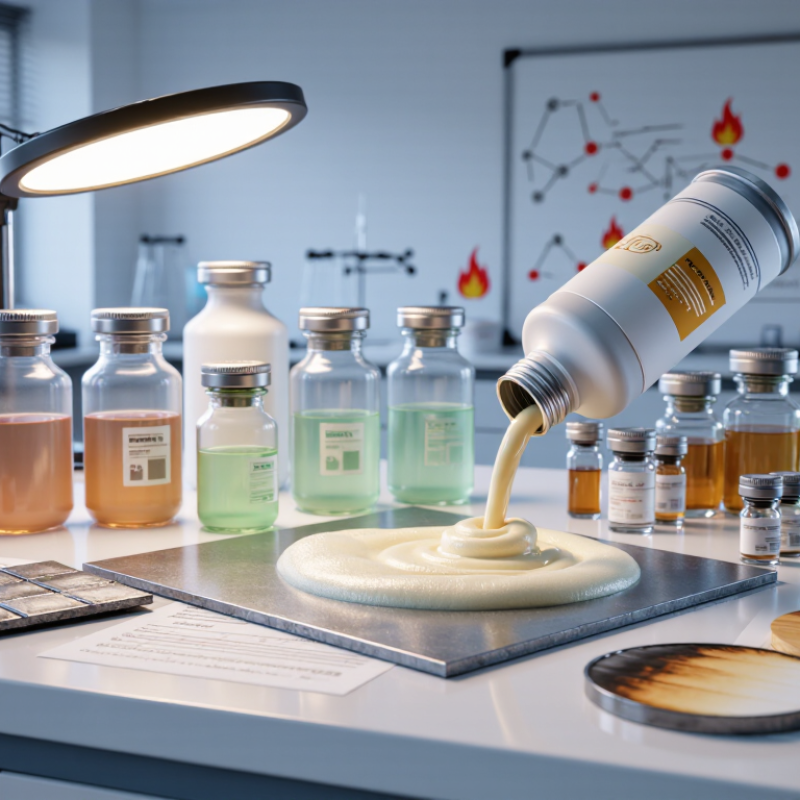
Best Intumescent Paint Additives in 2026 for Global Buyers

What Intumescent Paint Additives Are and How They Protect Structures

Intumescent paint additives help a coating swell when exposed to intense heat. The expanding layer forms a carbon-rich char that insulates the surface beneath it. On a steel beam, that char can slow heat transfer and delay the steel’s temperature rise. It does not make the structure fireproof. Not even close.

Many formulations combine ingredients that promote char formation, release gases, and support the coating’s structure. Their balance matters: a brittle, cracked layer may protect less effectively than expected. Additives also need to work with the binder and the surface preparation. A small test panel can reveal problems, such as poor adhesion or uneven expansion, before larger application begins.

For global buyers, the additive name alone tells little. Ask for fire-test data tied to the intended coating system, substrate, and application thickness. Check curing conditions, moisture exposure, and compatibility with primers or topcoats. Requirements and test methods vary by market, so confirm which documentation applies locally. One detail is easy to miss: performance depends on installation quality, not just the lab result. I would avoid assuming that one formulation suits every climate or structure.

Key Additive Types and Their Roles in Intumescent Coatings

Intumescent coatings rely on a coordinated additive package, not one “best” ingredient. When heated, the package forms an insulating char that slows heat transfer to the substrate. Ammonium polyphosphate supplies the acid source; pentaerythritol provides carbon; melamine releases gases that help expand the softened layer. Their ratios and compatibility affect char strength, adhesion, and expansion. Small details matter.

NFPA’s Fire Loss in the United States During 2023 estimates that U.S. fire departments responded to 1,389,000 fires that year. This scale reinforces why coating performance must be verified, not assumed. Zinc borate can support char formation and help reduce smoke, while expandable graphite offers a different expansion mechanism and may change the finish. For global buyers, check technical data for dry-film thickness, substrate preparation, humidity limits, and tested fire-resistance duration. Request test evidence for the complete coating system, including primer and topcoat, rather than judging additives alone. A formulation can look convincing on paper. Not a recipe.

Best Intumescent Paint Additives in 2026 for Global Buyers - Key Additive Types and Their Roles in Intumescent Coatings

Additive type Typical role in the coating How it contributes during fire exposure Common formulation considerations Useful buyer checks
Ammonium polyphosphate (APP) Acid source in many phosphorus-based intumescent systems. On heating, it can generate phosphoric-acid species that promote dehydration and char formation in suitable carbon-containing components. Particle size, surface treatment, moisture sensitivity, dispersion, and compatibility with the binder can affect processing and coating performance. Review particle-size data, moisture and storage guidance, dispersion requirements, and test results in the intended coating system.
Pentaerythritol and related polyols Carbon source in conventional APP-based intumescent formulations. Provides carbon that can be converted into a protective char when the acid source and other formulation components are appropriately balanced. Solubility, particle form, compatibility, and resistance to moisture migration may matter, particularly in waterborne coatings. Check grade consistency, handling and storage information, and compatibility with the selected binder and fire-test build-up.
Melamine Blowing or gas-generating component in many intumescent formulations. Thermal decomposition releases gases that can help expand the softened char layer. Decomposition behavior, particle size, dispersion, and the temperature range of the other intumescent ingredients should be considered together. Request technical data and evaluate expansion, char integrity, and coating appearance in the complete formulation.
Expandable graphite Expandable carbon-based component used in some fire-protective coatings and sealants. When heated, intercalated graphite can expand into a low-density, insulating structure that helps form a physical barrier. Expansion onset, particle size, expansion volume, coating surface quality, and compatibility with the binder can influence suitability. Confirm expansion characteristics and particle specifications; assess appearance, adhesion, and performance in the intended application.
Zinc borate Multifunctional additive used as a synergist and, in some systems, to support smoke and afterglow control. May assist char formation and contribute to a more coherent protective residue, depending on the formulation. Hydration state, particle size, loading, and interactions with other ingredients should be assessed for the target binder and exposure conditions. Check composition and particle data, applicable regulatory documentation, and evidence from tests on the complete coating.
Titanium dioxide and mineral pigments Provide color, opacity, and other formulation properties; they are not substitutes for the core intumescent package. Their effect on fire performance depends on the formulation; excessive or unsuitable pigment loading can alter expansion and char behavior. Balance opacity and color needs with solids content, viscosity, dispersion, film build, and the tested fire-protection design. Verify pigment grade and dispersion requirements, then confirm that the chosen color formulation remains within the qualified system.
Rheology modifiers and thickeners Control viscosity, sag resistance, application behavior, and suspension of solid ingredients. They do not normally provide the primary intumescent reaction, but consistent film application supports the designed dry-film thickness. Selection depends on binder chemistry, application method, shear profile, storage stability, and compatibility with the additive package. Check viscosity behavior, sag and leveling, settling resistance, and application performance under site conditions.
Dispersants and wetting agents Support wetting and dispersion of pigments and functional powders. Their contribution is mainly through formulation stability and uniformity rather than direct char formation. Over- or under-use can affect viscosity, water resistance, storage stability, and coating properties; compatibility should be tested. Review recommended use guidance and verify grind quality, storage stability, and performance in the final coating.

Additive selection is formulation- and application-specific. Confirm performance using the complete coating system, specified dry-film thickness, substrate, and applicable fire-test requirements.

How to Compare Additives for Performance and Formulation Compatibility

Comparing intumescent paint additives starts with the char they produce, not just the powder’s expansion ratio. A stable, cohesive char can help insulate steel during heating. Ask for test data that reflects the intended coating system, including binder, dry-film thickness, and substrate. Results from a different formulation may not predict yours.

Then check compatibility in the wet paint. Additives can change viscosity, settling, application, and surface finish. Disperse a small batch using your planned mixing process, then inspect it after storage. Look for hard sediment, lumps, or a texture that makes spraying uneven. Test the full system. Small differences matter.

For global sourcing, compare batch consistency, technical documentation, and delivery reliability alongside performance. Confirm that recommended loading levels fit your formulation and manufacturing equipment. A useful supplier should explain test conditions and limitations, not promise identical results everywhere. A neat lab result can still disappoint on a humid production floor; I would treat that gap as a reason to retest, not ignore. Keep records of mixing conditions, film thickness, and observed defects so comparisons remain practical and repeatable.

Best Intumescent Paint Additives in 2026: Comparing Typical Formulation Roles

Qualitative screening guide for common additive families. Scores indicate typical contribution to each role (0 = not a defining role; 1 = supporting role; 2 = primary role). They are not standardized test results: actual performance and compatibility depend on the binder, formulation, application, and fire-test requirements.

Formulation note: Ammonium polyphosphate is commonly used as an acid source, pentaerythritol as a carbon source, and melamine as a blowing agent. Expandable graphite contributes expansion, while zinc borate is commonly used as a synergist. Confirm compatibility and fire performance through formulation trials and applicable testing.

Global Standards, Sourcing, and Sustainability Considerations in 2026

Global buyers should assess intumescent paint additives as part of a tested coating system, not as standalone ingredients. ASTM E119, EN 13381-8, and ISO 834 use distinct testing or assessment frameworks; results are not automatically interchangeable. Check the project’s required standard, steel section factor, fire-resistance period, and tested dry-film thickness. A small specification mismatch can undermine confidence in the result.

Sustainability now belongs in the same procurement review. UNEP’s Global Status Report for Buildings and Construction 2024 estimates that the sector accounted for 34% of global energy demand and 37% of energy- and process-related CO₂ emissions in 2022. Ask for verified environmental product declarations, VOC data, and clear information on recycled or renewable content. An EPD supports comparison; it does not prove a product is automatically greener. Look closely at system boundaries.

For cross-border sourcing, request batch traceability, certificates of analysis, safety data sheets, and written change-control procedures. Confirm compatibility with primers and topcoats, plus storage limits and realistic delivery times. The awkward gap: comparable lifecycle data for specialty additives can be limited. Buyers should record what remains unverified, rather than treating missing data as a sustainability advantage.

How to Select an Additive System for Your Application

Selecting an intumescent paint additive system starts with the substrate and exposure—not a generic “best” ingredient. Steel beams in a dry indoor corridor face different demands from structures exposed to humidity, salt, or frequent cleaning. Check the required fire-resistance period, beam geometry, and target dry-film thickness before comparing formulations. Small details matter.

A typical system combines an acid source, a carbon source, and a blowing agent. Their balance affects how the coating expands and forms an insulating char. Ask for compatibility data with the intended binder, plus guidance on mixing, application, and curing. A smooth, even coat on a test panel can reveal settling or poor adhesion early. It cannot replace fire testing.

For global projects, verify that test evidence covers the full coating system, including primer and topcoat, on a comparable substrate and profile. Confirm the relevant local test method with the project team; acceptance can vary by market. Also consider spray equipment, storage temperature, and repair access. A formulation that performs well in a laboratory may be harder to apply consistently on site. That gap deserves attention.

Kontaktbox-Frau

  • CNC-STEP – Quick contact