


10 Best Jewelry Equipment for Professional Jewelers?

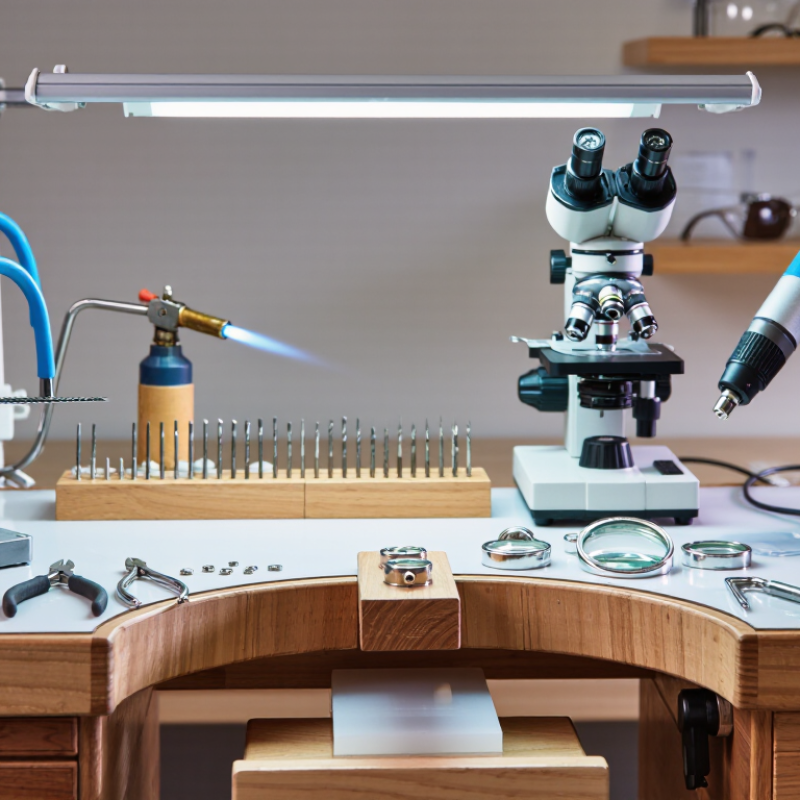
A professional bench can look modest: a bright task lamp, a jeweler’s saw, pliers, files, and a loupe. Yet the right Jewelry Equipment affects accuracy, comfort, and the finish of every piece. A saw frame that flexes can wander through a fine cut. A poorly balanced torch can make delicate soldering harder. Small choices matter.

The U.S. Bureau of Labor Statistics reported a median annual wage of $47,450 for jewelers and precious-stone and metal workers in May 2023. Its Occupational Outlook Handbook also describes work involving hand tools, microscopes, and precision equipment. These figures do not measure tool quality, but they show why dependable equipment matters in skilled bench work. No tool replaces training.

Metalsmith and educator Charles Lewton-Brain is known for practical, technique-focused instruction. A useful summary of his bench philosophy is: “Choose tools that serve the work, not the other way around.” This is a paraphrase, not a verified verbatim quotation. That distinction matters. The guide ahead compares ten essentials, from bench pins and flex shafts to polishing systems and safety gear. It considers control, durability, maintenance, and workspace fit—not just price. Some recommendations will depend on the metal, design, and production volume. A perfect universal setup does not exist. Even experienced jewelers refine their choices as their work changes.
10 Best Jewelry Equipment for Professional Jewelers?

How Professional Jewelers Choose Essential Workshop Equipment

Professional jewelers choose workshop equipment by matching tools to the work they actually perform. A bench pin should feel stable under the hand, while a jeweler’s saw should hold blades firmly without excessive tension. Try tools before buying when possible. Comfort matters. A poorly positioned bench can cause more fatigue than a demanding task, especially during fine setting or repeated filing.

Lighting and magnification deserve careful attention. Look for a bright, adjustable lamp that reveals scratches without casting hard shadows across the work. A loupe should offer clear focus at a comfortable distance; stronger magnification is not automatically better. Keep ventilation and eye protection in mind when selecting equipment for soldering, polishing, or handling fine dust. These practical details are easy to overlook when comparing shiny tools.

Choose durable essentials before specialized machines. Pliers with smooth, aligned jaws help avoid unwanted marks, and a reliable mandrel supports consistent ring sizing. Check whether replacement parts and routine maintenance are manageable. Then test it. A tool that looks precise in a catalogue may feel awkward at the bench. Even experienced makers sometimes buy equipment for a technique they rarely use, so workshop needs are worth reviewing as projects change.


Core Tools for Measuring, Cutting, and Forming Jewelry

Accurate jewelry work starts with dependable measuring tools. A digital caliper checks wire diameter, sheet thickness, and small gaps between components. A steel ruler and dividers help transfer dimensions onto metal without relying on guesswork. Mark lightly with a scribe; deep scratches can remain visible after polishing. Small differences matter. Check measurements twice, especially before cutting a costly sheet.

Tips: Keep caliper jaws clean and close them gently. For sawing, use a fine blade suited to the metal’s thickness, tension it firmly, and support the work on a bench pin. Wear eye protection; tiny metal fragments can travel farther than expected.

Cutting and forming tools shape the measured material. A jeweler’s saw handles curves and interior openings, while files refine edges left by the blade. Flat- and chain-nose pliers bend wire and hold small parts, but smooth jaws help prevent unwanted marks. A steel mandrel and rawhide mallet can round a ring gradually. Work in small adjustments. Metal may spring back, and repeated correction can leave a piece uneven. Even experienced makers sometimes need to pause and recheck the shape under good light.

10 Best Jewelry Equipment for Professional Jewelers

This chart groups ten core tools by their primary workflow stage. Counts reflect the tools listed in each category, not a ranking or a measure of tool quality.

Tools included: Measuring — digital caliper, steel ruler; Cutting — jeweler’s saw, flush cutters; Forming — round-nose pliers, flat-nose pliers, chasing hammer, ring mandrel; Joining — soldering torch; Finishing — needle files.

Equipment for Soldering, Stone Setting, and Precision Work

For soldering, a stable bench setup matters more than a crowded tool tray. A small torch, fire-resistant soldering block, tweezers, and a third hand help keep joints steady and heat controlled. Use suitable eye protection and keep ventilation working, especially when heating metal or using cleaning solutions. Small details matter. A temperature-controlled setup can reduce overheating, but it cannot replace careful observation. Watch the solder flow, not just the flame.

Stone setting calls for a different kind of control. A magnifier or bench microscope reveals uneven prongs and tiny gaps before they become costly repairs. Add a graver, setting burs, burnishers, and a flexible shaft for shaping and finishing. Keep burs sharp and matched to the stone; a poor fit can damage a seat. Calipers help check symmetry, though measurements alone do not guarantee a secure setting. Not glamorous. Clean tools and a bright, well-directed lamp often make precision work easier. A tool list can look complete while overlooking one weak habit: rushing inspection. Pause, check the stone from several angles, and correct small flaws before polishing hides them.

Machines for Grinding, Polishing, and Finishing Jewelry

Grinding, polishing, and finishing are distinct steps, and each needs the right tool. A bench grinder with suitable wheels can remove casting marks, while a flexible-shaft machine handles tight curves and small settings. Variable speed helps jewelers control heat and avoid removing too much metal. Small details matter. For consistent results, keep abrasive grades separate and inspect pieces under angled light between stages.

Market demand makes repeatable finishing increasingly valuable. Grand View Research’s Jewelry Market Size, Share & Trends Analysis Report estimated the global jewelry market at USD 353.26 billion in 2023, with projected annual growth of 4.7% from 2024 to 2030. That is market context, not proof that every workshop needs more machines. A vibratory or magnetic finisher can smooth batches, but delicate prongs and sharp edges still need close inspection. Dust extraction, wheel guards, and clean work surfaces are practical essentials. Dust matters. Polishing can improve a surface, but it cannot correct a poorly fitted joint. The awkward part is choosing speed and pressure consistently; even experienced hands sometimes overwork a piece.

10 Best Jewelry Equipment for Professional Jewelers: Machines for Grinding, Polishing, and Finishing Jewelry

Equipment Typical Operating Range or Capacity Primary Use Best For Key Selection Consideration
1. Bench Grinder and Polisher Commonly 1/4–1/2 hp; wheels often run at approximately 1,725 or 3,450 rpm Grinding, deburring, and polishing with interchangeable wheels or buffs General bench work and larger metal components Check wheel compatibility, stable mounting, adjustable guards, and access to dust collection.
2. Flexible-Shaft Rotary Machine Often variable speed, roughly 0–20,000 rpm; handpieces and accessory limits vary Localized grinding, drilling, sanding, carving, and polishing Detailed work, settings, and hard-to-reach areas Choose a compatible handpiece and collet system; use the lowest effective speed for delicate work.
3. Rotary Tumbler Barrel capacity commonly ranges from about 0.5 to 3 liters; run times are typically hours Batch finishing with abrasive media, water, and suitable compound Durable pieces that can withstand repeated tumbling contact Match barrel size and media to the work; avoid tumbling fragile settings or pieces that can tangle.
4. Magnetic Pin Finisher Typical bowls hold approximately 0.5–2 liters; cycle times often range from minutes to under an hour Uses stainless-steel pins to reach small recesses and refine metal surfaces Small parts, intricate details, and interior surfaces Confirm the machine is suitable for the metal and component geometry; separate pins carefully after processing.
5. Vibratory Tumbler Small workshop bowls commonly hold about 1–5 liters; media and cycle time depend on the finish required Batch deburring and surface finishing with ceramic, plastic, or other appropriate media Processing multiple robust parts with relatively consistent results Select media that will not damage the work, and account for noise, floor space, and media separation.
6. Ultrasonic Cleaner Bench units commonly have 0.5–6 liter tanks and operate near 40 kHz; heating is model-dependent Removes loose dirt and polishing residue from compatible items using cavitation Routine cleaning of suitable finished pieces and tools Check stone and setting compatibility first; porous, treated, fractured, or delicate stones may be unsuitable.
7. Steam Cleaner Many bench units produce steam at approximately 3–5 bar; reservoir and output vary by model Uses pressurized steam to remove residues from compatible jewelry Final cleaning after polishing and inspection Use eye protection and follow pressure precautions; avoid steam on heat-sensitive or fragile stones and settings.
8. Bench Dust Collector Small units commonly provide airflow in the several-hundred-cubic-feet-per-minute range Captures airborne polishing compounds and metal dust near the work area Regular grinding and polishing operations Consider hood position, filtration, noise, and safe collection of recoverable metal dust.
9. Rolling Mill Manual bench models commonly use rolls about 75–100 mm wide; reduction per pass depends on stock and mill design Reduces sheet or wire thickness and creates texture with suitable rollers Preparing metal stock before forming or fabrication Use gradual reductions, anneal metal when appropriate, and keep fingers clear of the rollers.
10. Jewelry Bench Lathe Small polishing lathes commonly run around 1,725–3,450 rpm; shaft and motor ratings vary Rotates mounted buffs and brushes for controlled polishing Bench polishing of rings, chains, and formed components Use properly secured, rated accessories and a protective polishing hood; tie back hair and secure loose clothing.

Operating ranges are general examples for workshop equipment, not specifications for every model. Always follow the equipment manual and verify material, stone, and setting compatibility before processing.

Safety and Maintenance of Professional Jewelry Equipment

Professional jewelry equipment stays safer when care is routine, not a last-minute repair. Before each shift, check flex-shaft cords, polishing-wheel guards, bench-pin stability, and extractor hoses for cracks or loose fittings. Unplug machines before changing burs or cleaning them. Small faults matter.

Fine metal dust can collect around polishing motors and beneath benches. Use suitable local exhaust ventilation, keep the intake close to the work, and clean filters as the equipment manual directs. Noise deserves attention too. OSHA’s hearing-conservation standard sets an action level of 85 dBA over eight hours. NIOSH’s 1998 Criteria for a Recommended Standard: Occupational Noise Exposure recommends the same daily exposure limit. A grinder may not seem loud. Repeated exposure can still add up. Keep a maintenance log; imperfect records are better than relying on memory.

Tips: Inspect guards and cords daily. Check extraction airflow regularly, and replace damaged filters promptly. If a machine vibrates, overheats, or rattles, stop and inspect it before continuing. These checks take minutes, though busy shops sometimes skip them—a habit worth questioning.

Kontaktbox-Frau

  • CNC-STEP – Quick contact