


10 Best Rail Freight Companies for Global Shipping

Rail Freight remains a practical choice for moving large volumes across long distances. It can connect inland production centers with ports and distribution hubs, often using less fuel per tonne than road transport. But a rail journey rarely tells the whole story. Border procedures, terminal capacity, and the first and last miles can change a shipment’s cost and timing.

“Rail is the most sustainable mode of transport,” said Jean-Pierre Loubinoux, former Director General of the International Union of Railways. That perspective helps explain rail’s appeal, though sustainability alone cannot determine the right carrier. Shippers also need to examine network reach, transit-time consistency, cargo visibility, intermodal services, and customer support. A polished route map is useful. Reliable execution matters more.

This guide reviews 10 rail freight companies serving global shipping needs. It considers where each provider operates, how its services fit different supply chains, and what details businesses should verify before requesting a quote. Capabilities and schedules can vary by route, season, and available capacity, so treat any comparison as a starting point—not a guarantee. Small details count: a missed transfer can leave a container waiting at a terminal. There is no perfect ranking for every shipment. The right partner depends on cargo, origin, destination, budget, and required delivery window. Some comparisons may still miss local conditions; checking directly with providers remains essential.
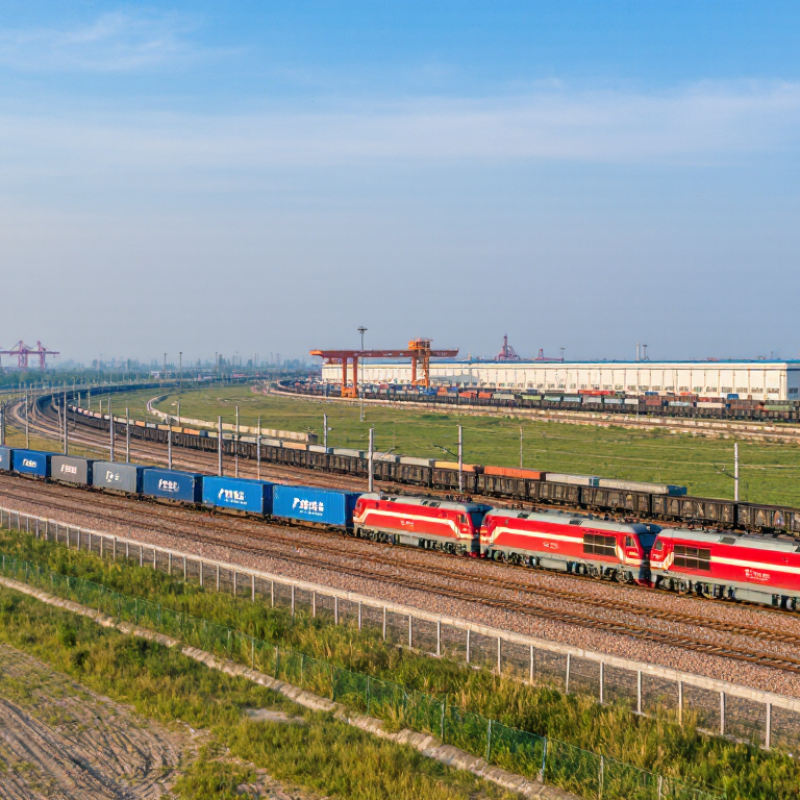
10 Best Rail Freight Companies for Global Shipping

How Rail Freight Supports Global Shipping

Rail freight supports global shipping by carrying containers between seaports, inland terminals, and industrial hubs. A container unloaded from a ship can move by train across long inland corridors, then transfer to trucks for final delivery. This creates a practical link between ocean routes and destinations far from the coast.

The International Energy Agency’s The Future of Rail (2019) reports that rail carries about 8% of global passenger and freight transport, while using roughly 2% of transport energy.

That efficiency can help reduce shipping’s transport footprint, especially on busy land corridors.

Rail also offers substantial capacity and avoids some road congestion. Trains can move many containers in one scheduled journey, while terminals provide places to consolidate cargo and coordinate transfers.

But the handoff matters. A missed train, crowded terminal, or slow border process can erase time gains, so shippers need realistic schedules and clear tracking.

Rail is not magic.

It works best when routes, equipment, and port connections align; not every origin has that access. The IEA’s figures are global averages, too, and do not guarantee lower emissions for every individual shipment.

A short feeder journey or poorly loaded train may change the result. Those details deserve more attention than glossy transit-time promises.


Criteria for Evaluating International Rail Freight Companies

An international rail freight company should be judged by how well its network fits your actual route. Check connections at border crossings, transfer terminals, and the final delivery point. A route map may look broad but hide extra handoffs. Ask who manages each transfer and how delays are communicated.

Compare quoted transit times with recent shipment records, not just best-case estimates. Request details on wagon or container availability, cargo tracking, insurance, and claims handling. A dependable provider should explain what happens when a train misses its scheduled connection. Even strong schedules can slip; that detail deserves a candid answer.

Tips: Ask for a sample tracking update and a written list of service exclusions. Check whether quoted charges include terminal handling and routine documentation. Compare like with like. If answers stay vague, treat that as a risk rather than a small sales detail.

Profiles of Ten Rail Freight Companies Serving Global Markets

Global rail freight companies differ in network reach, cargo focus, and border-handling capability. Eurostat recorded 378.9 billion tonne-kilometres of EU rail freight in 2023, down 4.9% from 2022 (Railway freight transport statistics, 2024). That shift underlines why a carrier’s route map is only part of the picture. Delivery schedules also depend on terminal capacity, locomotive changes, and coordination with other railways.

Ten useful company profiles include a North American long-haul operator built for intermodal containers; a bulk carrier moving grain and minerals; and a transcontinental operator coordinating cross-border handoffs. An East Asian network operator offers dense domestic connections, while an Indian carrier handles varied commodities across a large rail system. A European intermodal company links inland terminals with seaports. A regional wagonload carrier serves smaller industrial sidings. A Nordic specialist moves forest products and minerals. A Southern African heavy-haul operator focuses on bulk corridors. An Australian resource-haul company serves long-distance mine-to-port routes.

Details matter. Ask about terminal dwell time, wagon availability, and shipment tracking—not just advertised transit times. One caution: public statistics rarely compare service reliability on equal terms. A profile can look strong on paper, yet a missed interchange may add a day. Check recent route-level performance before choosing.

Selected Rail Routes Relevant to Global Freight

Route length offers a sense of the scale rail can cover in long-distance shipping. These figures describe routes, not the performance of individual freight companies.

Distances: Trans-Siberian Railway, 9,289 km; China–Europe freight route, approximately 11,000 km; China–Laos Railway, 1,035 km. China–Europe route distance varies by origin, destination, and itinerary.

Comparing Routes, Services, Transit Times, and Coverage

Choosing among ten rail freight companies starts with the exact route, not a broad claim of global coverage. Check whether a provider serves both the origin and destination terminals, and whether it manages transfers between rail networks. A map can look reassuring. The smaller details matter: track-gauge changes, terminal locations, and the frequency of departures can affect the journey.

Compare service options as well as routes. Some providers arrange door-to-door transport, while others cover only the rail leg. Ask who coordinates trucking, customs paperwork, cargo tracking, and transfer handling. For a shipment leaving inland China for a European warehouse, for example, the final road connection may shape the overall schedule as much as the rail journey. Confirm what is included in the quote.

Transit times should be assessed lane by lane. Published estimates may exclude terminal waits or delays at borders, so request typical and peak-season ranges. Also check how often schedules are updated and who communicates disruptions. These comparisons are imperfect; availability can shift after booking. A provider with fewer routes may still suit a specific shipment better if its service frequency and destination coverage match the cargo’s needs.

How to Choose a Rail Freight Partner for Your Shipping Needs

Choosing a rail freight partner starts with the route, not the sales pitch. Check which terminals it serves, how often trains depart, and where cargo changes hands. A container waiting two days at a transfer yard can erase the savings from a lower quoted rate. Ask for recent on-time performance by corridor, not a network-wide average. Request a sample tracking report, too. It should show terminal arrivals, delays, and who contacts you when plans change. Small details matter.

Capacity and handoff quality matter as much as price. The International Energy Agency’s 2019 report, The Future of Rail, estimates that rail carries about 7% of global freight movement while using around 2% of transport energy.

That efficiency is useful only when the service fits your schedule and connects reliably with road or port links. Compare total costs, including terminal handling, storage, and final delivery.

Confirm how the provider manages peak-season space, damage claims, and route disruptions. I would still challenge any promise of “real-time” visibility: ask how quickly a missed connection appears in the system. No partner controls every delay. A clear recovery plan is better than a perfect timetable.

Article Source:

Kontaktbox-Frau

  • CNC-STEP – Quick contact