


What Is the Best Stainless Steel Kitchen Sink in 2026?
The best Stainless Steel Kitchen Sink in 2026 is not simply the shiniest model on a showroom wall. It must handle boiling pasta water, heavy pans, and daily cleanup without becoming noisy or difficult to maintain. Houzz’s 2024 U.S. Kitchen Trends Study tracks sink replacement as a common part of kitchen renovations, reflecting how often homeowners reassess this hardworking fixture. The NKBA’s kitchen-trends research also highlights practical performance and lasting design as important considerations in today’s kitchens.
Useful details matter. Look at steel thickness, bowl depth, finish, sound-dampening pads, and installation style. A deep single bowl can fit a roasting pan, while a double bowl helps separate rinsing from washing. Neither suits every kitchen. Dan DiClerico, a home-renovation expert at HomeAdvisor, offers a useful perspective on choosing fixtures for real household needs; paraphrased, his advice is to prioritize everyday function over showroom appeal. That distinction deserves attention. A polished sink can look impressive, yet show scratches or water spots more clearly than expected.
This guide compares leading options by construction, usability, care, and value, while distinguishing documented features from marketing claims. It also considers household size, counter space, and cooking habits. There is no perfect sink for everyone. And that is worth admitting. Stainless steel remains popular for good reasons, but gauge labels alone cannot predict how a sink will sound, feel, or age in your kitchen.
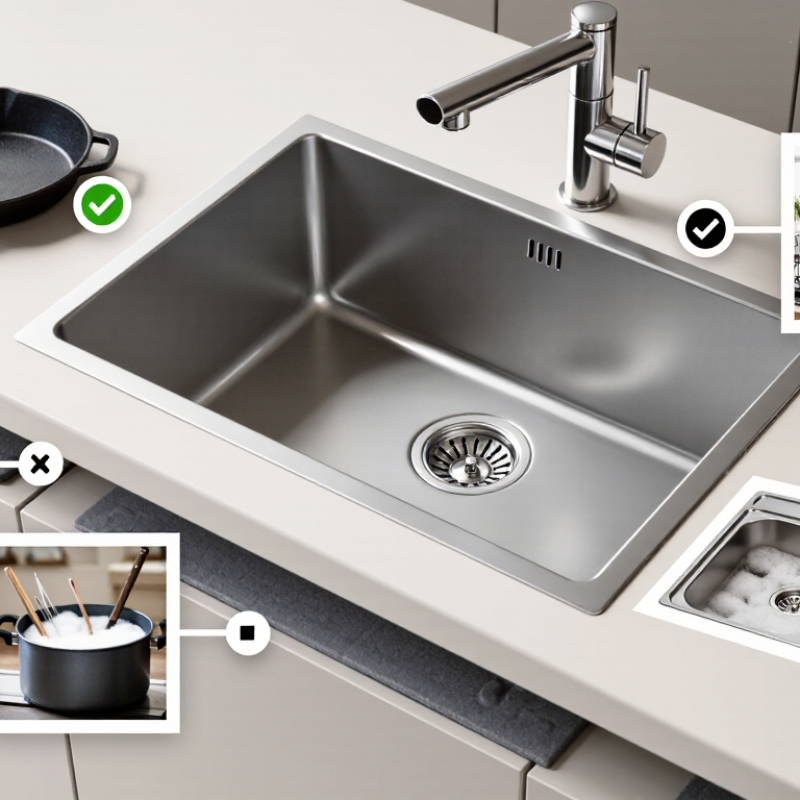
How Stainless Steel Kitchen Sinks Are Made and Graded
What Is the Best Stainless Steel Kitchen Sink in 2026?
How Stainless Steel Kitchen Sinks Are Made and Graded
A stainless steel sink starts as an alloy, usually containing iron and chromium. Chromium helps form a thin protective surface that resists rust. Some grades also contain nickel, which can improve formability and corrosion resistance. The metal is rolled into sheets, then shaped by pressing or assembled from welded panels. Manufacturers may anneal and clean the steel after forming. The finish matters, too: brushed surfaces soften reflections, while polished ones show scratches more readily.
Grade and thickness describe different things. Type 304, often called 18/8, is a common kitchen-sink choice because it balances corrosion resistance and workability. Type 316 includes molybdenum, which can improve resistance to chlorides, though it is less common in household sinks. Type 430 is magnetic and typically offers less corrosion resistance than 304. Gauge indicates sheet thickness, but numbering conventions can confuse shoppers. I would not judge a sink by gauge alone; construction, sound control, and installation also affect daily performance.
Tips: Check the grade in the product specifications, not just “stainless steel.” Look for clear thickness details and inspect seams, corners, and drain openings. A thicker sink may feel quieter, but pads or coatings can also reduce noise. Details matter. Hard water and abrasive cleaners can still mark the surface, so care instructions deserve a close look.

Which Materials and Features Affect Sink Performance?
Stainless steel sink performance depends on alloy, construction, and daily use—not just a polished surface. ASTM International’s A240/A240M specification sets Type 304 stainless steel’s chromium content at 18.0–20.0% and nickel at 8.0–10.5%. These elements help resist corrosion, but they do not make a sink immune to salt, harsh cleaners, or standing water. Rinsing and drying the bowl still matter. Small habits count.
Thickness affects how the basin feels and sounds. A thicker sheet may resist dents better, though installation and sink shape also matter; gauge numbers can confuse buyers because lower gauge numbers mean thicker steel. Look for securely attached sound-dampening pads and an underside coating to soften the clatter of cutlery and running water. Deep bowls hold large pans, but can make reaching the bottom awkward. Tight corners look crisp, yet collect crumbs more readily than gently rounded corners. One detail is easy to overrate: thickness alone. Check welds, drain placement, and finish quality, then consider how the sink fits your actual cookware and cleaning routine.
How Mounting Styles and Bowl Layouts Differ
What Is the Best Stainless Steel Kitchen Sink in 2026?
How Mounting Styles and Bowl Layouts Differ
The best stainless steel sink depends on your counter, cabinet space, and daily habits. An undermount sink sits below the countertop, so crumbs can be swept directly into the bowl. It gives a clean edge, but the counter cutout and seal need careful installation. A top-mount sink rests on the counter, with its rim visible. It is often simpler to replace, though crumbs may collect along the edge. Neither style wins everywhere. Check your countertop material and cabinet measurements before choosing.
Bowl layout matters just as much. A single, deep bowl can fit a roasting pan or baking sheet without awkward tilting. Two bowls help separate rinsing from washing, but a center divider may limit room for wide cookware. A low divider offers a compromise, though it does not create two fully separate spaces. Think about your usual dishes, not an idealized kitchen routine. That distinction is easy to miss.
Tips: Measure the cabinet opening, not just the old sink. Compare bowl depth and divider height, and check faucet clearance. If you wash large pans often, bring one measurement to the showroom. Small details matter. I’d also consider noise-dampening pads, but they cannot make a thin sink feel heavy-duty.
What Is the Best Stainless Steel Kitchen Sink in 2026? - How Mounting Styles and Bowl Layouts Differ
| Mounting Style | Bowl Layout | How It Sits | Installation Considerations | Everyday Use and Cleanup | A Good Fit For |
|---|---|---|---|---|---|
| Topmount (drop-in) | Single bowl | The sink rim rests on top of the countertop and is visible. | Fits into a countertop cutout; the rim covers the cut edge. Confirm the sink’s cutout dimensions and faucet-hole layout before purchase. | The open bowl accommodates large pots. The raised rim can interrupt wiping crumbs directly from the counter into the sink. | Renovations where a visible rim or straightforward cutout installation is preferred. |
| Undermount | Single bowl | The sink is attached beneath the countertop, leaving the counter edge exposed above the bowl. | Requires a compatible countertop and secure support under the sink. The countertop edge must be finished for exposure to water. | Provides an uninterrupted counter-to-bowl transition, making it easy to wipe debris into the sink. One large bowl suits bulky cookware. | Solid-surface or stone countertops and kitchens that prioritize a clean counter edge. |
| Topmount (drop-in) | Double bowl | The rim rests on the countertop; a divider separates the two bowls. | Check the overall cutout and the width of each bowl against cabinet space and intended use. | Separate bowls allow tasks such as washing and rinsing at the same time. Each compartment is smaller than a comparable single bowl. | Households that regularly separate washing, rinsing, or food-preparation tasks. |
| Undermount | Double bowl | Both bowls sit below the countertop, with the divider between them. | Needs a compatible countertop, secure support, and a carefully finished exposed countertop edge. | Combines a wipeable counter transition with separate work areas. The divider can limit space for wide pans. | Kitchens that want separate bowls and an undermount counter transition. |
| Topmount or undermount | Low-divide double bowl | The mounting position depends on the model; the divider is lower than the bowl walls. | Verify divider height and bowl dimensions, since these vary by sink model. Undermount versions also need compatible counters and support. | The lower divider can make it easier to handle some larger cookware while retaining two compartments. Water may pass between bowls more readily over the lower divider. | People who want two work areas but often wash cookware that is awkward in a standard double bowl. |
| Flush or integrated-rim installation | Single or double bowl, depending on model | The rim is designed to sit level with, or visually align with, the countertop. | Requires a sink and countertop designed for this installation, plus precise measurements and fabrication. It is not interchangeable with a standard drop-in cutout. | A level transition can make counter cleanup convenient. The result depends on accurate fitting and the specific countertop system. | New builds or planned countertop replacements where a level, coordinated transition is a priority. |
Mounting style and bowl layout are separate choices: many sink models combine different mounting styles with single, double, or low-divide bowls. Check the manufacturer’s dimensions, cutout template, and countertop requirements for the specific sink before installation.
How to Compare Stainless Steel Sinks in 2026
When comparing stainless steel sinks in 2026, look beyond the shine. Check the steel grade, thickness, bowl shape, and installation style together. A 304-grade sink is a common choice for kitchen use, while thicker steel—often listed as 16 gauge rather than 18—may feel sturdier and sound less hollow. Gauge labels can be confusing, so verify what the seller means.
Bring a tape measure. Confirm the sink fits the cabinet, countertop cutout, and plumbing, then compare usable bowl dimensions rather than the outside width alone. A deep basin can hide dishes, but it may be uncomfortable if you are short or have limited reach. Small detail. Check the drain position, too: a rear or offset drain can leave more room below for storage.
Finish and noise control affect daily use. Brushed surfaces tend to show fine scratches less readily than mirror-like finishes, though no finish stays perfect. Sound-dampening pads can soften clatter, but their coverage varies. If possible, inspect a sample under bright light and run a hand across its edges. I still find sink comparisons imperfect: showroom lighting can flatter a surface, and specifications do not reveal how a bowl feels after a week of washing pans. Compare warranty terms and care instructions, then choose based on your actual kitchen habits.
How to Choose a Sink for Your Kitchen and Budget
A stainless steel sink should fit your daily routine, not just the cabinet opening. Measure the cabinet width, bowl depth, and counter cutout before comparing prices. A deep single bowl can handle roasting pans, but it may feel awkward for shorter users. A divided bowl helps separate tasks, though large cookware can be harder to wash. Check the steel gauge, too: 16-gauge steel is thicker than 18-gauge steel, but installation quality and support still matter.
Budget the sink as part of the kitchen, not as an isolated purchase. Houzz’s 2024 U.S. Kitchen Trends Study reported a $24,000 median kitchen-remodel spend for projects completed in 2023. JLC’s 2024 Cost vs. Value Report put a minor midrange kitchen remodel at about $27,500. These figures cover much more than a sink, but they show how quickly labor, counters, and plumbing can outweigh the fixture price.
Ask whether the quote includes clips, a drain, sound-dampening pads, and installation. Compare total installed cost. A brushed finish can hide light water marks better than a polished surface, but it will not prevent scratches. That is an imperfect trade-off. If you cook often, bring a large pot’s dimensions when checking bowl size, and confirm the faucet hole layout before ordering. Measure twice. A cheap sink that needs a new countertop cutout may become the expensive choice.
What Is the Best Stainless Steel Kitchen Sink in 2026?
How Sink Gauge Affects Thickness and Budget
How to read this chart: A lower gauge number means thicker steel. Thicker steel may feel sturdier and can reduce vibration, but it often costs more. These are approximate sheet-thickness conversions; actual sink thickness can vary. Compare construction, sound insulation, finish, installation type, and price before choosing.
Siemensstraße 13-15
47608 Geldern
NRW Deutschland
Mail: sale@atmmachinesolutions.com
Head office:
+49 (0) 2831 91021-20
Fax:
+49 (0) 2831 91021-99
SUPPORT and INFO
from 3 p.m. to 6 p.m:
+49 (0) 2831 91021-60
( please ring for a long time )
Monday to Friday
8.00 – 12.30
and 13.00 – 15.00
Visit / collection by appointment only!
➣ Sign up for our newsletter
Benefit from a 20% discount, don’t miss any events and always stay up to date.
To access the actual content, click on the button below. Please note that data will be passed on to third-party providers.
More information