What Is a Ceiling Dehumidifier and How Does It Work?
Persistent humidity can make a room feel clammy, leave windows misted, and encourage musty odors. A Ceiling Dehumidifier tackles excess moisture from an overhead position, keeping floor space and wall areas free for other uses. It may suit homes, offices, or other rooms where conventional portable units are awkward to place.
Most models draw damp air through an intake, then remove water using a cooling coil or, in some designs, a desiccant material. The collected moisture usually travels through a drain line, while drier air returns to the room. The precise method varies by unit. Small details matter. A loose connection or blocked drain can affect performance, so installation and maintenance deserve attention.
Ceiling placement can distribute treated air across a room, but it does not guarantee even humidity everywhere. Room size, ceiling height, insulation, airflow, and the source of moisture all influence results. It is not magic. Before selecting a system, check its rated capacity, noise level, filter access, and drainage requirements. A basic humidity meter can help show whether moisture levels change after installation. For persistent dampness, identify and address leaks or ventilation problems as well; a dehumidifier may manage symptoms without fixing their cause. Understanding how a Ceiling Dehumidifier works makes it easier to compare options and set realistic expectations.
What a Ceiling Dehumidifier Is
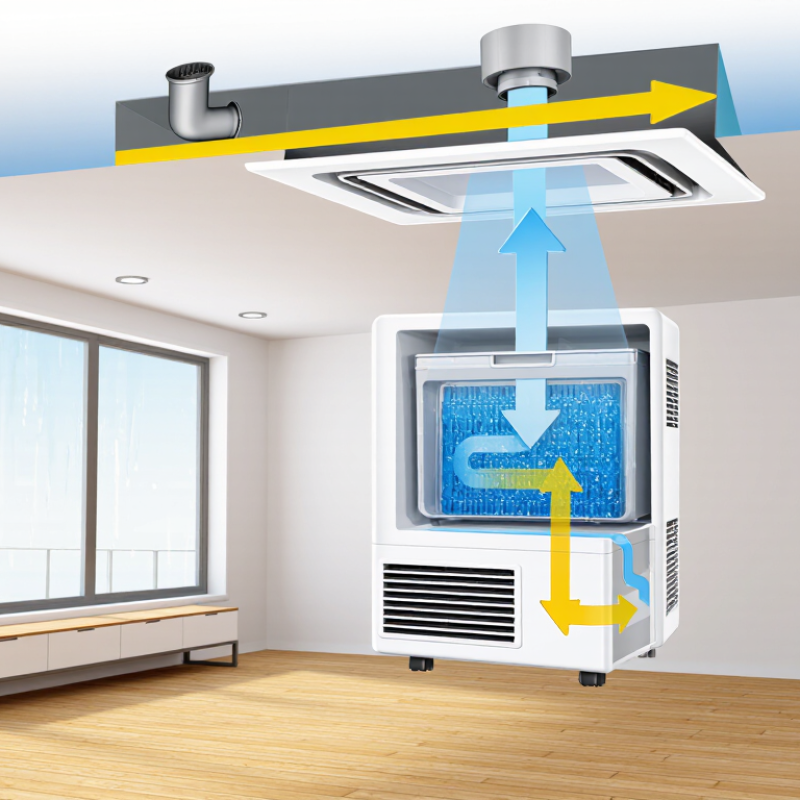
A ceiling dehumidifier is a moisture-removal unit designed to sit above a ceiling or hang from a ceiling structure. Unlike a portable appliance, it usually stays out of the way and connects to air grilles or short ducts. It draws damp room air into the unit, where a cooled coil causes water vapor to condense. The collected water flows to a drain, while drier air returns to the space. Simple in principle.
The setup is often used in places where floor space matters, such as indoor pools, basements, or large utility rooms. A technician may need to check ceiling clearance, airflow paths, drain slope, and access for filter cleaning before installation. These details affect how well the system performs. Some models serve one room directly; others connect to ducts and handle several areas. The name can be a little confusing, since some units are visible below the ceiling rather than concealed above it. Humidity readings near doors or cold exterior walls may also differ from readings elsewhere, so one measurement does not tell the whole story.
Key Components and Their Functions
A ceiling dehumidifier typically draws damp room air through an intake grille. A washable or replaceable filter catches dust before it reaches the internal parts. The fan moves air across a cold evaporator coil, where moisture condenses into droplets. This is the working heart of the system.
The compressor circulates refrigerant through the coils, while the condenser releases heat back into the treated air. As a result, the outgoing air is usually drier and slightly warmer. A drain pan collects water beneath the evaporator, and gravity drainage or a condensate pump carries it away. Some units include a float switch that stops operation if water rises too high. Small detail, big consequence.
A humidistat measures room humidity and signals the controls to start or stop the unit. The housing supports these components above the ceiling, while access panels allow inspection and filter changes. In practice, ceiling height, duct layout, and drainage access affect performance as much as the machine itself. Installation details can be overlooked. A blocked filter can reduce airflow, and a poorly sloped drain may leave standing water. Check service access before choosing a location; maintenance is less convenient when the unit is hidden behind a finished ceiling.
How It Draws In and Dries Air
A ceiling dehumidifier draws humid room air through a return grille, often set into the ceiling or connected to short ducts. A fan pulls air across a filter, which catches dust and lint before they reach the drying components. You may hear a soft rush of air near the grille. Air goes in. A humidity sensor can start or stop the unit as moisture levels change, though sensor readings may not match every corner of a room.
In many models, a cold coil cools the incoming air below its dew point. Water droplets form on the coil and run into a collection tray or drain line. The drier air then passes over a warmer coil and returns to the room, usually at a more comfortable temperature. Some units use moisture-absorbing material instead, so the exact process varies. Keep the intake and outlet clear; blocked airflow can reduce performance and encourage dampness to linger. A drain line also needs a proper slope and occasional checks. It is easy to overlook. Airflow paths are not always obvious after installation, so checking where the unit draws and releases air can help explain uneven drying.
How Condensed Water Is Collected and Drained
Inside a ceiling dehumidifier, humid air passes over a cold evaporator coil. As the air cools, moisture turns into droplets on the coil, much like condensation on a chilled glass. The droplets fall into a condensate tray beneath it. This tray is tilted or shaped to guide water toward a drain outlet. Small, steady drips are normal. Not unusual.
From the outlet, water usually travels through a drain line by gravity. The line needs a continuous downward slope; a sag can hold water and encourage slime or blockage. Where gravity drainage is impractical, some units use a small condensate pump to lift water to a suitable drain. Follow the equipment instructions for any required trap or pump arrangement, since ceiling air pressure can affect drainage. An overflow switch may stop the unit if the tray fills, but it is not a substitute for inspection. Check the tray and drain line periodically for standing water, buildup, or damp ceiling marks. A drain that looks clear today can still clog later. That detail is easy to underestimate.
Where Ceiling Dehumidifiers Are Used and What to Consider
Where Ceiling Dehumidifiers Are Used and What to Consider
Ceiling dehumidifiers suit spaces where floor area is scarce and moisture loads are steady. Common settings include indoor pools, locker rooms, commercial kitchens, laundries, and archives. In natatorium design, the ASHRAE Handbook—HVAC Applications recommends maintaining roughly 50–60% relative humidity. That range helps limit condensation while supporting occupant comfort. The U.S. Environmental Protection Agency advises keeping indoor humidity below 60%, ideally between 30% and 50%, to reduce conditions that encourage mold growth. These are useful targets, not substitutes for a room-specific assessment.
Sizing matters. A unit that is too small may run constantly, while an oversized system can cycle inefficiently. Ask a qualified HVAC professional to assess moisture sources, room volume, occupancy, and outdoor-air loads. Check whether ceiling structure can support the equipment, and confirm that condensate has a reliable drain. Airflow must reach damp corners, not just the sensor. Small details count.
Maintenance access is easy to overlook. Filters, coils, and drain pans need inspection, even when the unit sits above a finished ceiling. In pool spaces, humid air can be corrosive, so materials and service intervals deserve careful review. Consider sound levels, duct layout, and controls before installation. A ceiling location saves space, but it may make repairs harder. That trade-off deserves an honest look.