



China Best Hydraulic Pedal Lever Valve Supplier?
Choosing the right China Hydraulic Pedal Lever Valve supplier requires more than comparing prices and catalog photographs. These valves control hydraulic flow through foot-operated movement, often in compact machines, mobile equipment, and industrial control panels. A reliable supplier should explain pressure ratings, port sizes, spool configurations, sealing materials, and expected service life. Small details matter. A stiff pedal can delay machine response. A leaking connection can stain the workshop floor and interrupt production.
Fluid-power educator Anthony Esposito wrote, “The purpose of fluid power is to transmit and control energy.” That principle remains practical when evaluating a Hydraulic Pedal Lever Valve manufacturer. The best supplier should connect design choices with real operating conditions, including oil temperature, contamination levels, pedal frequency, and installation space. Requesting test records, dimensional drawings, material specifications, and sample feedback can reveal more than attractive marketing language. Factory experience also matters, especially when engineers can adjust spring force, detent action, or mounting dimensions.
China offers a broad manufacturing base, but quality is not uniform. Some suppliers provide excellent machining and inspection. Others may rely too heavily on standard claims. No supplier is perfect. A thoughtful buyer should question unclear tolerances and verify actual test methods. Look for traceable quality procedures, responsive technical support, and consistent communication before placing a large order. This guide examines supplier capabilities, product performance, customization, certification evidence, and after-sales support. The goal is not to name a winner too quickly, but to identify the supplier that performs reliably under real hydraulic pressure.
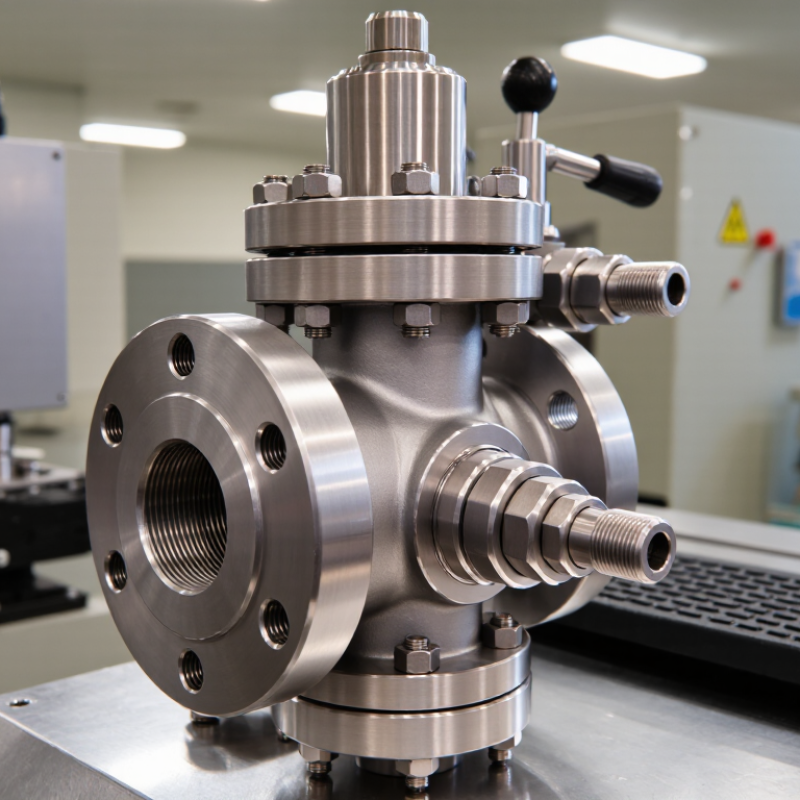
Hydraulic Pedal Lever Valve Basics: ISO 4413 Safety and 250–315 bar Ratings
China Best Hydraulic Pedal Lever Valve Supplier?
A hydraulic pedal lever valve converts foot movement into controlled fluid flow. For industrial systems, ISO 4413 requires risk assessment, pressure control, safe maintenance, and protection against unexpected movement. A 250–315 bar rating does not mean every installation can operate safely at that pressure. It must match the valve body, seals, tubing, fittings, and actuator. Rated pressure is not burst pressure. Confusing them is a costly mistake.
Grand View Research estimated the global hydraulic equipment market at about USD 49.8 billion in 2023, with continued growth through 2030. This expansion increases demand for compact manual controls, but market growth does not replace engineering checks. During practical testing, technicians should inspect pedal return, mounting stability, leakage, and response under cold and warm oil conditions. Small differences matter. A stiff pedal may indicate contamination, poor alignment, or excessive spring force.
Tips: Check the ISO 4413 documentation before purchasing. Confirm continuous pressure, peak pressure, port size, fluid compatibility, and test standards in writing. Ask for pressure-test records and material details. Do not select a 315 bar valve only because the number looks stronger. I have seen specifications appear complete, yet omit temperature limits or return-line pressure. That omission deserves a second review.
China Best Hydraulic Pedal Lever Valve Supplier? - Hydraulic Pedal Lever Valve Basics: ISO 4413 Safety and 250–315 bar Ratings
| Evaluation Dimension | Typical Specification or Range | Technical Meaning | Selection and Safety Notes |
|---|---|---|---|
| Valve function | Manual pedal-operated directional control valve | Uses foot movement to shift a spool and control hydraulic flow to an actuator. | Choose a guarded or shrouded pedal where accidental operation could create a hazard. |
| Common spool configurations | 3/2, 4/2, and 4/3 directional configurations | The first number indicates ports; the second indicates spool positions. | A 4/3 valve may provide neutral, actuator-extend, and actuator-retract positions. Check the exact center condition. |
| Nominal port size | G1/4, G3/8, G1/2, or equivalent SAE port options | Port size affects connection compatibility and practical flow capacity. | Do not select solely by thread size; compare rated flow, pressure drop, sealing method, and hose requirements. |
| Rated working pressure | 250–315 bar typical product class | The maximum continuous pressure permitted by the specific valve design and documentation. | The complete circuit must be rated for the highest possible pressure, including pressure spikes. |
| Pressure range to verify | Working, peak, and proof-test pressure | Working pressure is continuous service; peak pressure is short-duration capability; proof pressure is a test value. | Never use proof or peak pressure as the normal operating pressure unless the technical documentation explicitly allows it. |
| Typical flow capacity | Approximately 20–80 L/min, depending on bore, spool, and pressure drop | Flow capacity determines actuator speed and energy loss through the valve. | Use the manufacturer’s flow-versus-pressure-drop curve rather than port size alone. |
| Actuation method | Direct mechanical pedal or pedal with lever linkage | Mechanical input shifts the spool without electrical power. | Evaluate pedal travel, operating force, return mechanism, mounting rigidity, and operator ergonomics. |
| Return and detent options | Spring return, maintained position, or detented position | Defines whether the spool returns automatically or remains in the selected position. | For safety-critical motion, a spring-return or monitored neutral arrangement may be preferable, subject to risk assessment. |
| Hydraulic fluid | Mineral-based hydraulic oil commonly specified around ISO VG 32–68 | Fluid viscosity and cleanliness influence leakage, wear, response, and service life. | Confirm seal compatibility before using water-glycol, fire-resistant, biodegradable, or other specialty fluids. |
| Operating temperature | Common design range: approximately −20°C to +80°C | Temperature limits apply to the valve, seals, fluid, and surrounding environment. | Actual limits vary by seal material and fluid. Verify cold-start viscosity and maximum fluid temperature. |
| Mounting orientation | Panel, base, or manifold mounting | Mounting style affects installation space, service access, and mechanical alignment. | Provide positive mechanical support and prevent side loads on the valve body or pedal linkage. |
| ISO 4413 relevance | Hydraulic-system safety principles and general rules | ISO 4413 addresses safe design, installation, operation, maintenance, and risk reduction for hydraulic systems. | Assess pressure limitation, safe isolation, stored energy, hose routing, guarding, leakage control, and emergency procedures. |
| Pressure protection | System relief valve sized for the circuit | Limits system pressure to protect the valve, actuator, hoses, and connected equipment. | A directional valve is not automatically a substitute for a correctly adjusted and accessible relief valve. |
| Neutral-position behavior | Closed center, open center, tandem center, or float-related design | The center spool land arrangement determines pump unloading, actuator holding, and downstream circuit behavior. | Match the center condition to fixed-displacement or variable-displacement pump requirements. |
| Leakage and cleanliness | Low internal leakage; filtration commonly selected near ISO 4406 cleanliness target 18/16/13 or cleaner, as required | Contamination can cause spool sticking, accelerated wear, and shortened service life. | The correct cleanliness level depends on the whole hydraulic system and component sensitivity; follow the equipment specification. |
| Supplier qualification criteria | Documented pressure, flow, cycle, leakage, material, and inspection data | Objective technical evidence helps compare equivalent valves without relying only on price. | Request dimensional drawings, performance curves, inspection records, traceability information, and replacement-seal availability. |