

China Best A105 Valve Body Manufacturer for Global Buyers?
Choosing China’s best A105 Valve Body manufacturer requires more than comparing unit prices. Buyers need evidence of material quality, forging control, machining accuracy, and dependable delivery. Small details matter. A heat number stamped on a body should match its material test report, while sealing surfaces should be clean and dimensionally consistent.
Grand View Research’s Industrial Valves Market Size report estimated the global industrial valves market at USD 76.1 billion in 2023, with projected growth through 2030. This figure describes the wider valve market, not A105 Valve Body demand specifically. Still, it signals a large, competitive supply chain where supplier verification matters. ASTM A105 covers forged carbon-steel piping components for ambient- and higher-temperature service; buyers should confirm that the selected product and documentation meet their project requirements. W. Edwards Deming, a quality-management expert, is widely credited with saying, “Quality is everyone’s responsibility.” Applied here, that principle means checking controls across purchasing, forging, inspection, and final packing—not just reviewing a polished sample.
This guide examines how global buyers can assess Chinese manufacturers through material traceability, production capability, inspection records, export experience, and communication. Ask for clear evidence. Review certificates and drawings against the actual order, and clarify acceptance criteria before production begins. A low quotation may look attractive, yet unclear documentation can create avoidable delays. No supplier is perfect; careful checks help buyers understand the remaining risks before committing.
Understanding ASTM A105 and Its Role in Valve Body Production
ASTM A105/A105M defines forged carbon-steel piping components for ambient- and higher-temperature pressure service. For a valve body, the specification guides material chemistry, heat treatment, and mechanical testing; it does not, by itself, certify the finished valve. A105 is commonly selected when a forged body needs dependable strength and machinability. Inspectors should still verify the material test certificate, heat number, and traceability markings against the purchase order. Small paperwork gaps can become big problems.
The scale of steel production gives useful context, not a quality guarantee. World Steel Association’s World Steel in Figures 2025 reports 1,882.6 million tonnes of crude steel produced globally in 2024. That figure describes the wider supply chain, not A105 output or valve performance. For buyers, the practical checks are more specific: confirm the specified A105 grade, review tensile and yield results, and ensure the forging and machining records match the supplied body. A standard helps set the baseline. It cannot replace careful inspection.

Key Manufacturing Processes for A105 Valve Bodies
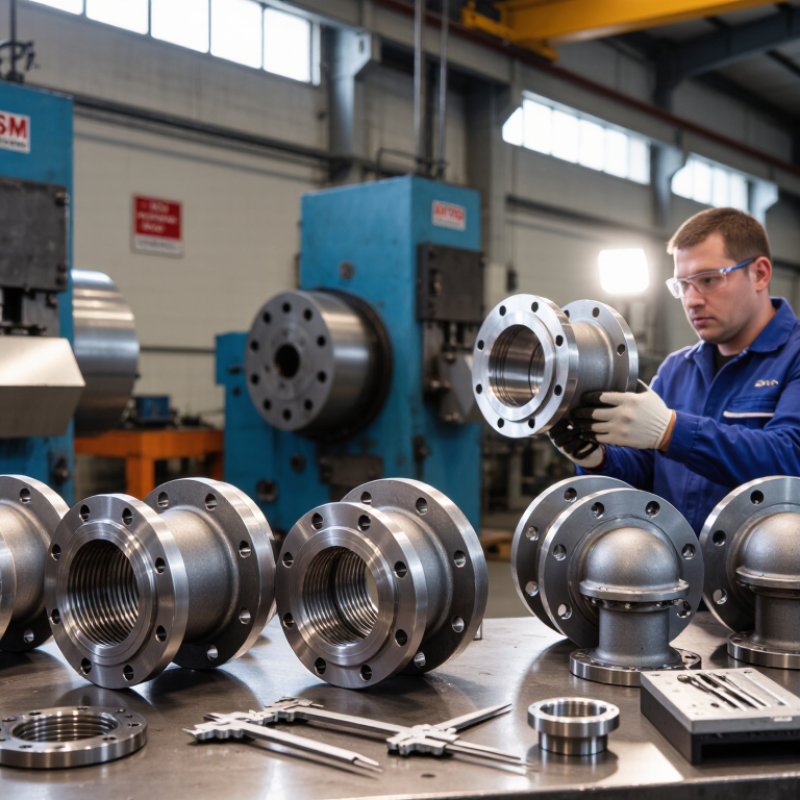
Reliable A105 valve bodies start with controlled material selection and forging. Incoming steel is checked against the purchase specification, including heat identification and available chemistry and mechanical-property records. A heated billet is shaped under a press or hammer, then trimmed and prepared for heat treatment. The exact thermal cycle depends on the required specification and component design; it should be documented, not assumed.
Tips: Keep heat numbers traceable through cutting and machining. Confirm critical dimensions on the drawing before production. Small setup errors can shift a flange face or bore alignment.
After heat treatment, machining establishes the sealing surfaces, bolt holes, and internal passages. Operators check dimensions with calibrated gauges, especially around seat areas and connection faces. Inspection may include visual checks and specified nondestructive testing. Each method has limits. A pressure test can reveal leakage, but it does not replace material verification or dimensional inspection. Test records should identify the body, test conditions, and acceptance criteria. In practice, a rushed handoff between forging and machining can leave gaps in traceability, so review those records before release.
How to Evaluate Chinese A105 Valve Body Manufacturers
When evaluating Chinese A105 valve body manufacturers, start with material traceability, not the brochure. Ask for a material test report linked to the heat number stamped or recorded on each forging. Check that the reported chemistry and mechanical properties match the purchase specification. A neat certificate is useful, but it is not enough.
Look closely at the forging and inspection process. Ask how the supplier controls heating, forming, heat treatment, and machining, then request inspection records for a comparable valve body. These should identify measured dimensions, inspection methods, and any nonconformities. For example, compare the bore, flange face, and bolt-hole positions against the approved drawing. Small errors matter. A sample body can reveal surface finish and machining consistency, though one sample cannot prove long-term process control.
Discuss testing and shipment details before placing an order. Confirm which pressure tests and acceptance criteria apply to the finished valve assembly, since a body alone may not demonstrate complete valve performance. Ask how parts are marked, protected from corrosion, and packed for transport. A remote factory review or independent inspection can help verify records and production practices. It may add time and cost. Still, skipping verification can be the more expensive choice. No single certificate settles every question; clear records and repeatable results build confidence.
Quality Standards, Inspection, and Testing for A105 Valve Bodies
For an A105 valve body, quality checks begin with the purchase specification. ASTM A105/A105M covers forged carbon steel components for pressure service, but the required grade, heat treatment, and supplementary tests depend on the order. Inspectors should compare the material certificate with the part marking and heat number. Traceability matters. A mismatch can delay acceptance, even when the body looks sound.
Visual and dimensional inspections catch practical problems: surface laps, damaged threads, uneven flange faces, and incorrect wall thickness. Measurements should follow approved drawings and tolerances, not guesswork. Chemical analysis and tensile testing help verify the material’s composition and mechanical properties. Testing may use certified samples or other agreed methods. Details matter.
Non-destructive examination, such as magnetic-particle or ultrasonic testing, should be selected according to the specification and risk—not applied automatically. Pressure testing usually applies to the completed valve assembly, under the relevant design requirements; a body-only test is not a substitute for that process. Records should link results to each heat and inspection stage. No checklist is perfect. I have seen small marking errors create more confusion than visible surface flaws, so clear records deserve as much attention as the test itself.
Sourcing and Export Considerations for Global Buyers
For global buyers, sourcing an A105 valve body starts with a clear technical package. Specify pressure class, end connections, dimensions, machining requirements, and the applicable inspection criteria. A105 is a forged carbon steel material, but the finished component still needs to match the valve design and service conditions. Do not rely on a short product description alone. Drawings and revision numbers matter.
Ask the supplier for material test reports linked to heat numbers, plus inspection records for dimensions and any agreed tests. Check that markings on the parts match the paperwork before shipment. A neat certificate file helps, but it cannot replace inspection. When risk or order value warrants it, arrange a pre-shipment review with a qualified inspector. Small mismatches can become expensive after installation.
Export planning deserves equal attention. Confirm the packing list, invoice details, country-of-origin information, and shipping marks with the freight provider before dispatch. Protect machined faces with suitable covers, and use dry, secure packaging to limit corrosion and handling damage. A crate may look sound outside. Open it and check. Transit times, port handling, and document requirements vary by route, so leave room for verification. One weak point in many orders is assuming every detail will be understood without written confirmation. That assumption needs a second look.
China Best A105 Valve Body Manufacturer for Global Buyers? - Sourcing and Export Considerations for Global Buyers
| Sourcing Dimension | What Buyers Should Verify | Practical Considerations |
|---|---|---|
| Material Specification | Confirm that the forged carbon-steel component is supplied to the specified edition of ASTM A105/A105M. | ASTM A105/A105M covers forged carbon-steel piping components for ambient- and higher-temperature service. It is a material specification; the valve design, dimensions, and testing requirements must also be defined separately. |
| Product Definition | Specify valve type, pressure class, end connections, dimensions, face-to-face requirements, and applicable design standard. | A “valve body” is not a complete technical specification. Requirements vary by valve type and design standard, so drawings and purchase documents should identify the intended configuration and service conditions. |
| Material Traceability | Request material test reports linked to the delivered parts by heat number or another agreed traceability method. | Review the reported chemical composition and mechanical test results against the purchase specification. Agree in advance how markings and records will remain linked after machining and packing. |
| Manufacturing Route | Clarify forging method, machining sequence, heat-treatment condition, and inspection stages. | Ask for the approved manufacturing plan and any required process records. Heat treatment and supplementary processing should follow the applicable material specification, design code, and purchase requirements. |
| Inspection and NDE | Define inspection scope, acceptance criteria, inspection hold points, and whether independent inspection is required. | Visual, dimensional, and nondestructive examinations should be specified according to the component design and service needs. Do not assume that a particular NDE method or acceptance level is included unless it is stated in the contract. |
| Pressure Testing | Identify the applicable valve test standard and specify test scope, pressure, duration, and acceptance criteria. | Pressure testing is generally addressed by the relevant valve standard and purchase specification, not by ASTM A105 alone. Clarify whether body-shell and closure testing are required and request documented results when applicable. |
| Quality Documentation | Agree on the required document package before order placement. | A typical package may include a material test report, dimensional inspection records, heat-treatment records where applicable, NDE reports when specified, pressure-test records for completed valves, and a certificate of conformity. |
| Supplier Qualification | Assess technical capability, quality controls, traceability systems, production capacity, and experience with the required product scope. | Review sample records, inspection procedures, nonconformance handling, and change-control practices. A quality-management certificate can support an assessment but does not replace product-specific verification. |
| Order and Lead Time | Obtain a written schedule covering drawing approval, production, inspection, documentation, and dispatch. | Lead time depends on design approval, order quantity, tooling or machining needs, material availability, inspection requirements, and shipping arrangements. Request milestone dates rather than relying only on a single estimated delivery date. |
| Export Packing | Specify preservation, end protection, moisture control, packing method, and shipping marks. | Machined surfaces and openings should be protected against corrosion, impact, and contamination during handling and transit. Packing should suit the transport mode and destination conditions. |
| Shipping Terms | State the agreed Incoterms® rule, named place, shipment mode, and responsibility for export clearance and freight. | The chosen term affects which party arranges transport, insurance, and customs formalities. Confirm the named place precisely and align the commercial invoice, packing list, and transport documents with the contract. |
| Customs and Import | Verify the product description, tariff classification, origin declaration, and destination-country import requirements. | Tariff classification and duties depend on the product’s design, function, materials, and importing jurisdiction. Confirm the appropriate classification with a qualified customs professional or the relevant authority before shipment. |
| Commercial Risk Control | Document specifications, approved drawings, inspection rights, warranty terms, remedies, and change-approval requirements. | Clear purchase documents help prevent disputes about material grade, dimensions, testing, delivery, and documentation. Any substitution or deviation should be reviewed and approved in writing before implementation. |
Note: Requirements depend on valve design, service conditions, applicable codes, contract terms, and destination-country rules. Confirm the current standards and project-specific requirements before ordering.
Article Source:
Siemensstraße 13-15
47608 Geldern
NRW Deutschland
Mail: sale@atmmachinesolutions.com
Head office:
+49 (0) 2831 91021-20
Fax:
+49 (0) 2831 91021-99
SUPPORT and INFO
from 3 p.m. to 6 p.m:
+49 (0) 2831 91021-60
( please ring for a long time )
Monday to Friday
8.00 – 12.30
and 13.00 – 15.00
Visit / collection by appointment only!
➣ Sign up for our newsletter
Benefit from a 20% discount, don’t miss any events and always stay up to date.
To access the actual content, click on the button below. Please note that data will be passed on to third-party providers.
More information