What Is China Best Continuous Carbon Fiber Production Line?
Choosing the best Continuous carbon fiber production line in China requires more than comparing prices or advertised output. A reliable line must deliver stable fiber quality, repeatable tensile strength, and controlled production costs. It should also match the buyer’s precursor type, tow size, capacity, and target applications.
This introduction examines how Chinese production lines are evaluated in practical manufacturing environments. Key sections will cover PAN precursor preparation, stabilization, carbonization, surface treatment, sizing, drying, and precision winding. Temperature control matters at every stage. Tension variation can create uneven fiber performance. A dependable system should include responsive sensors, programmable controls, clear alarm records, and accessible maintenance points.
Independent test data provides stronger evidence than brochures. Buyers should request samples, production records, energy consumption figures, and traceability documents. Factory acceptance testing can reveal problems that appear only during continuous operation. ISO-based quality systems may support consistency, but certification alone does not guarantee excellent fiber.
The “best” line is not automatically the largest one. It is the system that fits technical goals and operating conditions. A smaller line may suit research production, while an integrated high-capacity line may serve automotive or aerospace suppliers. No line is perfect. Even experienced teams can underestimate training, spare parts, cooling requirements, or waste handling. That weakness deserves attention. This guide therefore compares equipment capability, supplier experience, process evidence, service response, and compliance practices. The aim is a balanced assessment that helps readers make a safer, more informed investment decision.
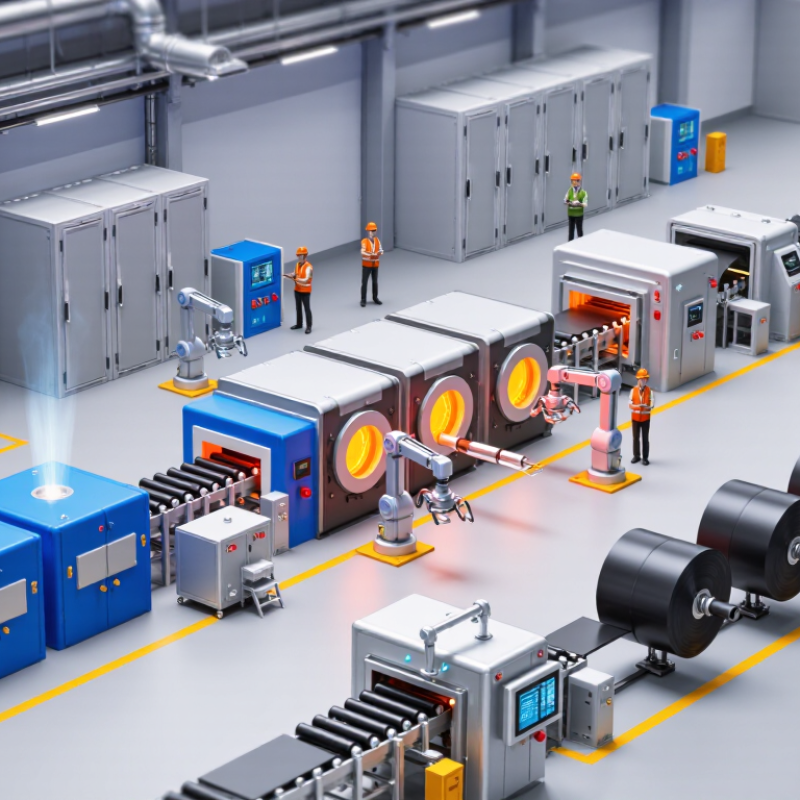
Definition and Role of Continuous Carbon Fiber Production Lines in China
A continuous carbon fiber production line is an integrated system that converts precursor fiber into stable carbon fiber without repeated batch interruptions. In China, these lines commonly connect fiber unwinding, tension control, oxidation, carbonization, surface treatment, drying, and winding. Each section affects the next. A small tension change can create uneven tow spreading or broken filaments.
The line’s main role is to maintain consistent thermal and mechanical conditions at industrial scale. Oxidation ovens stabilize the precursor under controlled air flow and temperature. Carbonization furnaces then remove non-carbon elements through carefully managed heating zones. Operators monitor furnace temperature, line speed, gas flow, and fiber tension in real time. Practical experience matters here. Sensors can detect drift, but skilled technicians still interpret unusual patterns.
A capable Chinese production line should support stable output, traceable inspection, and flexible process adjustment. Quality checks may examine tensile strength, filament continuity, surface energy, sizing uniformity, and spool appearance. These details influence composites used in transportation, wind energy, sporting goods, and industrial equipment. No line is perfect. Energy consumption can remain high, and maintenance around hot furnaces is demanding. Some systems also need better automation for early defect detection. Reliable production therefore depends on equipment design, trained personnel, documented procedures, and honest data review. The best solution is not simply the fastest line. It is the line that repeatedly produces usable fiber under controlled conditions.
Key Stages of the Continuous Carbon Fiber Manufacturing Process
What Is China’s Best Continuous Carbon Fiber Production Line?
Key Stages of the Continuous Carbon Fiber Manufacturing Process
A reliable continuous carbon fiber line begins with precursor preparation. Most industrial systems use PAN fiber, which must remain clean, aligned, and evenly tensioned. Small defects can multiply during later heating. The line usually includes creeling, tension control, surface cleaning, and controlled drying. It sounds simple. It is not.
Stabilization converts the precursor in heated air, often between 200°C and 300°C. The fiber changes color and becomes thermally stable. Carbonization follows in an oxygen-limited furnace, commonly above 1,000°C. High-temperature treatment may exceed 2,000°C when higher modulus is required.
U.S. Department of Energy technical assessments place conventional carbon fiber energy use near 200–300 MJ per kilogram. Furnace sealing and heat recovery therefore deserve serious attention. Many production plans underestimate them.
After carbonization, surface treatment improves bonding with resin. A sizing layer then protects the filaments during winding and composite processing. Online cameras, tension sensors, and oxygen monitoring help reduce breaks.
The International Energy Agency reported global wind capacity additions of about 117 GW in 2023, supporting continued demand for lightweight composite materials. Yet higher output alone does not prove a better line.
A practical evaluation should compare yield, fiber consistency, energy consumption, maintenance access, and verified test data. Some specifications look impressive on paper but remain untested under continuous operation. DOE and Oak Ridge National Laboratory process studies also show why lower-cost production depends on stable heating and reduced energy loss, not speed alone.
Core Equipment and Technologies Used on Chinese Production Lines
What Is China Best Continuous Carbon Fiber Production Line?
China’s strongest continuous carbon fiber production lines combine thermal processing, tension control, surface treatment, and intelligent monitoring. The production route usually begins with precursor unwinding, followed by oxidation and carbonization furnaces. Each furnace needs accurate temperature zones, controlled airflow, and stable fiber tension. Small fluctuations can reduce strength or create uneven shrinkage.
Core equipment matters.
Precision rollers guide thousands of filaments through the line without excessive abrasion. Multi-zone oxidation ovens gradually stabilize the precursor before high-temperature carbonization. Carbonization furnaces use controlled atmospheres to limit unwanted reactions and protect fiber quality. After treatment, an electrochemical or chemical surface system improves resin bonding. A sizing unit then applies a thin protective coating before drying, winding, and packaging.
Control technology connects these stages. Distributed sensors track temperature, line speed, tension, oxygen levels, and coating weight. A programmable control system can adjust operating conditions quickly. Laser or camera inspection may detect broken filaments, fuzz, and winding defects. Production records also support batch traceability and process comparisons.
In practical operation, no line is perfect.
Even advanced equipment needs careful calibration, cleaning, and operator judgment. A stable reading can still hide a gradual roller wear problem. Energy use is another concern, especially in long furnace sections. Engineers should review maintenance access, exhaust treatment, spare components, and data accuracy before selecting a line. A useful evaluation includes trial production, tensile testing, surface analysis, and repeated runs under different speeds.
Applications, Advantages, and Development Trends in China
What Is China’s Best Continuous Carbon Fiber Production Line?
Applications, Advantages, and Development Trends in China
China’s advanced continuous carbon fiber lines combine precursor preparation, oxidation, carbonization, surface treatment, and winding. Each stage needs stable tension and accurate temperature control. In practical production, a small furnace fluctuation can change tensile strength and reduce usable yield. This detail is often underestimated.
Applications are expanding from aerospace structures to wind blades, pressure vessels, electric vehicles, and sporting equipment. The International Energy Agency reported more than 14 million electric cars sold worldwide in 2023. Their lightweight structures create new demand for carbon fiber components. The Global Wind Energy Council also recorded 117 gigawatts of new wind capacity in 2023. Longer blades may require stronger composite reinforcement.
China Chemical Fibers Association industry statistics indicate that China’s carbon fiber capacity exceeded 140,000 tonnes in 2023, although actual output and utilization differed among producers. This gap shows both progress and pressure. Domestic lines can reduce equipment dependence, improve energy efficiency, and support wider tow sizes. Automated quality inspection is becoming essential. Digital monitoring may track tension, furnace temperature, and surface treatment in real time. However, production data use different statistical definitions, so direct comparisons can mislead. Future development will likely focus on lower energy consumption, steadier quality, recyclable composite systems, and better integration with downstream molding. Cost remains important. Performance alone is not enough.