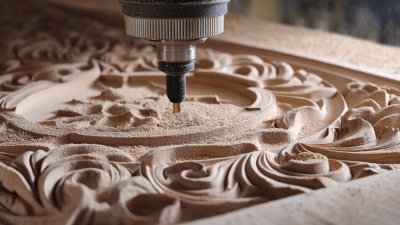


China Top 10 Wood Carving Machine Manufacturers
Choosing a reliable wood carving machine requires more than comparing prices or spindle power. Manufacturers differ in frame strength, control systems, software support, dust collection, and after-sales service. These details affect every cut, from a shallow floral pattern to a deep hardwood relief. A rigid gantry can reduce vibration. A balanced spindle can leave cleaner edges. Even the table surface matters when securing irregular boards.
This guide examines China’s top 10 wood carving machine manufacturers through practical criteria. We consider production experience, machine accuracy, component quality, customization, export capability, and technical support. CNC educator Bob Warfield offers a useful reminder: “The machine is only as good as the process behind it.” That principle remains important for workshops choosing equipment under real production pressure.
Some manufacturers may appear impressive online but provide limited documentation or slow spare-parts support. That weakness deserves attention. A lower purchase price can become expensive when a controller fails during a large order. We also recognize that no supplier is perfect. One company may offer excellent automation, while another provides better training or more flexible customization. Therefore, this ranking should support careful comparison, not replace factory verification. Buyers should request sample carvings, inspect safety features, confirm warranty terms, and test software compatibility before making a decision. Practical evidence is often more valuable than polished advertising.
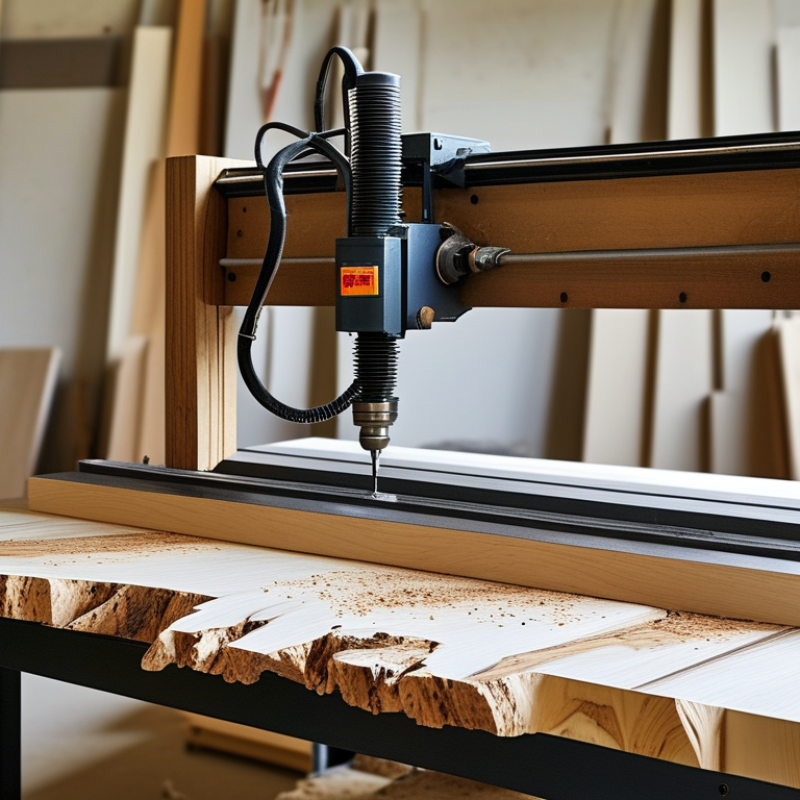
China’s Top 10 Wood Carving Machine Manufacturers
China’s Top 10 Wood Carving Machine Manufacturers deserve evaluation beyond online rankings. A reliable manufacturer should show stable cutting results, clear specifications, and responsive technical support. Factory experience matters. During machine inspections, I look at spindle vibration, frame thickness, cable protection, and dust collection design. Small details often reveal production discipline.
The strongest manufacturers usually offer machines for furniture panels, doors, relief work, and custom signage. Their equipment may include three-axis, four-axis, or rotary configurations. A practical test should use the buyer’s actual wood species and file formats. Pine cuts easily. Dense hardwood exposes weaknesses faster. Operators also need simple control systems, accessible replacement parts, and realistic training. Fast delivery sounds attractive, but installation guidance can matter more.
Rankings remain imperfect. A manufacturer with excellent hardware may provide weak documentation. Another may offer helpful engineers but inconsistent finishing quality. I would not judge a supplier from photographs alone. Ask for sample carvings, maintenance records, accuracy data, and videos from ordinary production floors. Safety guards, emergency stops, and electrical certifications also require careful checking. These points support a more reliable view of China’s Top 10 Wood Carving Machine Manufacturers, though each buyer should verify current performance before ordering.
Selection Criteria for Ranking Wood Carving Machine Manufacturers
Selection Criteria for Ranking China’s Top 10 Wood Carving Machine Manufacturers
A credible ranking begins with verified manufacturing experience, not attractive catalog images. We examine production history, factory capacity, and the team’s technical knowledge. Factory visits can reveal assembly quality, wiring standards, dust protection, and component storage. These details often matter more than polished advertising. A manufacturer should also explain spindle options, drive systems, control software, and compatible materials in practical terms.
Performance testing is another key measure. We compare cutting accuracy, surface smoothness, vibration, working speed, and repeatability. Test pieces should include hardwood, plywood, and detailed relief patterns. Operators record setup time and observe how the machine performs after extended use. Safety systems, emergency stops, electrical protection, and documented maintenance procedures receive serious attention. Reliable technical support matters too, especially when customers need remote troubleshooting or replacement parts.
The ranking also considers certifications, warranty clarity, delivery consistency, training, and total ownership cost. Customer feedback is useful, but it can be incomplete or influenced by installation conditions. One test cannot represent every workshop. That limitation deserves honest acknowledgment. A machine may perform well in a controlled factory and struggle in a dusty production room. For this reason, we balance laboratory results, field reports, supplier transparency, and long-term service records. Price remains relevant, but the cheapest quotation may hide software limitations, weak support, or costly downtime.
Profiles of the Top 10 Chinese Wood Carving Machine Manufacturers
China’s wood carving machine sector includes several specialized manufacturers with different strengths. Profile One focuses on compact CNC routers for furniture workshops and small studios. Profile Two builds heavy gantry machines for large doors, screens, and architectural panels. Profile Three emphasizes four-axis carving, helping operators shape curved chair legs and decorative columns.
Profile Four develops machines with automatic tool-changing systems for repeated production. Profile Five supplies water-cooled spindle options, which can reduce heat during long carving cycles. Profile Six concentrates on relief carving, where consistent depth matters more than extreme cutting speed. Profile Seven offers entry-level equipment for training centers, although basic models may require more manual calibration.
Profile Eight serves custom furniture makers with wider working tables and vacuum beds. Profile Nine combines carving and cutting functions for signboards, templates, and interior components. Profile Ten provides customized machine layouts for factories with unusual material sizes. In practical evaluations, buyers should inspect spindle noise, gantry movement, dust collection, and emergency controls. A clean test cut reveals more than a polished brochure. Ask for sample results in hardwood, plywood, and softer timber. Some suppliers describe precision generously, yet actual performance can change with tool quality and workshop temperature. That deserves careful checking. Reliable manufacturers explain maintenance intervals, software compatibility, operator training, and replacement-part availability. They also share realistic production limits instead of promising effortless results. Experiences from installers and long-term users remain valuable, but they should be compared with documented testing.
Key Technologies and Machine Types They Offer
China Top 10 Wood Carving Machine Manufacturers
China’s leading wood carving machine manufacturers offer equipment for furniture, doors, panels, signs, and artistic relief work. Their common technologies include CNC control, servo motors, precision ball screws, rack-and-pinion drives, and automatic tool changers. These systems help maintain stable cutting paths during long production runs.
Three-axis CNC routers remain popular for flat panels and simple reliefs. Four-axis machines can rotate workpieces, making them useful for columns, chair legs, and cylindrical carvings. Five-axis models provide greater freedom for complex sculptures and deeply curved furniture parts. Dust extraction ports, vacuum tables, and water-cooled spindles also improve daily operation. Dust changes everything.
Many manufacturers now integrate CAD/CAM software, toolpath simulation, remote diagnostics, and automatic height sensing. These features reduce setup errors and support repeatable results. However, software quality matters as much as hardware. A powerful spindle cannot correct a poorly designed toolpath. Practical buyers should request test cuts using similar wood, especially hardwood with uneven grain.
Machine selection still requires careful judgment. A higher axis count is not automatically better for every workshop. Larger machines may consume more space, power, and maintenance time. No machine is perfect. Check cutting accuracy, frame rigidity, emergency protection, training, spare-part availability, and service response before purchase. Ask for repeatability data and inspect sample carvings under close light. Small surface marks can reveal vibration, incorrect feeds, or unstable clamping.
How to Compare China’s Wood Carving Machine Manufacturers
Comparing China’s wood carving machine manufacturers requires more than checking catalog prices. In my machine evaluations, the useful questions begin with actual production needs. Ask whether the manufacturer builds machines for solid wood, MDF, doors, or detailed relief work. A machine may look impressive online but perform poorly on dense hardwood.
Request a sample-cut test using your own file and material. Examine edge quality, carving depth, dust removal, and repeatability after several hours. Check spindle power, working-table accuracy, controller compatibility, and available tool sizes. Small details matter. Ask for recorded test data, not only polished videos. A factory visit can reveal assembly quality, wiring protection, storage conditions, and the technicians’ practical knowledge.
Compare the full ownership cost, including packaging, installation, training, spare parts, and response time. A low quotation may exclude essential components. Confirm electrical specifications and safety documentation before payment. Review the warranty in writing, especially for the spindle, motors, controller, and linear guides. Ask how quickly replacement parts can ship.
Supplier age can offer useful evidence, but it is not proof of quality. A newer manufacturer may have better engineering and weaker after-sales support. An established factory may still use outdated designs. I once trusted a detailed specification sheet too quickly; the machine later needed adjustments for a material the seller had claimed to support. That mistake changed my process. Compare verified performance, transparent communication, and service capacity together.
| Profile | Typical Product Focus | Common Working Area | Spindle Power Options | Axis Configuration | Positioning Accuracy | Control and Software Compatibility | Typical Production Lead Time | Best Comparison Consideration |
|---|---|---|---|---|---|---|---|---|
| Manufacturer Profile 01 | Flatbed CNC routers for furniture panels, doors, signage, and general woodworking. | 1,300 × 2,500 mm to 2,000 × 3,000 mm | 3.2–9.0 kW air- or water-cooled spindle | 3-axis; optional rotary axis | Approximately ±0.05–0.10 mm, depending on machine configuration | Commonly compatible with G-code workflows and major CAD/CAM formats such as DXF, AI, and STL. | Approximately 15–35 working days after technical confirmation | Check frame rigidity, rack-and-pinion quality, vacuum-table design, and service response time. |
| Manufacturer Profile 02 | Heavy-duty CNC routers for solid wood, hardwood furniture components, and large decorative panels. | 1,500 × 3,000 mm to 2,000 × 4,000 mm | 6.0–12.0 kW spindle | 3-axis or 4-axis | Approximately ±0.05–0.08 mm | Industrial CNC controller with standard USB, network, or offline file-transfer functions. | Approximately 20–45 working days | Compare steel gantry construction, drive-motor torque, dust extraction, and continuous-duty performance. |
| Manufacturer Profile 03 | Compact CNC carving machines for workshops, schools, makerspaces, and small-batch production. | 600 × 900 mm to 1,300 × 2,500 mm | 1.5–4.5 kW spindle | 3-axis | Approximately ±0.08–0.15 mm | Suitable for common CAD/CAM software and basic 2D and 3D toolpath generation. | Approximately 10–25 working days | Compare footprint, electrical requirements, operator training, and ease of maintenance. |
| Manufacturer Profile 04 | 4-axis CNC carving systems for cylindrical legs, columns, balusters, and furniture parts. | 1,300 × 2,500 mm bed; rotary diameter commonly 200–400 mm | 3.2–7.5 kW spindle | 3-axis with rotary attachment or integrated 4-axis | Approximately ±0.05–0.10 mm | Supports rotary-axis post-processing and standard 3D relief toolpaths. | Approximately 20–40 working days | Verify rotary-axis indexing accuracy, chuck design, tailstock support, and toolpath compatibility. |
| Manufacturer Profile 05 | Automatic tool-changing routers for mixed production, cabinet components, and repeated job orders. | 1,300 × 2,500 mm to 2,000 × 3,000 mm | 6.0–12.0 kW ATC spindle | 3-axis; 4-axis options available | Approximately ±0.05–0.08 mm | Tool libraries, automatic tool-length measurement, nesting, and multi-tool production workflows. | Approximately 25–50 working days | Compare tool-change time, magazine capacity, collet standards, and automatic calibration functions. |
| Manufacturer Profile 06 | High-speed carving machines for relief artwork, plaques, ornaments, and detailed 3D wood sculpture. | 900 × 1,500 mm to 1,500 × 3,000 mm | 3.2–6.0 kW high-speed spindle | 3-axis or 4-axis | Approximately ±0.03–0.08 mm under suitable operating conditions | Optimized for 3D relief machining, raster finishing, and fine-detail toolpaths. | Approximately 15–35 working days | Compare spindle runout, linear-guide quality, acceleration, vibration control, and finishing results. |
| Manufacturer Profile 07 | Hybrid CNC systems combining routing, drilling, cutting, and nesting for panel processing. | 1,300 × 2,500 mm to 2,100 × 3,100 mm | 6.0–9.0 kW spindle, with optional drilling unit | 3-axis with auxiliary drilling or cutting functions | Approximately ±0.05–0.10 mm | Supports nesting software, barcode workflows, automatic work-origin setting, and production optimization. | Approximately 30–60 working days | Compare material handling, vacuum zoning, drilling accuracy, nesting efficiency, and workflow integration. |
| Manufacturer Profile 08 | Large-format CNC routers for architectural woodwork, oversized doors, screens, and carved wall panels. | 2,000 × 4,000 mm to 2,500 × 6,000 mm | 6.0–15.0 kW spindle | 3-axis; optional 4-axis | Approximately ±0.08–0.15 mm due to increased travel length | Standard industrial CNC control with large-file handling and segmented vacuum-table control. | Approximately 30–70 working days | Compare installation requirements, gantry leveling, table flatness, shipping dimensions, and site commissioning. |
| Manufacturer Profile 09 | Industrial 5-axis or advanced 4-axis machines for complex sculpture, molds, and compound-surface carving. | 1,300 × 2,500 mm to 2,000 × 4,000 mm | 8.0–15.0 kW spindle | 4-axis or 5-axis | Approximately ±0.03–0.08 mm, subject to calibration and machine geometry | Requires advanced CAM post-processors, 3D simulation, and multi-axis collision checking. | Approximately 45–90 working days | Compare kinematic accuracy, rotary-table load capacity, post-processor support, and operator training. |
| Manufacturer Profile 10 | Customized CNC carving lines for OEM projects, high-volume production, and application-specific automation. | Customized; commonly 1,300 × 2,500 mm or larger | 3.2–15.0 kW, selected according to material and throughput | 3-axis, 4-axis, or 5-axis | Specified according to application, generally about ±0.03–0.15 mm | May include robotic loading, automatic tool measurement, vision systems, ERP connectivity, and custom interfaces. | Approximately 45–120 working days | Compare engineering capability, documented acceptance criteria, spare-parts planning, integration support, and warranty terms. |
Note: The specifications shown are practical comparison ranges commonly used for Chinese wood carving machine projects. Final values depend on machine size, configuration, materials, control system, options, and acceptance testing; buyers should request a detailed technical specification and sample-cut verification before purchase.
Related Posts
-
Unlocking Creativity with CNC Wood Carving Machines for Unique Artistic Expressions
-

2025 Yearly Trends in Best Wood Carving Machinery You Should Know
-
Unlocking Creativity: How a CNC Wood Router Transforms Your Woodworking Projects
-
What is a CNC wood cutting machine and how does it work?
-
Best CNC Wood Cutting Machine for Global Buyers Solutions?
-
Why Choose a CNC Wood Router Machine for Your Woodworking Needs?

Siemensstraße 13-15
47608 Geldern
NRW Deutschland
Mail: sale@atmmachinesolutions.com
Head office:
+49 (0) 2831 91021-20
Fax:
+49 (0) 2831 91021-99
SUPPORT and INFO
from 3 p.m. to 6 p.m:
+49 (0) 2831 91021-60
( please ring for a long time )
Monday to Friday
8.00 – 12.30
and 13.00 – 15.00
Visit / collection by appointment only!
➣ Sign up for our newsletter
Benefit from a 20% discount, don’t miss any events and always stay up to date.
To access the actual content, click on the button below. Please note that data will be passed on to third-party providers.
More information