



How to Choose a Double Spiral Twin Shaft Concrete Mixer?
Concrete production depends on consistent batching, reliable mixing, and equipment suited to the actual mix. The Global Cement and Concrete Association’s 2021 Concrete Future roadmap estimates that about 14 billion cubic metres of concrete are produced worldwide each year. That scale makes dependable mixing a production concern, not a minor equipment detail. The International Energy Agency’s 2023 cement-sector analysis attributes roughly 7% of global CO₂ emissions to cement production. This figure describes the wider industry, not the environmental performance of any individual mixer. The distinction matters.
A Double Spiral Twin Shaft Concrete Mixer may suit demanding production, but its name alone cannot confirm it is the right choice. Compare usable batch volume, mixing time, installed power, discharge method, and access to wear parts. Check performance using your own target mix, including its aggregate grading and moisture variation. Do not size by nominal capacity alone. Ask for test results. Then inspect the mixing arms, liners, seals, and maintenance access. A powerful unit can still underperform if the batch size or recipe assumptions are wrong. No mixer is perfect. Supplier data can also be difficult to compare, so buyers should verify what each figure measures. This guide focuses on practical checks that connect published specifications with real plant needs.
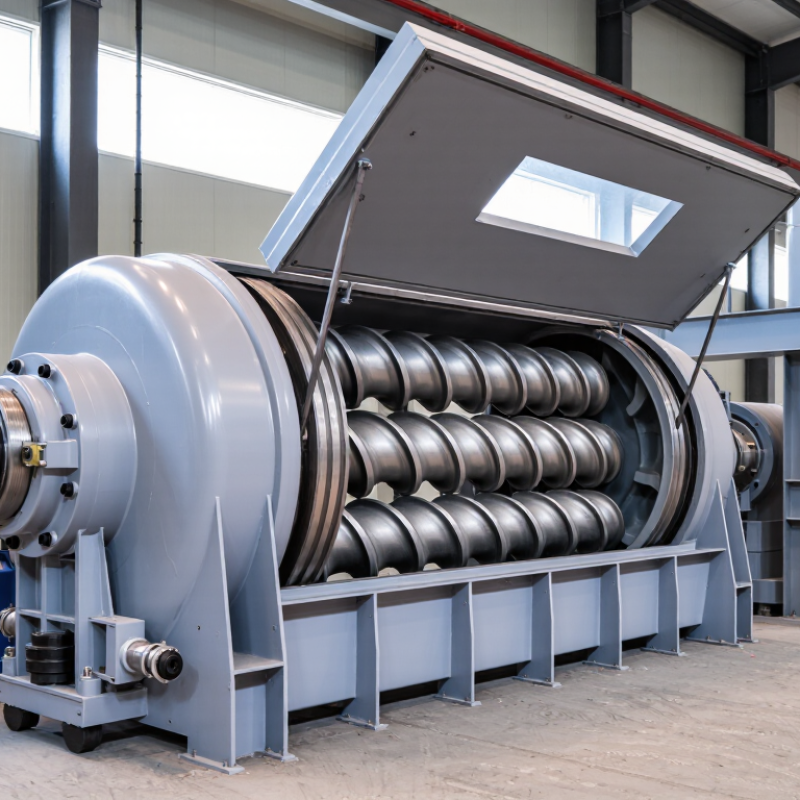
Understand the Design and Working Principle of a Double Spiral Twin Shaft Mixer
A double spiral twin shaft concrete mixer has two horizontal shafts inside a rigid mixing trough. Mixing arms and replaceable paddles are arranged along each shaft in a spiral pattern. The shafts usually rotate in opposite directions, drawing material toward the central mixing zone and lifting it across the trough. This is not simply a pair of screws conveying concrete from one end to the other. The paddles repeatedly fold and redistribute the batch.
As the shafts turn, aggregates, cement, and water move through overlapping paths. The action helps disperse moisture and coat coarse particles, while the trough walls guide material back into circulation. Look closely at shaft spacing, paddle angle, and the gap between paddles and liners; these details affect flow and wear. The exact pattern varies by machine design.
For selection, compare the mixer’s usable batch volume with your actual production cycle, not just its advertised capacity. Check the permitted aggregate size, access for cleaning, liner replacement, and shaft-seal maintenance. A mixer that produces a uniform batch in a test may behave differently with dry or poorly graded materials. That detail is easy to overlook. Ask how mixing time is measured and inspect sample batches under your expected operating conditions.
| Selection Dimension | Design and Working Principle | What to Check When Choosing | Practical Reference |
|---|---|---|---|
| Shaft arrangement | Two horizontal shafts rotate in opposite directions. Mixing arms and blades move material through the chamber and across the space between the shafts. | Confirm the rotation direction, shaft layout, and mixing-arm arrangement match the intended concrete mix and batch size. | The counter-rotating action helps create intensive circulation and reduces stagnant areas when the mixer is correctly loaded and maintained. |
| Spiral or paddle configuration | Spiral-arranged arms and mixing blades lift, fold, and push material along the chamber while the two shafts produce intersecting mixing flows. | Review blade shape, spacing, adjustment method, and the availability of replaceable wear parts. Ask for test results using a comparable mix. | Blade geometry affects material movement, mixing uniformity, power demand, and wear; no single arrangement is ideal for every mix. |
| Mixing uniformity | Aggregates, cement, water, and admixtures are repeatedly redistributed by forced mechanical action rather than relying on a rotating drum. | Check whether the mixer can handle the required slump, aggregate grading, and admixture sequence. Request a uniformity test where consistency is critical. | Uniformity depends on the mixer design, loading sequence, batch size, mixing time, and material properties. |
| Batch capacity and output | The mixing chamber processes a defined batch; the effective output per hour also depends on loading, mixing, discharge, and plant-cycle time. | Compare rated batch volume with the required compacted concrete output. Check whether the quoted capacity is a mixing volume or a finished-concrete volume. | Do not estimate production from mixing time alone. Include loading, discharge, and the wider batching-plant cycle. |
| Mixing time | Mixing begins after the ingredients have entered the chamber and continues until the concrete reaches the required consistency. | Use the supplier’s recommended cycle as a starting point, then verify performance with the actual recipe and production process. | There is no universal mixing time: mix design, moisture, aggregate size, admixtures, and loading sequence all affect the required duration. |
| Drive system and motor power | A motor and transmission system drive both shafts, commonly through a synchronized gearbox arrangement. | Check installed power, starting method, overload protection, transmission access, and whether the drive is suitable for frequent starts and heavy-duty operation. | Required power varies with chamber size, mix resistance, operating duty, and design. Compare complete technical specifications rather than motor power alone. |
| Maximum aggregate size | Material must pass through the charging opening and move freely around the blades and inside the mixing chamber. | Confirm the permitted maximum aggregate size and check the opening, blade clearances, and discharge arrangement against the project mix. | Oversized aggregate can obstruct material movement or increase wear; follow the mixer’s stated limits. |
| Discharge and residual material | A bottom discharge gate releases the mixed concrete into a receiving hopper, skip, or truck-loading system. | Inspect gate size, opening mechanism, sealing, discharge speed, and compatibility with the plant layout. | A well-matched discharge arrangement helps reduce delays and material build-up between batches. |
| Shaft seals and bearings | Sealing components help keep cement paste and water out of the bearing areas, while bearings support rotating shafts under load. | Ask how seals are inspected, adjusted, and replaced, and whether bearing access is practical for routine maintenance. | Seal condition is important in abrasive, wet concrete service. Follow the operating and maintenance instructions for inspection intervals. |
| Wear protection | Mixing blades, arms, and chamber liners contact abrasive aggregates and cementitious material during operation. | Check liner and blade materials, thickness, replacement access, and whether wear parts can be changed without extensive dismantling. | Wear rate depends on aggregate hardness, mix design, operating hours, and maintenance practices. |
| Cleaning and maintenance | Access doors and wash-down arrangements allow operators to remove concrete residue and inspect the chamber. | Check safe access, cleaning-port locations, lockout provisions, and the manufacturer’s procedure for preventing hardened build-up. | Never enter or service a mixer while it can start. Isolate and lock out the power source before maintenance. |
| Installation and controls | The mixer operates as part of a batching system, coordinating material feeding, water addition, mixing, and discharge. | Verify foundation and clearance requirements, electrical supply, control-system interfaces, and available service access. | Confirm site conditions and plant integration before ordering to avoid installation and commissioning delays. |