How to Choose LED Tunnel Lights in 2026?
Choosing a Led Tunnel Light in 2026 is a safety decision, not merely a purchasing exercise. A tunnel fixture must guide drivers through bright entrances, dark interiors, wet pavement, dust, and changing traffic conditions. It should deliver stable illumination without harsh glare or distracting flicker. As lighting specialist Dr. James Benya has stated, “Good lighting puts light where people need it, not simply where fixtures are easy to install.” That principle remains highly relevant for tunnel projects.
This guide examines the details that are easy to overlook. We will compare photometric performance, beam distribution, color temperature, optical shielding, IP and IK protection, thermal design, dimming controls, and emergency operation. Entrance zones may require stronger output during daylight. Interior zones need consistent brightness and comfortable visual adaptation. A poorly selected Led Tunnel Light can create dark patches between fixtures. It may also increase energy use and maintenance costs.
Real conditions matter. Water can collect near a mounting bracket. Dust can cover a lens. A driver may fail during a winter night. Therefore, product data should be checked against actual tunnel drawings, traffic speed, ceiling height, and cleaning schedules. No selection is perfect. Even experienced teams can overestimate theoretical efficiency. Field testing remains valuable.
The best choice balances safety, visibility, durability, energy performance, and long-term serviceability. This article will help buyers ask sharper questions before approving a tunnel-lighting system.
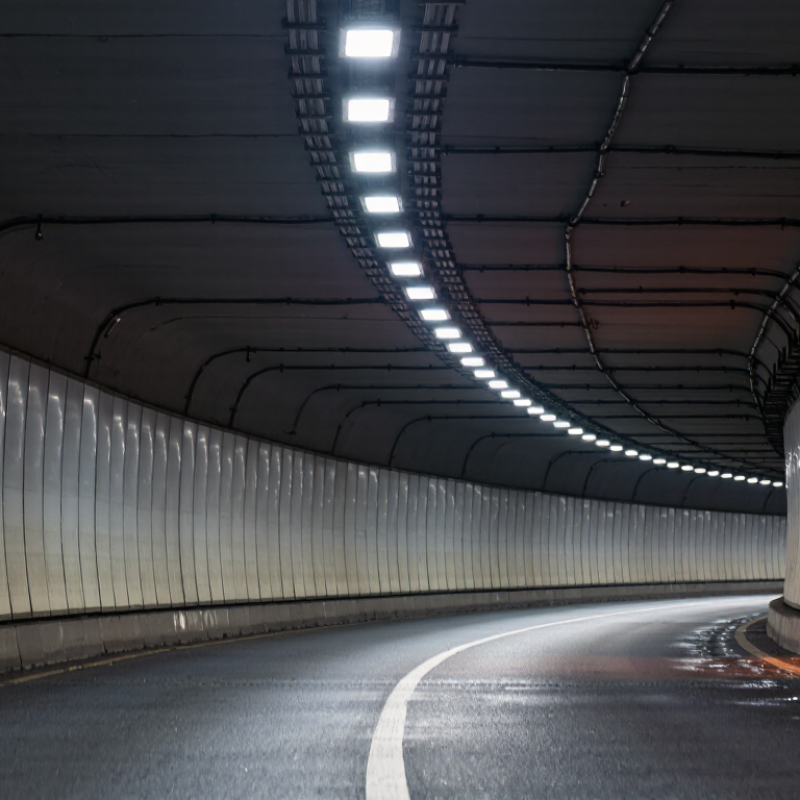
Define Tunnel Lighting Requirements and Safety Standards
How to Choose LED Tunnel Lights in 2026?
Define the tunnel before choosing the fixture. Record tunnel length, lane count, ceiling height, driving direction, and road speed. Note entrances, curves, slopes, emergency bays, and pedestrian routes. Daylight changes sharply near the portal. Therefore, entrance, transition, interior, and exit zones need different lighting levels. Measure existing luminance with calibrated equipment, not visual guesswork. Vehicle speed and traffic density also affect safe lighting requirements. A poorly measured tunnel can create glare, dark patches, or delayed driver adaptation.
Daylight changes sharply near the portal.
Safety standards must guide every specification. Check current national road-lighting rules, electrical codes, fire requirements, and tunnel authority procedures. Confirm photometric performance, uniformity, glare control, color rendering, ingress protection, impact resistance, and thermal safety. Emergency lighting should support evacuation and maintenance access during power failure. Control systems need tested dimming schedules and reliable backup communication. Requirements differ by region. Local approval remains essential. I have seen projects overfocus on wattage, while beam distribution caused the real problem. A perfect specification is rare.
Tips: Build a zone-by-zone lighting schedule before requesting quotations. Ask for measured photometric files, not only lumen claims. Test one section at night and during daylight. Inspect flicker, glare, shadows, and surface visibility from a driver’s position. Leave maintenance clearance around drivers and connections. Review the design after seasonal changes, because assumptions about sunlight may prove wrong. Keep records of measurements, inspections, and corrective actions for future audits.
Evaluate LED Performance, Efficiency, and Light Distribution
How to Choose LED Tunnel Lights in 2026?
LED tunnel selection should begin with measured performance, not advertised wattage. The International Energy Agency reports that lighting uses about 15% of global electricity. Efficient tunnel fixtures can reduce demand, but only when illumination remains consistent. Check maintained efficacy in lumens per watt, not initial laboratory output. The U.S. Department of Energy notes that LED performance depends strongly on temperature, optics, and control systems. A fixture producing 150 lm/W in a cool laboratory may perform differently above a tunnel ceiling.
Light distribution is equally important. CIE 88 recommends designing tunnel lighting around adaptation, visibility, and road-surface luminance. Ask for photometric files and review L20 assumptions at the entrance zone. Examine longitudinal uniformity, overall uniformity, glare, and disability glare. A narrow beam may save energy, yet create bright patches between vehicles. That is risky. Wide optics can improve visual comfort, but they may waste light on walls or equipment. My field experience suggests testing one representative section before full installation. Simulations often look cleaner than real tunnels.
Thermal management deserves close attention. Measure junction-temperature data, surge protection, flicker, and lumen maintenance under actual operating conditions. The DOE’s LED Lighting Facts research shows that rated life is not simply a calendar promise; temperature and driver conditions change outcomes. Controls should reduce output during low traffic, while preserving safe transition zones. I would also question any perfect forecast. Dust, aging lenses, and maintenance access can defeat an excellent design.
Choose the Right Fixture Design and Protection Rating
In 2026, tunnel lighting selection should begin with fixture design, not a headline lumen number. A recurring field lesson is simple: glare often comes from poor optics, not insufficient output. Choose a narrow, asymmetric distribution that follows the lane geometry. Add a recessed lens, smooth housing, and replaceable driver access. CIE 88:2019 evaluates tunnel visibility through luminance and adaptation zones, rather than average illuminance alone. PIARC publication 2019R04EN also links lighting design with speed, traffic flow, and visual adaptation.
Protection rating must match the washing routine. Under IEC 60529, IP66 means dust-tight protection and resistance to powerful water jets. IP67 adds temporary immersion, but it does not automatically improve jet resistance. That difference matters near drainage channels. For exposed portals, inspect gasket compression, cable glands, breather membranes, and corrosion resistance. Specify an impact rating separately, such as IK08 or IK10, under IEC 62262. A sealed fixture can still fail early if heat remains trapped behind the mounting rail.
Energy figures deserve skepticism. The International Energy Agency’s Energy Efficiency 2023 report states that LEDs exceed half of global lighting sales, yet efficiency depends on optics, drivers, and cleaning intervals. A high-efficacy module may waste light above the roadway. Request photometric files, operating-temperature data, surge test results, and maintenance records. I would also question my preference for IP69K. It may be excessive where routine cleaning is gentle. Overprotection can increase cost, weight, and thermal risk.
Assess Total Cost, Reliability, and Supplier Support
How to Choose LED Tunnel Lights in 2026?
Total cost starts with more than the purchase price. The U.S. Department of Energy reports that LED lighting can use at least 75% less energy and last up to 25 times longer than incandescent lighting. However, tunnel calculations must include drivers, cleaning, access equipment, controls, and electricity tariffs. A low-priced luminaire may require earlier replacement or costly night closures. Ask suppliers for five-year energy models, not only lumen and wattage claims. Include measured system efficacy, power factor, and dimming performance.
Reliability depends on heat, moisture, vibration, and maintenance access. Specify LM-80 and TM-21 evidence for LED packages, plus tested IP and impact ratings. CIE 88 guidance also stresses tunnel luminance, visibility, and maintenance conditions. Those details affect real safety and operating costs. Review L70 lifetime, driver failure data, surge protection, and temperature testing. Rated life alone is not enough. A spreadsheet can still lie.
Supplier support deserves equal attention. Request photometric files, installation drawings, replacement schedules, and batch consistency records. Confirm spare-driver availability and response times before signing. The U.S. DOE’s solid-state lighting research reports identify efficacy, thermal management, and controls as continuing performance priorities. In practice, support quality can decide whether a fault lasts hours or weeks. I would also test one installation through a wet season. Laboratory results are useful, but tunnel dust and condensation remain uncomfortable realities.