| Two-Piece Aluminum Impact-Extrusion Line | Forms the can body and integral bottom from a single aluminum slug through impact extrusion, followed by trimming, washing, printing and internal coating. | - Aluminum slugs
- Water-based or solvent-based external coatings
- Internal protective lacquer
| - Seamless aluminum aerosol cans
- Common diameters: approximately 35–66 mm
- Common heights: approximately 80–300 mm
| Approximately 60–250 cans per minute, depending on can size, decoration process and line configuration. | - Personal-care aerosols
- Deodorants and shaving products
- Household and automotive products
- Premium visual packaging
| - Aluminum grade and slug compatibility
- Required wall thickness and pressure rating
- Decoration quality and color-change time
- Scrap recovery and energy consumption
|
| Three-Piece Tinplate Aerosol Can Line | Forms a body from a rectangular metal sheet, creates a welded side seam, and attaches the top and bottom ends by double seaming. | - Tinplate
- Electrolytic chromium-coated steel
- Welding wire or electrical seam-welding systems
- Protective lacquers and coatings
| - Welded steel aerosol cans
- Standard cylindrical shapes
- Multiple diameters and heights
| Approximately 100–600 cans per minute for high-volume body-making and seaming systems; actual speed depends on diameter, seam design and inspection requirements. | - Paints and coatings
- Insecticides
- Air fresheners
- Industrial and household chemicals
| - Weld integrity and seam strength
- Steel thickness and coating compatibility
- Pressure-resistance requirements
- Ability to handle several can dimensions
|
| Can Necking and Beading Machine | Reduces or shapes the open end of the can and forms beads or profiles that support valve-cup attachment and improve structural stability. | - Aluminum or tinplate aerosol cans
- Coated or printed can bodies
| Necked cans prepared for standard valve-cup and actuator assemblies. | Approximately 100–500 cans per minute, depending on the number of forming stations and the required neck profile. | - Standard aerosol packaging
- High-pressure formulations
- Products requiring accurate valve seating
| - Neck diameter tolerance
- Bead geometry
- Protection of printed and coated surfaces
- Changeover time between formats
|
| Internal Lacquer and External Coating Line | Applies protective coatings to prevent product interaction, corrosion and loss of package integrity; external coatings also provide decoration and abrasion resistance. | - Epoxy, acrylic or other approved protective lacquers
- Water-based or solvent-based decorative coatings
- Aluminum and steel can bodies
| Two-piece and three-piece aerosol cans requiring internal chemical resistance or external decoration. | Commonly matched to the can-making line, from approximately 100 to more than 500 cans per minute. | - Acidic or alkaline formulations
- Water-based products
- Solvent-containing products
- Decorative retail aerosols
| - Coating compatibility with the formulation
- Curing temperature and oven capacity
- VOC-control requirements
- Coating thickness and pinhole detection
|
| Printing and Decoration Machine | Prints graphics, regulatory information, batch areas and brand-independent product information directly onto metal can bodies or applies labels. | - Coated aluminum
- Tinplate
- Metal-compatible inks and varnishes
| Cylindrical aerosol cans with one-color to multi-color decoration requirements. | Approximately 100–600 cans per minute for rotary printing systems; speed varies with print stations, curing and inspection. | - Personal care
- Household products
- Automotive chemicals
- Paint and technical aerosols
| - Number of print colors
- Registration accuracy
- Ink adhesion and curing
- Digital or conventional artwork changeover needs
|
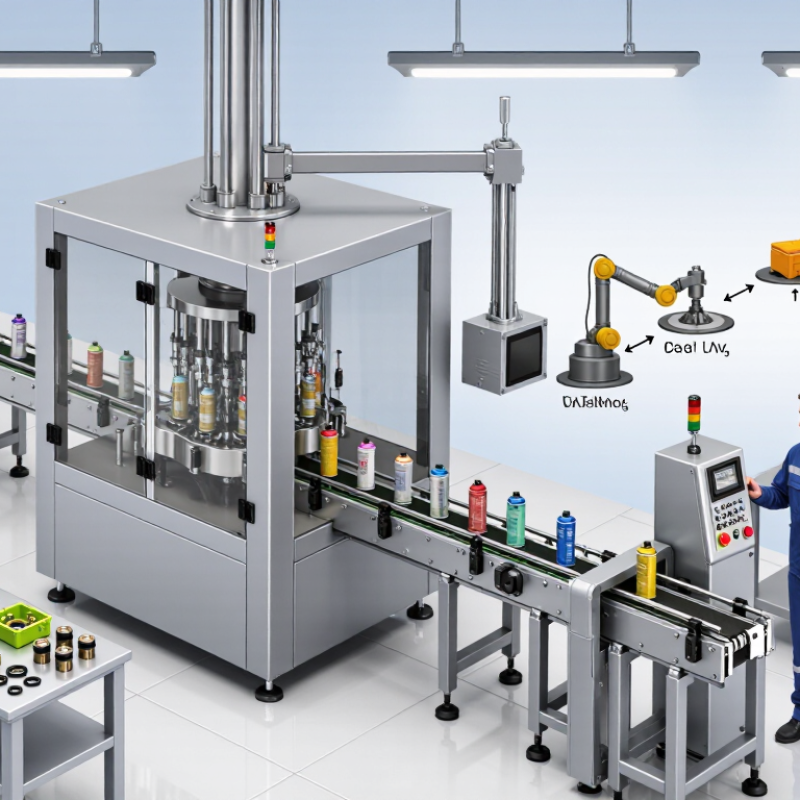
| Aerosol Filling Line | Fills the product concentrate into the can, inserts the valve, crimps the valve cup, adds propellant and completes final assembly. | - Aluminum or steel cans
- Liquid or viscous product concentrates
- Compressed gases or liquefied propellants
| Most standard aerosol cans, including personal-care, household, industrial and technical formats. | Approximately 30–300 cans per minute for many commercial lines; specialized high-speed systems may exceed this range. | - Deodorants
- Air fresheners
- Insecticides
- Paints and lubricants
- Foams and cleaning products
| - Product viscosity and foaming behavior
- Filling accuracy
- Propellant type and handling method
- Explosion protection and ventilation
- Cleaning and changeover procedures
|
| Valve Insertion and Crimping Machine | Places the aerosol valve assembly on the can and crimps the valve cup to create a controlled mechanical seal. | - Aluminum or steel aerosol cans
- Metal valve cups
- Rubber or elastomeric gaskets
| Standard aerosol cans using one-inch or other application-specific valve systems. | Approximately 60–400 cans per minute, depending on valve design, crimp specification and automation level. | - All pressurized aerosol products
- Metered-dose applications
- Continuous-spray applications
- Foam and mousse products
| - Crimp diameter and depth control
- Valve orientation
- Seal reliability
- Automatic rejection of missing or damaged valves
|
| Propellant Gassing Machine | Introduces liquefied or compressed propellant into the filled and sealed can using a pressure-controlled process. | - Hydrocarbon propellants
- Dimethyl ether
- Compressed air or nitrogen
- Other application-approved propellants
| Pressurized aerosol cans requiring controlled propellant dosage and safe gas handling. | Approximately 30–250 cans per minute, depending on propellant method, can size and safety system design. | - Personal-care aerosols
- Household sprays
- Industrial lubricants
- Paints and insecticides
| - Propellant accuracy and repeatability
- Hazardous-area electrical design
- Gas detection and ventilation
- Pressure control and emergency shut-off
|
| Water-Bath Leak Tester | Tests filled aerosol cans in a heated water bath to reveal leakage, abnormal deformation or pressure-related defects before packing. | - Filled aluminum aerosols
- Filled steel aerosols
- Pressurized products
| Pressurized cans requiring final leak and deformation verification. | Approximately 30–300 cans per minute, depending on immersion time, bath length and inspection method. | - Consumer aerosols
- Flammable formulations
- Industrial and technical sprays
| - Bath temperature control
- Residence time
- Automatic rejection and drying
- Compliance with applicable aerosol safety standards
|
| Non-Destructive Leak and Pressure Inspection System | Uses pressure decay, vacuum, force, vision or other non-destructive methods to detect leaks and verify closure quality without immersing every can in heated water. | - Filled or empty aerosol cans
- Aluminum and steel packages
| Standard and specialty cans where continuous, automated quality monitoring is required. | Approximately 60–400 cans per minute, depending on the inspection technology and test sensitivity. | - High-volume production
- Flammable or temperature-sensitive products
- Pharmaceutical and precision applications
| - Required leak-detection limit
- False-rejection rate
- Integration with line controls
- Data logging and traceability
|
| Actuator, Cap and Dip-Tube Assembly Machine | Fits the actuator, protective cap and dip tube after filling, creating a ready-to-pack aerosol product. | - Plastic actuators and caps
- Polyethylene or polypropylene dip tubes
- Aluminum or steel aerosol cans
| Spray, foam, continuous-dispensing and metered-dose aerosol packages. | Approximately 60–500 cans per minute, depending on component geometry and inspection requirements. | - Personal-care products
- Cleaning sprays
- Lubricants
- Paints and air fresheners
| - Component feeding reliability
- Actuator orientation
- Cap retention force
- Compatibility with multiple closures
|
| Vision Inspection, Coding and Packaging System | Checks fill level, valve presence, cap position, print quality and code readability, then packs cans into cartons or trays. | - Finished aluminum or steel aerosols
- Printed and coded containers
- Cartons, trays and shrink film
| Finished consumer, household, industrial and technical aerosol products. | Approximately 60–400 cans per minute, depending on camera resolution, coding method and packing pattern. | - Retail-ready aerosols
- Regulated chemical products
- Export packaging
- High-traceability production
| - Camera and lighting performance
- Code verification and data storage
- Pack format flexibility
- Reject handling and line synchronization
|