


How to Choose Pharmaceutical Grade Activated Carbon

Choosing Pharmaceutical Grade Activated Carbon is a quality decision, not a simple price comparison. The material may look like fine black powder, yet its pore structure, ash content, and trace metals can differ significantly. A reliable selection begins with the intended use, such as decolorization, purification, or gastrointestinal adsorption. Each application requires different performance evidence.

Compendial expectations matter. The United States Pharmacopeia–National Formulary and European Pharmacopoeia provide recognized testing frameworks for pharmaceutical materials. These references commonly guide evaluation of identity, adsorption performance, loss on drying, residue, and elemental impurities. The ICH Q7 guideline also supports supplier control, traceability, and documented quality systems for active pharmaceutical ingredients. FDA process-validation guidance adds an important reminder: laboratory results must connect with controlled manufacturing performance. A certificate alone is not enough.

Ask for recent batch data.

Review particle-size distribution, microbiological limits, packaging integrity, and cleaning controls. Confirm whether the carbon is produced from coconut shell, wood, or another validated source. Feedstock affects pore volume, hardness, and impurity risk. Supplier audits should examine change-control records, calibration practices, and deviation handling. These details can reveal problems before a black powder reaches production.

Market reports from Grand View Research and Fortune Business Insights describe continuing growth in activated carbon demand, driven by purification and healthcare applications. However, market growth does not prove pharmaceutical suitability. That distinction is easy to miss. A practical qualification plan should compare at least three batches under actual process conditions. Even then, uncertainty remains; adsorption can change with pH, temperature, contact time, and competing compounds. Choose evidence over attractive specifications.
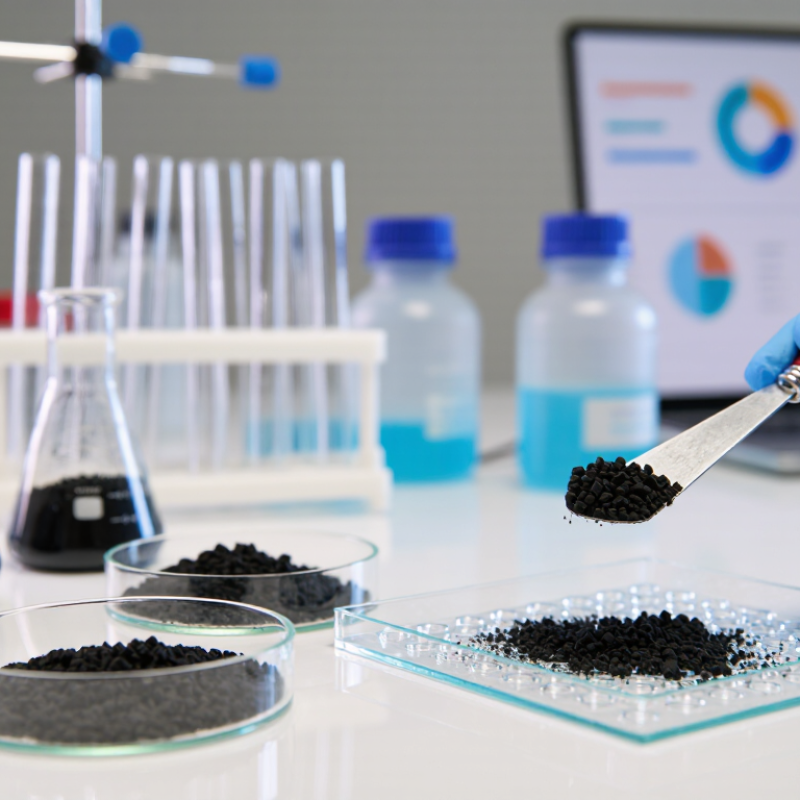
How to Choose Pharmaceutical Grade Activated Carbon

Understanding Pharmaceutical Grade Activated Carbon

Pharmaceutical-grade activated carbon is selected through evidence, not a darker appearance or a promising brochure. Understanding its intended use matters first. Powdered carbon may support decolorization, while granular carbon often suits water treatment. The process changes adsorption needs, filtration behavior, and contamination risks.

Review recent lot data for iodine number, moisture, ash, particle size, and pH. ASTM D4607 measures iodine number, while ASTM D2867 and D2866 address moisture and ash. A higher iodine number can indicate stronger micropore development, but it does not prove pharmaceutical suitability. That assumption is easy to make. Confirm heavy metals, microbial limits, and extractables through validated testing. USP General Chapters <61>, <62>, and <85> provide relevant approaches for microbial quality and endotoxins. However, USP <85> calculates endotoxin limits from the final dose; it does not create one universal carbon limit. WHO Technical Report Series guidance on pharmaceutical water systems also supports documented control of treatment materials and sanitization.

Request a certificate of analysis for multiple production lots, not one favorable sample. Check manufacturing date, retest period, packaging integrity, and full traceability. Examine whether the carbon releases fines into a clear filtrate. A glass beaker test can reveal visible particles, but it cannot replace process validation. Carbon with excellent adsorption data may still clog a filter or alter product color. That inconvenient detail deserves attention. Supplier qualification should include change-control history, impurity profiles, and compatibility data for the actual solvent, temperature, and contact time. Standards guide the decision; process-specific evidence finishes it.


Defining Purity, Safety, and Regulatory Requirements

How to Choose Pharmaceutical Grade Activated Carbon

Defining Purity, Safety, and Regulatory Requirements

Pharmaceutical grade activated carbon must be judged by evidence, not appearance. A uniform black powder can still contain ash, metals, or process residues. In practice, I would request a current certificate of analysis for every production batch. That document should show adsorption performance, moisture, ash, particle size, and impurity limits. Small details matter.

Safety also depends on the intended use. Carbon used in purification may contact an active ingredient, a solvent, or process water. Each application creates different risks. Check extractables, leachables, microbiological quality, and endotoxin requirements when relevant. A low ash value alone does not prove suitability. It is only one piece.

Regulatory acceptance requires traceability. Suppliers should provide manufacturing records, raw material controls, change notifications, and documented testing methods. Their quality system should support good manufacturing practice and applicable pharmacopeial or regional requirements. Ask whether test methods are validated and whether laboratories maintain calibration records. Do not rely on a generic “pharmaceutical grade” statement. It may sound authoritative, but it can hide important gaps. A supplier audit is useful, although no checklist is perfect. I would also compare retained samples with incoming material, because unexpected odor, color, or sediment may reveal a problem before production begins.

Matching Carbon Properties to Pharmaceutical Applications

Choosing pharmaceutical grade activated carbon requires more than comparing surface area or iodine value. The carbon must match the process, product, and impurity profile. For decolorizing an aqueous solution, fine particles can provide rapid contact and efficient color removal. However, they may create difficult filtration and increase product loss. A coarser grade may filter more cleanly, but it can require longer contact time.

Application testing should examine ash, moisture, pH, particle size, extractables, and microbial quality. Low ash is important when inorganic residues could affect the active ingredient. Controlled pore structure also matters. Large pores can support the removal of bulky molecules, while smaller pores may capture lighter impurities. High adsorption capacity alone is not enough. It may remove a valuable compound along with the unwanted material.

A practical evaluation uses the actual process liquid, temperature, mixing rate, and contact time. Measure color reduction, impurity clearance, recovery, and filtration performance. Keep samples from different production lots for comparison. Documentation should support traceability and align with applicable pharmacopoeial and quality requirements. Small details matter.

One caution remains. Laboratory screening can look convincing, yet scale-up may behave differently. Carbon fines may blind a filter, or a change in pH may reduce adsorption. I have found that selection is rarely perfect on the first attempt. A second review of recovery data is often necessary before process validation. Good carbon is not simply the strongest adsorbent; it is the grade that performs predictably without compromising product quality.

How to Choose Pharmaceutical Grade Activated Carbon - Matching Carbon Properties to Pharmaceutical Applications
Pharmaceutical Application Primary Treatment Objective Recommended Carbon Form Key Property Targets Typical Operating Considerations Critical Quality and Validation Checks
Purification of Active Pharmaceutical Ingredients (APIs) Removal of color bodies, trace organic impurities, reaction by-products, and residual aromatic compounds. Pharmaceutical-grade powdered activated carbon for batch treatment; granular carbon may be used in fixed beds. Iodine number: typically 800–1,200 mg/g
Methylene blue adsorption: typically 150–300 mg/g
Moisture: commonly ≤10% for dry powder grades
Ash: preferably ≤5%
Conduct laboratory screening first because excessive dosage or contact time can reduce API yield through adsorption. Use controlled mixing, validated filtration, and dust-management procedures. Identity, microbial limits, elemental impurities, extractables, adsorption capacity, particle-size distribution, filterability, and API recovery must be evaluated for the specific process.
Decolorization of Pharmaceutical Intermediates Reduction of visible color caused by conjugated organic molecules, oxidation products, and polymeric impurities. Fine powdered activated carbon with a high external surface area and good dispersibility. Particle size: often D50 approximately 10–30 µm
Iodine number: commonly 700–1,100 mg/g
pH of aqueous extract: generally near neutral to mildly alkaline
Low soluble iron and low ash are preferred
Optimize carbon concentration, temperature, and contact time to balance color removal with product loss. Carbon should be easy to separate by validated filtration. Measure color reduction using a defined analytical method, confirm no unacceptable change in assay or impurity profile, and verify that carbon fines are removed from the final product stream.
Purification of Aqueous Pharmaceutical Solutions Reduction of dissolved organic contaminants, taste and odor compounds, residual disinfectants, and trace process chemicals. Granular activated carbon in a fixed-bed system; carbon block or powdered carbon may be selected for small-volume applications. Iodine number: typically 900–1,200 mg/g
Effective particle size: commonly 0.5–2.0 mm for granular media
Good hydraulic conductivity and low pressure drop
Low leachable ash and metals
Control bed depth, empty-bed contact time, flow rate, and pressure drop. Prevent microbial growth by using a validated sanitation and change-out strategy. Water-system qualification, microbial monitoring, chemical breakthrough testing, extractables and leachables assessment, and documented regeneration or replacement controls are required.
Removal of Endotoxin-Associated Organic Impurities Reduction of certain hydrophobic organic components and process impurities associated with fermentation or biological manufacturing. Low-fines granular carbon or carefully selected powdered carbon, depending on process configuration. High adsorption capacity for hydrophobic organics
Controlled particle size and low fines
Low endotoxin contribution from the carbon itself
Low ash and controlled elemental impurities
Activated carbon is not a universal endotoxin-removal method. Its suitability must be demonstrated for the specific molecule, matrix, pH, ionic strength, and process conditions. Use a validated endotoxin test method, perform spiking and recovery studies, assess product binding, and verify that carbon handling does not introduce microbial or particulate contamination.
Treatment of Solvents and Organic Process Streams Removal of trace color, odor, catalyst residues, and selected dissolved organic contaminants from compatible solvents. Granular or extruded activated carbon with suitable mechanical strength and low attrition. Iodine number: commonly 800–1,200 mg/g
High abrasion resistance for packed beds
Controlled moisture and ash
Chemical compatibility with the solvent and process temperature
Evaluate solvent wetting, heat of adsorption, flammability, pressure drop, and safe handling of spent carbon. Do not assume water-based performance translates directly to organic solvents. Confirm solvent compatibility, residual-solvent limits, leachable substances, bed integrity, breakthrough behavior, and safe disposal or regeneration procedures.
Removal of Trace Process Chemicals from Biopharmaceutical Streams Reduction of selected residual media components, pigments, hydrophobic impurities, or small organic molecules. Highly purified powdered or granular carbon selected through molecule-specific screening. Controlled pore-size distribution, including mesopores for larger organic molecules
Low endotoxin and bioburden
Low extractables and leachables
Consistent surface chemistry and particle size
Carbon may adsorb proteins, peptides, vitamins, or other valuable components. Use small-scale design-of-experiment studies before process-scale implementation. Evaluate recovery, potency, aggregation, host-cell proteins, DNA, bioburden, endotoxin, particulates, and product-specific impurity clearance.
Final Polishing and Point-of-Use Filtration Reduction of residual trace organics, color, and odor before a downstream purification or filling step. Carbon block, carbon-containing depth filter, or a validated granular bed followed by a fine particulate filter. Uniform media distribution
Low particle shedding
Controlled pressure drop
Appropriate adsorption capacity for the target contaminants
Low microbial and endotoxin burden
Activated carbon should normally be followed by an appropriate particle-retention step. Monitor differential pressure and replace the media before contaminant breakthrough. Verify extractables, leachables, particulate release, microbial control, adsorption breakthrough, filter integrity where applicable, and compatibility with the final product.

The property ranges shown are general selection guidelines rather than universal pharmaceutical specifications. Final carbon selection should be based on application-specific adsorption studies, supplier qualification, compendial or regulatory requirements, extractables and leachables testing, microbial control, and documented process validation.

Evaluating Supplier Quality and Product Documentation

Choosing pharmaceutical grade activated carbon starts with the supplier’s evidence, not a polished product sheet. The World Health Organization estimates that one in ten medical products in low- and middle-income countries is substandard or falsified. That risk makes document control essential. Request a current certificate of analysis for every lot, with identity, ash, moisture, heavy metals, microbiological limits, particle size, and adsorption performance. The certificate should show test methods, specifications, results, approval dates, and the responsible quality reviewer.

Check whether the supplier follows pharmaceutical quality systems and provides traceability from raw material to shipment. Useful records include GMP statements, safety data sheets, change-control notices, deviation histories, and manufacturing-site audit responses. IQVIA’s Global Use of Medicines 2024 report projects global medicine spending will reach 2.3 trillion dollars by 2028. Larger supply chains increase the value of reliable qualification. However, a large document package can still conceal weak testing. No checklist is perfect. Ask how out-of-specification results are investigated, retained samples are stored, and complaints are closed.

Tips: Compare three recent lot certificates, not one sample. Confirm that the listed method matches your intended use. Request written notice before changes to feedstock, activation conditions, packaging, or testing laboratories. Check packaging seals and labels when materials arrive. A missing signature or unclear revision number deserves attention. Small gaps often become expensive audit findings. Reassess the supplier annually, and document why continued approval remains justified.

Selecting, Testing, and Handling the Final Product

Selecting pharmaceutical-grade activated carbon begins with traceability, not appearance. A reliable supplier should provide batch records, origin, activation method, particle-size data, and a current certificate of analysis. The 2024 Grand View Research market assessment valued the global activated carbon market at over USD 6 billion, but market size does not prove pharmaceutical suitability. Ask for USP–NF or Ph. Eur. compliance, depending on the intended market.

Test the final product against approved specifications. Key checks include adsorption performance, moisture, ash, pH, extractable substances, heavy metals, and microbial limits. ASTM D2862 reports iodine number in milligrams per gram, but iodine performance alone is not enough. A high value may still hide excessive fines or poor purity. Independent laboratory testing should confirm identity and contamination controls. Review sampling plans under GMP principles, such as those described in FDA’s Data Integrity guidance. One sealed sample is not sufficient evidence.

Handle carbon as a clean, moisture-sensitive powder. Use closed containers, labeled status controls, and dedicated tools. Record opening time and storage conditions. Avoid strong odors and volatile chemicals nearby. Dust control matters. Activated carbon can spread across benches quickly. In practice, operators may overlook humidity during short transfers. That assumption deserves review. Recheck the material after unusual exposure, packaging damage, or extended storage. Retain samples for comparison when results seem unexpectedly weak.

How to Choose Pharmaceutical Grade Activated Carbon

Selecting, testing, and handling the final product requires checking adsorption performance, purity, moisture, ash, and slurry pH.

The chart presents commonly used industry benchmark ranges for pharmaceutical-grade activated carbon. Iodine number and methylene blue adsorption indicate pore-development and adsorption capacity, while moisture, ash, and pH support purity and handling decisions. Actual acceptance limits should always be confirmed against the applicable pharmacopoeial monograph and approved product specification.

Kontaktbox-Frau

  • CNC-STEP – Quick contact