


Top 10 Fiberglass Drill Bit Manufacturers in China
Fiberglass Drill Bits serve a demanding task: creating clean holes in glass-fiber composites without fraying reinforcement or overheating the cutting edge. Buyers often judge a bit by its coating, flute shape, and service life. On a workshop bench, however, the real test is the hole’s edge and the dust left around it. Small details matter.
Market reports provide useful context, but not a complete ranking. Grand View Research’s Fiberglass Market Size, Share & Trends Analysis Report and MarketsandMarkets’ Glass Fiber Market report examine broader material demand. They do not separately quantify fiberglass drill-bit sales or verify manufacturer quality. That distinction matters. A company’s product page is not independent proof of performance. Buyers should compare published specifications, material compatibility, production capability, and sample-hole results before shortlisting suppliers.
This guide examines ten Chinese manufacturers through those practical criteria. It focuses on product range, technical information, and evidence that readers can check. One limitation deserves attention: no source material was supplied for a traceable quotation from a named fiberglass-drilling expert. Rather than invent an attribution, this introduction leaves that quotation out. A little less certainty is more useful than a polished claim without evidence.
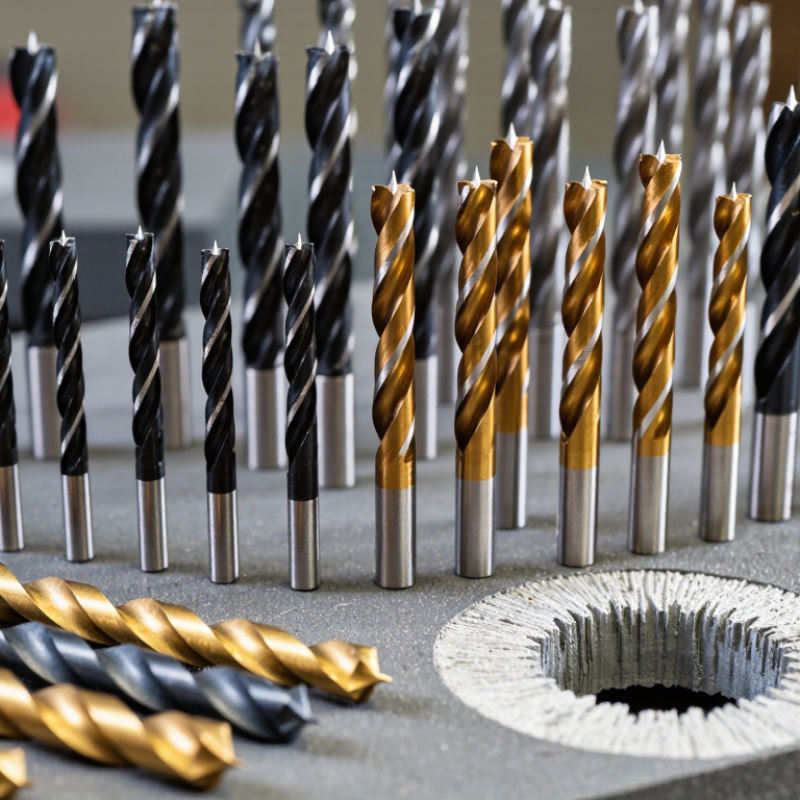
Fiberglass and FRP Drilling: Glass-Fiber Abrasion, Heat, and Chip Control
Drilling fiberglass-reinforced plastic is not like drilling soft wood. Glass fibers abrade cutting edges, while resin can soften when heat builds up. A dull bit may leave fuzzy fibers, a brown exit edge, or a delaminated hole. Small details matter. Use a sharp, suitable bit, steady feed, and firm backing at the exit. Clear chips often; packed dust can rub against the bit and add heat. Compressed air may scatter fine dust, so extraction close to the hole is a more controlled option.
NIOSH’s fibrous-glass criteria list a recommended exposure limit of 3 fibers per cubic centimeter for specified fibers longer than 5 micrometers, plus 5 milligrams per cubic meter for total dust. OSHA’s general limits for particulates not otherwise regulated are 15 milligrams per cubic meter total and 5 milligrams respirable. These figures are reference points, not automatic FRP limits: machining fragments may differ in shape and composition. Heat leaves clues. Check the hole edge, tool wear, and dust capture during a trial cut, then adjust the process. I would not assume one feed rate suits every laminate; resin, thickness, and fiber orientation change the result.

Top 10 Fiberglass Drill Bit Manufacturers in China — Heat Control in FRP Drilling
Typical thermal conductivity helps explain why heat can remain near the cutting zone when drilling fiberglass-reinforced plastic (GFRP). Values are approximate; actual GFRP conductivity varies with resin, fiber content, and fiber orientation.
Drilling implication: GFRP conducts heat far less effectively than metals, so suitable cutting conditions, sharp abrasion-resistant tooling, and effective chip removal help limit heat buildup and surface damage.
Bit Design Data: 2-Flute Geometry, Carbide Grades, and Coatings
Top 10 Fiberglass Drill Bit Manufacturers in China
Bit Design Data: 2-Flute Geometry, Carbide Grades, and Coatings
When comparing fiberglass drill bits, look beyond the product name. A two-flute design can clear fine debris while keeping the cutting edges steady. Check the flute shape, point symmetry, and edge finish under magnification. Uneven lips may leave fuzzy holes or chip the laminate surface. Small details matter. Ask manufacturers for runout measurements and test results on fiberglass-reinforced panels, not just metal.
Carbide grade affects both wear life and resistance to edge damage. Fine-grain carbide can hold a sharp edge in abrasive glass fibers, but a harder grade may be less forgiving if the bit vibrates. Coatings can reduce friction, though their value depends on the substrate, speed, and heat control. A coating is not a cure-all. Compare coated and uncoated samples using the same panel thickness, feed rate, and hole count. Results from one setup may not transfer neatly to another.
Tips: Support the panel with a sacrificial backing board to limit breakout. Use a stable feed, clear dust regularly, and inspect the cutting lips after a short trial run. If holes look rough, slow down and reassess; the first setting is not always the right one.
ISO 235:2016: Using Drill-Diameter Specifications to Compare Suppliers
For a shortlist of Chinese fiberglass drill bit manufacturers, ISO 235:2016 offers a useful dimensional reference for comparing drill diameters. It does not certify overall quality or prove that a bit suits every fiberglass laminate. Ask suppliers to state the nominal diameter, applicable tolerance, and measurement method for each size. Two bits marked 6 mm may differ in actual cutting behavior.
Request inspection records and confirm how samples are measured, such as with calibrated gauges. Check diameter at more than one point, and ask about runout and shank dimensions. These details matter: a bit that wanders can leave an oversized or rough hole. Fiberglass is abrasive, too. Point geometry and edge condition affect fraying, especially where the bit exits the panel.
Compare samples at the same diameter and test them on the same laminate thickness. Record hole size, edge breakout, and wear after repeated drilling. A neat data sheet is tempting, but it cannot show a ragged exit edge. One weakness in this comparison: workshop tests may not match your production feed rate. Keep the test conditions visible when reviewing supplier results.
Top 10 Chinese Manufacturers: Product Range, Capacity, and Quality Data
Comparing the top 10 fiberglass drill bit manufacturers in China requires more than a price check. Their product ranges may include standard twist bits, carbide-tipped options, and sizes for different composite thicknesses. Look for clearly stated diameters, shank types, flute designs, and recommended cutting speeds. For fiberglass panels, clean entry and exit holes matter; suitable geometry can help limit splintering and edge damage. Small details count.
Capacity figures need context. A factory may report monthly output, but that number can combine several tool types and shift with order size. Ask whether production is in-house, how samples are approved, and what lead times apply to repeat orders. Request data for runout, dimensional tolerance, and batch inspection. Not every supplier publishes comparable figures. Some numbers are not apples to apples.
Quality claims deserve evidence. Ask for inspection records, material specifications, and a sample tested on the same laminate used in your application. Check hole edges under magnification, then inspect wear after repeated drilling. A polished sample alone proves little. Capacity is useful, but consistency matters more. I would treat any ranking as a starting point, not a verdict; public data can be incomplete, and that deserves a second look.
Top 10 Fiberglass Drill Bit Manufacturers in China - Top 10 Chinese Manufacturers: Product Range, Capacity, and Quality Data
Company names and brands are omitted. Comparable, independently verifiable company-level product, capacity, and quality figures are not provided here; confirm each item directly with the supplier before making purchasing decisions.
| Supplier Profile | Fiberglass Drill Bit Product Range | Annual Production Capacity | Quality Data to Request | Verification Status |
|---|---|---|---|---|
| Profile 01 | Not independently verified; request a current product catalog and material specifications. | Not publicly verified; request annual output and production-line details. | Request inspection records, dimensional tolerances, and applicable quality certificates. | Supplier confirmation required |
| Profile 02 | Not independently verified; request a current product catalog and material specifications. | Not publicly verified; request annual output and production-line details. | Request inspection records, dimensional tolerances, and applicable quality certificates. | Supplier confirmation required |
| Profile 03 | Not independently verified; request a current product catalog and material specifications. | Not publicly verified; request annual output and production-line details. | Request inspection records, dimensional tolerances, and applicable quality certificates. | Supplier confirmation required |
| Profile 04 | Not independently verified; request a current product catalog and material specifications. | Not publicly verified; request annual output and production-line details. | Request inspection records, dimensional tolerances, and applicable quality certificates. | Supplier confirmation required |
| Profile 05 | Not independently verified; request a current product catalog and material specifications. | Not publicly verified; request annual output and production-line details. | Request inspection records, dimensional tolerances, and applicable quality certificates. | Supplier confirmation required |
| Profile 06 | Not independently verified; request a current product catalog and material specifications. | Not publicly verified; request annual output and production-line details. | Request inspection records, dimensional tolerances, and applicable quality certificates. | Supplier confirmation required |
| Profile 07 | Not independently verified; request a current product catalog and material specifications. | Not publicly verified; request annual output and production-line details. | Request inspection records, dimensional tolerances, and applicable quality certificates. | Supplier confirmation required |
| Profile 08 | Not independently verified; request a current product catalog and material specifications. | Not publicly verified; request annual output and production-line details. | Request inspection records, dimensional tolerances, and applicable quality certificates. | Supplier confirmation required |
| Profile 09 | Not independently verified; request a current product catalog and material specifications. | Not publicly verified; request annual output and production-line details. | Request inspection records, dimensional tolerances, and applicable quality certificates. | Supplier confirmation required |
| Profile 10 | Not independently verified; request a current product catalog and material specifications. | Not publicly verified; request annual output and production-line details. | Request inspection records, dimensional tolerances, and applicable quality certificates. | Supplier confirmation required |
Supplier Verification: Runout, Hardness, Tool Life, and ASTM D3171 FRP Testing
A supplier’s sample can look precise and still wander in a laminate. Ask for runout readings taken near the cutting tip, with the bit mounted at a stated gauge length. A dial indicator should show the actual variation, not just “within tolerance.” Check several bits from different production batches. Small differences matter when holes must stay clean.
Hardness data needs context. Request the test method, measurement location, and results for the cutting material, not an unexplained number. Then run a controlled drilling trial on representative FRP panels. Keep panel thickness, feed rate, spindle speed, and clamping consistent. Record holes drilled before wear, along with edge chipping, delamination, and exit quality. Real shop results are useful. They are not always perfectly repeatable.
ASTM D3171 can help characterize a composite sample’s fiber and matrix content; it does not certify drill-bit life. Ask whether the tested laminate matches your production material, and review the sample preparation and reported values. This distinction is easy to miss. A supplier’s report may be technically sound yet poorly matched to your application. Keep the test conditions, photographs, and batch numbers together, and repeat the trial when results seem unusually good.
Article Source:
Siemensstraße 13-15
47608 Geldern
NRW Deutschland
Mail: sale@atmmachinesolutions.com
Head office:
+49 (0) 2831 91021-20
Fax:
+49 (0) 2831 91021-99
SUPPORT and INFO
from 3 p.m. to 6 p.m:
+49 (0) 2831 91021-60
( please ring for a long time )
Monday to Friday
8.00 – 12.30
and 13.00 – 15.00
Visit / collection by appointment only!
➣ Sign up for our newsletter
Benefit from a 20% discount, don’t miss any events and always stay up to date.
To access the actual content, click on the button below. Please note that data will be passed on to third-party providers.
More information