



How to Choose Rubber Oil Seals in 2026?
Choosing Rubber Oil Seals in 2026 starts with understanding the job, not picking a material from a catalog. A seal that performs well in one machine may leak in another. The difference can come down to oil type, operating temperature, shaft speed, pressure, or even a slightly worn shaft surface. Small details matter.
This guide introduces the factors engineers and maintenance teams should check before selecting a seal. It explains how elastomer choices, such as nitrile, fluorocarbon, and silicone, relate to different operating conditions. It also considers shaft diameter, housing dimensions, lip design, and installation space. A seal’s stated temperature range is useful, but it does not tell the whole story. Actual oil chemistry, exposure time, and changing operating loads also affect service life. Real equipment rarely behaves like a perfect test setup.
The aim is practical selection, not a claim that one seal fits every application. Start with the equipment manufacturer’s specifications, then confirm them against the machine’s real operating conditions. Inspect the shaft and bore, and check whether the original seal failed from wear, heat, contamination, or poor installation. Replacing a seal without finding the cause may only repeat the problem. That step is easy to overlook. The sections ahead offer a structured way to compare options, ask suppliers informed questions, and avoid common selection mistakes. When specifications are uncertain, verify them with a qualified seal supplier or equipment specialist before ordering.
Understanding Rubber Oil Seals and Their Functions
How to Choose Rubber Oil Seals in 2026?
Understanding Rubber Oil Seals and Their Functions
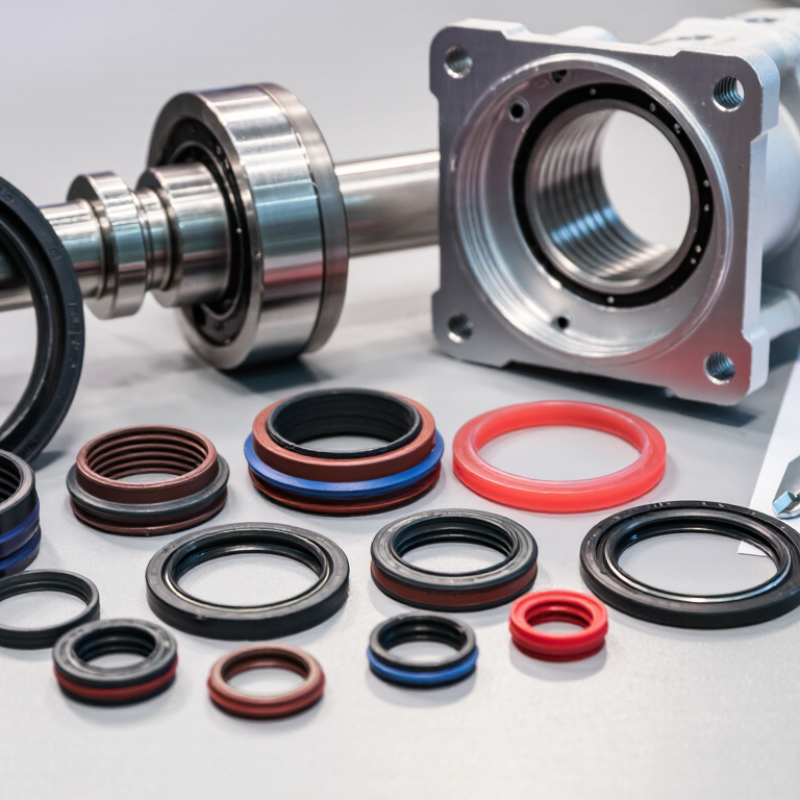
Rubber oil seals are compact barriers fitted around rotating or moving shafts. Their main job is to keep lubricant inside a housing while limiting dust, water, and grit from entering. A flexible sealing lip contacts the shaft surface. In many designs, a spring helps maintain that contact as parts move.
The seal also manages friction and heat. Too much lip pressure can raise temperature and accelerate wear; too little may allow leakage. Material matters because oils, additives, and operating temperatures affect rubber differently. Check the actual fluid and temperature range, not just a broad material label. Nitrile suits many common oil applications, while other elastomers may be needed for higher heat or specific fluids. The right choice depends on operating conditions.
Fit is only part of the job. Measure the shaft and housing carefully, and inspect the shaft for grooves, corrosion, or rough machining marks. These details can damage a new lip quickly. Consider shaft speed, pressure, runout, and exposure to dirt or water. Installation matters too: protect the lip from sharp edges and keep it aligned. A seal can look correct and still leak. Not always obvious. Real equipment is rarely perfect; worn shafts or rushed installation can complicate an otherwise sound selection. That deserves a closer look.
| Selection Factor | What to Check | Why It Matters | Practical Selection Guidance |
|---|---|---|---|
| Sealing function | Whether the seal must retain lubricant, exclude dust or water, or do both | A radial shaft oil seal uses a flexible lip against a rotating shaft to limit leakage and contamination ingress. | Choose a basic single-lip design for lubricant retention in a clean environment. Consider a dust lip or an additional protective feature where dirt or splash exposure is expected. |
| Elastomer material | Fluid compatibility, operating temperature, and environmental exposure | The elastomer affects swelling, hardening, flexibility, wear, and service life. | Use the equipment and lubricant manufacturers’ compatibility data. Common material families include NBR, HNBR, FKM, ACM, and silicone; no single material suits every fluid and temperature. |
| Temperature | Continuous operating temperature, start-up or shutdown extremes, and heat near the shaft | Excess heat can accelerate aging, while low temperatures can reduce lip flexibility and sealing contact. | Compare the full temperature range with the specific compound’s rating. Published limits vary by formulation and should not be treated as interchangeable across suppliers. |
| Rotational speed | Shaft speed, shaft diameter, surface finish, and heat dissipation | Higher sliding speed can increase frictional heat and lip wear. | Check the seal design’s rated speed and the application’s operating conditions. Keep the shaft surface within the seal maker’s specified finish and runout limits. |
| Lubricant and media | Oil type, additives, grease, fuel, process fluid, and cleaning chemicals | Some fluids can cause elastomers to swell, shrink, soften, or lose strength. | Verify compatibility with the exact fluid formulation, including additives. Do not assume that seals compatible with one mineral oil will suit every synthetic oil or chemical. |
| Shaft and housing dimensions | Shaft diameter, bore diameter, seal width, chamfers, and tolerances | Correct fit helps maintain lip contact and prevents leakage or seal movement. | Match the required dimensions and tolerances to the equipment specification. Check the shaft for wear, grooves, burrs, and damage before installation. |
| Pressure and alignment | Pressure differential, shaft runout, misalignment, and vibration | Many standard radial shaft seals are intended for low-pressure applications; excess pressure or movement can distort the lip. | Confirm pressure capability for the exact seal design. Address excessive runout, misalignment, or vibration rather than relying on a standard oil seal to compensate. |
| Contamination and installation | Dust, water, abrasive particles, assembly direction, and installation tools | Contamination and installation damage can cut or distort the sealing lip and cause early leakage. | Use suitable contamination protection, lubricate the lip as specified, and install with a proper driver. Keep the sealing lip clean and avoid dragging it over sharp edges or keyways. |
| Service conditions | Duty cycle, maintenance access, expected life, and consequences of leakage | A seal that is adequate for occasional duty may not be suitable for continuous operation or difficult-to-service equipment. | Base selection on the actual operating cycle and maintenance plan. For critical applications, validate the material and design under representative conditions. |
| Specification verification | Applicable drawings, equipment documentation, and current manufacturer data | Material grades, limits, and dimensions can differ between seal designs and formulations. | Record the shaft and bore sizes, fluid, temperature range, speed, pressure, and contamination exposure before ordering. Treat generic ratings as screening guidance, not a substitute for product-specific data. |