


How to Choose the Right Electricity Controller?

Choosing the right Electricity Controller is a practical decision, not a simple product comparison. The controller may sit inside a factory panel, a solar inverter, or a building energy system. Its response time, communication protocol, protection settings, and operating range can affect safety and uptime. A low purchase price can be misleading. Maintenance costs may appear months later.

The International Energy Agency’s Electricity 2024 report projects global electricity demand will grow by more than 4% annually through 2026. This growth increases pressure on equipment that manages changing loads, distributed generation, and grid connections. The U.S. Department of Energy also identifies interoperability, cybersecurity, and grid flexibility as key priorities in modern control systems. These findings suggest that buyers should examine the complete operating environment, not only the controller’s rated current. Check voltage stability, fault response, data logging, remote access, and compatibility with existing meters. A controller that works perfectly in a laboratory may struggle beside a dusty motor cabinet.

Dr. Massoud Amin, a widely recognized smart-grid expert, has described the smart grid as “not a single technology, but a system of systems.” That principle matters here. The best Electricity Controller should communicate reliably with connected equipment and remain useful as the system expands. Standards such as IEC 61131-3, Modbus, and IEC 61850 may influence selection, depending on the application. However, standards alone do not guarantee a successful installation. Site testing is still necessary. Even experienced teams can choose poorly when they overlook heat, network delays, or operator training.
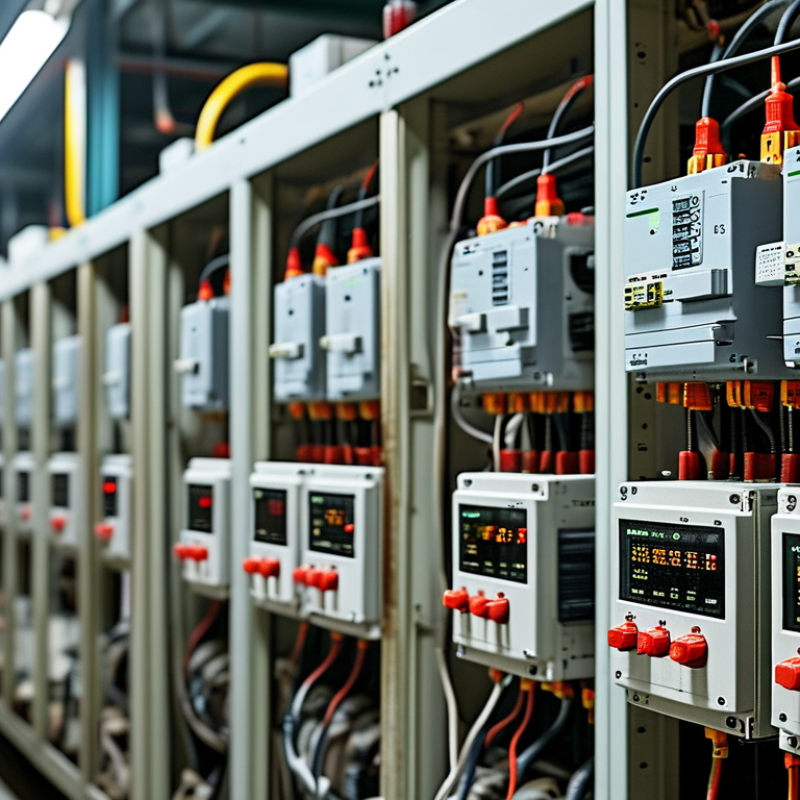
How to Choose the Right Electricity Controller?

Define the Electrical Load and Control Requirements

How to Choose the Right Electricity Controller?

Define the Electrical Load and Control Requirements

Start with the real electrical load, not only the nameplate value. Record voltage, running current, phase, frequency, and expected operating hours. Motors may draw several times their rated current during startup. Heating elements usually create steadier demand. Pumps and fans can change load as pressure or airflow changes. Measure these conditions when possible. A tidy calculation can still be wrong.

Define how the controller must operate

Decide whether control will be manual, automatic, remote, or linked to sensors. Specify switching frequency, response time, overload protection, and acceptable voltage variation. Consider what happens after power loss. Should the system restart, remain off, or require confirmation? Small details matter.

Protect the equipment and the operator

Check the controller’s current rating, short-circuit capability, enclosure rating, cooling needs, and terminal capacity. Apply suitable derating for heat, dust, altitude, and continuous operation. Follow applicable electrical codes and recognized safety standards. Use isolation and emergency stopping methods where the application requires them. Do not treat software control as a replacement for physical protection.

Test the selected controller under normal and worst-case conditions

Watch startup current, temperature rise, noise, and control stability. Keep records of measurements and alarm responses. Field conditions often expose assumptions made during design. Review them honestly, because the first specification may need revision.


Compare Controller Types and Operating Principles

How to Choose the Right Electricity Controller?

Choosing an electricity controller starts with understanding its operating principle. An on-off controller uses a relay or semiconductor switch. It is simple, affordable, and suitable for basic heating or lighting loads. However, frequent switching can shorten component life and create noticeable voltage changes.

A PWM controller adjusts power by switching rapidly. The load receives controlled pulses, which can regulate brightness, speed, or charging current. It works well when the source and load have compatible voltage ranges. An MPPT controller is more advanced. It continuously searches for the source’s most productive voltage and current point. This can improve energy collection when sunlight, temperature, or load conditions change. For motor applications, a variable-frequency controller changes both frequency and voltage. The motor can then start smoothly and run at adjustable speeds.

Tips: Check voltage, continuous current, peak current, enclosure rating, cooling space, and protection functions. Read the wiring diagram carefully. Measure real operating conditions, not only the label values. Leave a safety margin.

In practical installations, heat is often underestimated. A controller rated for 20 amps may need ventilation when operating near that limit. I once focused too much on maximum current and overlooked startup demand. That was a useful mistake, but an avoidable one. Confirm compatibility with the power source, cable size, load type, and control signal before installation. Independent test data and a clear technical datasheet are more reliable than impressive marketing claims.

How to Choose the Right Electricity Controller?

Controller selection depends on the required precision, load dynamics, switching method, and acceptable electrical noise. The chart compares representative control-action update rates used in common controller types.

On/off controllers switch fully on or fully off and are suitable for slow-changing loads. PWM controllers regulate average power by varying duty cycle at a high switching frequency. Phase-angle controllers adjust the firing point within each AC half-cycle; at 50 Hz mains, this provides approximately 100 control opportunities per second. PID controllers continuously adjust output according to proportional, integral, and derivative feedback, making them suitable for accurate regulation of dynamic loads.

The values are representative engineering figures rather than universal ratings. Actual performance depends on load type, mains frequency, sensor response, switching hardware, tuning, and safety requirements.

Check Voltage, Current, Phase, and Load Compatibility

How to Choose the Right Electricity Controller?

Choosing an electricity controller starts with the voltage printed on the equipment label. Match the controller’s input and output voltage carefully. A small mismatch can cause overheating, unstable operation, or permanent damage. Measure the supply with a reliable multimeter, because building voltage may fluctuate during heavy use. Leave a reasonable voltage margin when the equipment operates near its rating.

Current needs equal attention. Check both the normal running current and the starting current. Motors, pumps, and compressors may briefly draw several times their rated current. A controller rated only for continuous current may fail during startup. I once focused on the running value and ignored an inrush spike. The result was repeated tripping. That mistake changed my inspection routine. Load type matters too. Resistive heaters behave differently from inductive motors and capacitive power supplies.

Phase compatibility can quietly cause trouble. Confirm whether the system uses single-phase or three-phase power. Never assume the wiring matches the equipment. Check terminal markings, phase sequence, grounding, and protective devices before energizing the circuit. The controller must also suit the load’s switching method, frequency, and environmental conditions. Dust, moisture, and heat can reduce service life. Test under normal load, then observe temperature, noise, and voltage stability. Document the readings. Recheck them later. A careful choice is not always perfect, but measured evidence exposes weak assumptions before they become expensive failures.

Evaluate Safety Features, Certifications, and Installation Needs

How to Choose the Right Electricity Controller?

Safety should guide the choice, not just switching speed or price. Check for overload protection, short-circuit protection, thermal cut-off, and reliable grounding. A visible test button helps confirm protective functions before regular use. Look beyond the label. Confirm the product carries certifications recognized in your country. Verify the certificate number through the issuing authority, because copied marks can appear on poor-quality equipment. Requirements may differ between household, commercial, and industrial installations.

Installation needs deserve equal attention. Match the controller’s voltage, current rating, load type, and operating environment. A dusty workshop may require a stronger enclosure than a clean indoor cabinet. Measure mounting space, cable routes, ventilation clearance, and terminal access before ordering. An experienced electrician should review the wiring diagram and local electrical rules. Never assume an existing circuit is suitable. Old cables can heat under a new load.

During inspection, I have seen small details cause larger problems. Loose terminals, missing strain relief, and blocked ventilation are easy to overlook. Test the controller under normal load, then check for unusual heat, noise, or delayed response. Keep installation records, test results, and certification documents together. Some instructions seem overly cautious, yet ignoring them can create confusion later. I would also question unclear documentation. If the manufacturer cannot explain protection limits or maintenance intervals, choosing another certified option may be wiser.

Select a Controller Based on Environment, Cost, and Future Expansion

How to Choose the Right Electricity Controller?

Select a Controller Based on Environment, Cost, and Future Expansion

Choosing an electricity controller starts with its surroundings, not its feature list. Measure temperature swings, dust, moisture, vibration, and available cabinet space. A controller designed for a clean indoor panel may fail beside a hot motor. Check its ingress protection, operating range, load capacity, and duty cycle. Also verify grounding, wiring, and applicable electrical standards with a qualified technician. These checks reduce overheating, nuisance shutdowns, and unsafe connections.

Cost deserves a wider view. Compare purchase price, installation time, energy use, maintenance, and potential downtime. I once selected a cheaper controller for a small machine. It worked initially, but limited terminals made later sensor upgrades expensive. That choice looked efficient on paper. It was not. For future expansion, reserve input and output points, communication capacity, cabinet space, and thermal allowance. Confirm whether firmware updates, replacement parts, and technical documentation will remain available. A slightly higher initial cost can protect the project from redesign work.

Tips: Record the maximum measured temperature, peak load, and daily operating hours. Keep at least some spare capacity, but avoid paying for unused features. Ask an electrician to review the final selection. Test the controller under realistic conditions, including startup surges and dusty operation. Document every setting. Small details matter.

How to Choose the Right Electricity Controller? - Select a Controller Based on Environment, Cost, and Future Expansion

Controller Type Typical Applications Suitable Environment Control Capability Typical Hardware Cost Future Expansion Main Advantages Key Limitations Recommended Selection Scenario
Electromechanical Relay Controller Simple on/off control for lighting, pumps, fans, heaters, and small machines Clean, dry indoor locations with limited vibration and moderate switching frequency Discrete switching; commonly used for low-complexity loads US$10–50 per channel Low; additional functions usually require more relays and wiring Low initial cost, simple installation, easy troubleshooting, and electrical isolation between control and load circuits Mechanical contacts wear over time; switching speed and cycle life are limited; no advanced diagnostics Choose when the system has a small number of infrequently switched loads and minimum cost is the priority
Solid-State Relay Controller Frequent switching of resistive heaters, lamps, valves, and other repetitive loads Indoor or protected industrial environments; requires heat dissipation and suitable enclosure ventilation Fast electronic switching with no mechanical contact movement US$20–120 per channel Moderate; channels can be added, but thermal capacity and control architecture must be reviewed Long switching life, quiet operation, fast response, and reduced mechanical wear Produces heat, may have leakage current when off, and can fail in a conducting state; heat sinks may be required Choose for high-cycle switching where silent operation and long switching life are important
PID Temperature Controller Ovens, furnaces, heat treatment, plastic processing, food equipment, and laboratory systems Controlled industrial environments; sensor wiring should be protected from electrical noise and excessive heat Closed-loop proportional, integral, and derivative control using temperature or process feedback US$50–300 per loop Low to moderate; multi-loop systems may require a larger controller or supervisory system Accurate process regulation, fast response, and reduced temperature overshoot when correctly tuned Primarily designed for one or a few process variables; tuning and sensor selection affect performance Choose when stable temperature control is more important than broad automation and network expansion
Variable-Frequency Drive Controller Speed and torque control for three-phase motors, pumps, fans, conveyors, and compressors Industrial environments with suitable enclosure protection, ventilation, grounding, and electromagnetic compatibility measures Adjustable motor frequency and voltage, acceleration control, braking, and basic motor protection US$150–2,000 per motor Moderate; supports additional control signals and communication, but is normally dedicated to one motor Energy savings in variable-torque applications, soft starting, reduced mechanical stress, and adjustable speed Requires correct motor sizing, installation practices, and attention to harmonics, cable length, and cooling Choose when motor speed control, process adjustment, or reduced starting current is required
Programmable Logic Controller Machine automation, production lines, material handling, water treatment, and building systems Industrial environments when installed in an enclosure rated for dust, moisture, vibration, and temperature conditions Sequencing, timing, counting, analog control, alarms, interlocks, and communication US$300–5,000 for a small-to-medium system High Modular I/O, reusable logic, diagnostics, networking, and strong support for future automation changes Higher engineering cost, programming requirements, and greater initial investment than simple relay systems Choose when the process may grow, multiple devices must communicate, or centralized logic is required
Remote I/O and Distributed Controller Large facilities, long production lines, utilities, process plants, and geographically distributed equipment Industrial environments with a suitable network design, enclosure protection, and controlled cable routing Collects field signals and controls remote devices through an industrial communication network US$500–8,000 per installation segment Very high Reduces long control cable runs, supports modular growth, and simplifies expansion across multiple locations Network design, cybersecurity, communication compatibility, and commissioning require specialist knowledge Choose when equipment is spread across a large area or when future I/O growth is expected
Energy Management Controller Commercial buildings, industrial facilities, microgrids, battery systems, solar integration, and demand management Protected electrical rooms or control cabinets with reliable communication and power-quality monitoring Load scheduling, peak-demand control, power monitoring, source coordination, and automated energy optimization US$1,000–15,000 per system Very high Supports energy visibility, demand reduction, renewable integration, and coordinated operation of multiple electrical assets Higher system complexity; benefits depend on accurate metering, compatible equipment, and configuration quality Choose when energy cost, peak demand, renewable generation, or multiple power sources must be managed together
Safety-Rated Controller Emergency stops, protective doors, light curtains, presses, conveyors, and hazardous machine functions Industrial environments where the controller is installed according to the required safety architecture and risk assessment Monitors safety inputs and removes hazardous motion or energy under defined fault conditions US$250–3,000 per system Moderate to high; expansion depends on safety architecture and validated system limits Designed for safety functions, fault detection, diagnostics, and documented risk-reduction measures Must be selected, wired, validated, and maintained according to applicable machinery and electrical safety requirements Choose when a risk assessment identifies a need for monitored safety functions rather than standard control alone

Cost ranges are indicative hardware-only estimates in US dollars and vary with voltage, current rating, enclosure requirements, communication features, certification, installation, and engineering. Environmental suitability must be verified using the controller’s specified operating temperature, humidity, vibration, EMC, and ingress-protection ratings.

Kontaktbox-Frau

  • CNC-STEP – Quick contact