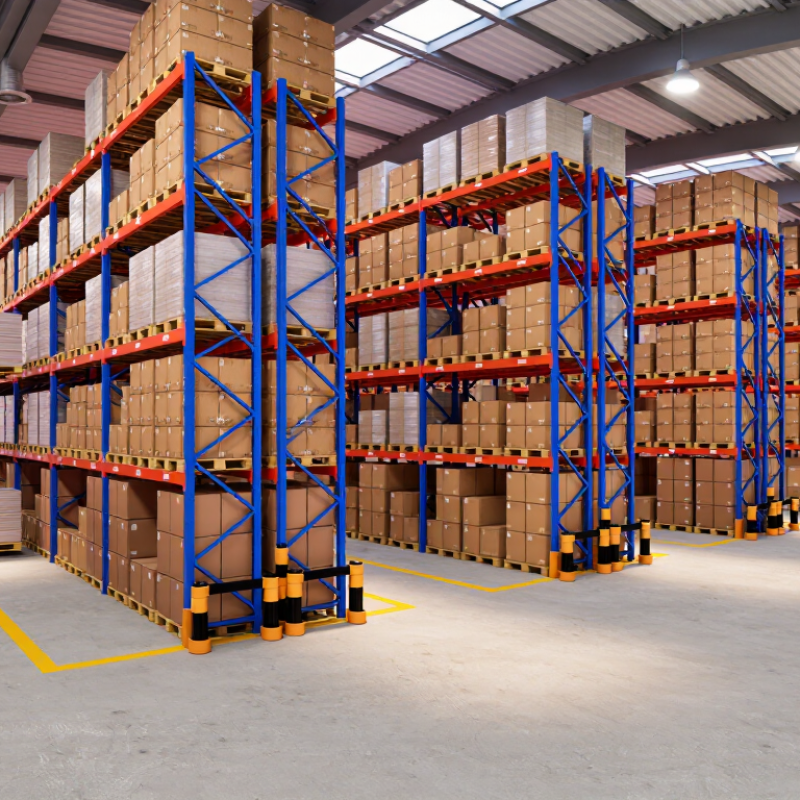
How to Choose the Right Storage Racking System?
Choosing the right Storage Racking system begins with understanding how your warehouse actually works. Product weight, carton dimensions, pallet types, and daily movement all shape the decision. A busy distribution center may need wide aisles for counterbalance forklifts. A compact facility might benefit from narrow-aisle or high-density racking. The best solution fits the operation, not just the available floor area.
Safety and accessibility should guide every comparison. Check the manufacturer’s load ratings carefully. Measure beam levels, ceiling height, aisle clearance, and forklift turning space. A small measurement error can affect the entire layout. Experienced warehouse managers also consider picking frequency, stock rotation, future expansion, and maintenance access. These details often separate a practical system from an impressive-looking installation.
No system is perfect. A design that saves floor space may reduce access speed. A cheaper option may create higher labor costs later. This is where professional advice becomes valuable. Qualified suppliers, structural engineers, and trained installers can review load data and operating conditions before recommending equipment. Their guidance should be supported by clear specifications, inspection procedures, and realistic performance expectations. Still, assumptions deserve review. Warehouse demand changes, product lines grow, and equipment may be replaced. A reliable Storage Racking plan must allow safe adjustments without compromising stability. The following guide explains the main system types, selection criteria, common mistakes, and practical questions to ask before investing.
Define Your Storage Goals and Inventory Requirements
How to Choose the Right Storage Racking System?
Define Your Storage Goals and Inventory Requirements
A reliable racking decision begins with your inventory, not the available floor space. List each product’s dimensions, weight, packaging, and storage conditions. Note how often workers retrieve each item. Fast-moving cartons may need direct access, while seasonal stock can use denser storage. Clear goals prevent an expensive mismatch.
Walk through your current operation. Measure aisle widths, ceiling height, door locations, and equipment movement. A practical assessment should also consider future growth. Leaving no expansion space may save money today, but it can create costly changes later. I have seen neat layouts fail because product sizes changed faster than expected. That risk deserves honest attention.
Tips:
Build a simple inventory table before requesting rack designs. Include SKU count, pallet size, average quantity, and monthly movement. Check the heaviest load, not just the average one. Keep emergency access clear. Ask workers where delays happen; their experience may reveal problems that spreadsheets miss. Review the plan with a qualified storage professional, and confirm load ratings, floor capacity, anchoring needs, and local safety requirements. Test one section before expanding the entire system. Small trials expose mistakes early.
Measure the Available Space and Operating Environment
How to Choose the Right Storage Racking System?
Measure the Available Space and Operating Environment
Start with the usable space, not the building’s advertised area. Measure floor length, width, clear height, columns, doors, lights, sprinklers, and uneven surfaces. Record the smallest aisle width and the forklift’s actual turning radius. A drawing can look generous. The floor may disagree.
Check the slab’s load capacity before selecting heavy-duty racking. Rack loads, pallets, forklifts, and stored goods all transfer forces to the floor. The Rack Manufacturers Institute’s ANSI MH16.1 standard provides engineering requirements for industrial steel storage racks, including design loads and stability. Ask a qualified engineer to review unusual floors or seismic conditions. Guesswork becomes expensive quickly.
The operating environment matters just as much. Note temperature, humidity, dust, corrosion, vehicle traffic, and pallet quality. Cold rooms may affect materials and worker visibility. Outdoor exposure requires different protection. Keep access routes visibly clear. OSHA’s Powered Industrial Trucks guidance links forklifts to about 85 worker fatalities and 34,900 serious injuries each year in the United States. That figure makes aisle planning more than a space-saving exercise.
Check sprinkler clearance and emergency access against local requirements. NFPA 13 addresses sprinkler installation and storage arrangements, but site conditions still need professional review. MHI’s 2024 Annual Industry Report found that 55% of surveyed supply-chain leaders planned to increase technology investment. That trend may encourage automated equipment, yet automation cannot fix inaccurate measurements. Leave room for maintenance, growth, and human error. You will need it.
Compare Racking Types, Layouts, and Load Capacities
Choosing the right storage racking system starts with comparing product access, layout efficiency, and load capacity.
Selective pallet racking offers direct access to every pallet and suits varied inventory. Drive-in racking stores more pallets in less floor space, but it reduces access flexibility. Cantilever racking works better for long materials, such as pipes, timber, or metal sections. Mobile racking can increase storage density, although it requires careful floor planning and controlled movement.
Layout decisions should reflect daily handling patterns.
Keep fast-moving goods near dispatch areas. Provide wider aisles where forklifts turn frequently. Narrow aisles may increase capacity, but they can slow operations and require suitable equipment. Measure column spacing, ceiling height, door positions, and emergency routes before selecting a configuration. A drawing may look efficient. Real movement can prove otherwise.
Load capacity needs practical verification, not guesswork.
Check the weight of each pallet, its dimensions, and the number of storage levels. Include uneven loading, impact from handling equipment, and future inventory changes. Rack beams and uprights must carry the intended loads within their rated limits. The floor also needs sufficient strength and levelness. In warehouse assessments, a common mistake is choosing a system for today’s stock only. That decision may create expensive changes later. Regular inspections should check bent frames, damaged beams, missing locking pins, and altered load patterns. Small defects matter. Record findings clearly and remove unsafe sections from service until a qualified professional evaluates them.
Evaluate Safety, Accessibility, and Material-Handling Needs
Choosing the right storage racking system starts with the work happening around it. I begin by studying load weights, pallet sizes, aisle width, and lifting equipment. A rack may hold heavy goods, but it can still fail operationally. I once underestimated turning space for a loaded forklift. That mistake slowed every shift.
Safety depends on more than the rack’s stated capacity. Check beam ratings, floor strength, upright protection, and anchoring requirements. Keep damaged components out of service immediately. Regular inspections should record bent frames, loose connections, and uneven loading. Qualified personnel should review the layout against applicable local standards and site conditions. Small details matter.
Accessibility also affects productivity and risk. Fast-moving items belong near comfortable picking zones, while slower stock can use higher positions. Leave clear sightlines at aisle ends. Material-handling equipment must fit without scraping frames or forcing sharp turns. Trial the layout with real loads, not empty pallets. Ask operators where they hesitate. Their feedback often exposes problems that drawings miss. I would also review the system after several weeks, because a layout that looks efficient on paper may create congestion during peak activity.
How to Choose the Right Storage Racking System? — Evaluate Safety, Accessibility, and Material-Handling Needs
| Racking System | Typical Storage Density | Pallet Selectivity | Stock Rotation | Accessibility and Handling | Key Safety Requirements | Best Fit for Material-Handling Needs |
|---|---|---|---|---|---|---|
| Selective Pallet Racking | Low to medium Usually about 30–50% of floor area used for storage, depending on aisle width and layout. | 100% Every pallet position is directly accessible. | Well suited to FIFO or FEFO when inventory is managed by location and date. | Works with counterbalance forklifts, reach trucks, and narrow-aisle trucks. Standard aisle requirements commonly range from approximately 2.4–3.7 m, depending on the truck and load. | Protect uprights and frames, anchor the structure to the floor, maintain rated load signs, inspect beams and connectors, and prevent pallet overhang. | Best general-purpose option for many SKUs, mixed pallet quantities, frequent picking, and operations requiring maximum access. |
| Double-Deep Pallet Racking | Medium Provides more storage positions than single-deep selective racking while retaining multiple lanes. | About 50% Two pallets are stored in depth; the rear pallet is not directly accessible from the aisle. | Suitable for LIFO. FIFO is possible only with careful lane and inventory control. | Requires reach trucks with double-deep capability. Greater fork reach and accurate load placement are necessary. | Use approved equipment, confirm maximum reach and load capacity, protect against load displacement, and maintain clear visibility during deep placement. | Suitable for facilities with medium-to-high pallet quantities per SKU and less frequent access to reserve inventory. |
| Drive-In / Drive-Through Racking | High Reduces the number of aisles and can achieve high pallet density in block storage. | Low Access is lane-based; pallets inside a lane are not individually accessible. | Drive-in systems generally favor LIFO. Drive-through layouts can support FIFO when loading and unloading occur from opposite sides. | Requires forklift entry into storage lanes. Best for uniform pallets and relatively few SKUs with multiple pallets per SKU. | Install guide rails and impact protection, control forklift speed, keep rails and supports in good condition, and ensure pallets are compatible with the system. | Best for high-volume, low-SKU operations, seasonal products, cold storage, and products that can tolerate limited direct access. |
| Pallet Flow Racking | High Uses inclined roller lanes to reduce aisle requirements and organize pallet movement. | Lane-based Individual pallet access depends on lane assignment and product rotation. | FIFO Loading and picking occur from opposite sides of the lane. | Forklifts load from the replenishment side while operators pick from the discharge side. Brakes, rollers, and lane separators control pallet movement. | Verify pallet quality and dimensions, inspect rollers and speed controllers, use pallet stops, and maintain clear loading and discharge zones. | Well suited to perishable goods, date-sensitive inventory, high-throughput distribution, and operations requiring controlled FIFO rotation. |
| Push-Back Racking | High Stores multiple pallets deep while preserving more aisle access than drive-in systems. | Lane-based Multiple pallets share a lane, so direct access to every pallet is limited. | LIFO Last pallet loaded is normally the first pallet retrieved. | Forklifts load and retrieve pallets from the same aisle. Cart or roller systems move pallets toward the aisle as positions are emptied. | Control load placement speed, inspect carts and rails, use compatible pallets, and prevent operators from entering storage lanes. | Good for medium-turnover products, multiple pallets per SKU, and facilities seeking greater density without fully sacrificing aisle access. |
| Cantilever Racking | Medium to high for long loads Provides open vertical and horizontal storage without front columns. | High Each arm position is generally accessible from the aisle. | Depends on the product and handling method; FIFO is possible with disciplined location control. | Suitable for forklifts, side loaders, and manual handling of long products. Aisle width must accommodate the selected truck and load length. | Balance loads across arms, use end stops where required, protect columns, respect arm capacity, and secure unstable or cylindrical materials. | Designed for lumber, pipe, steel sections, furniture, carpet, panels, and other long or irregularly shaped products. |
| Carton Flow Racking | Medium to high for small-item picking Uses inclined roller or wheel beds to present cartons at the pick face. | High Each SKU can have a dedicated forward-pick lane. | FIFO Replenishment occurs from the rear and picking from the front. | Primarily designed for manual order picking. Replenishment may use carts, pallet jacks, or forklifts depending on rack height. | Keep pick faces organized, prevent cartons from exceeding lane capacity, inspect rollers and dividers, and provide ergonomic working heights. | Best for piece picking, e-commerce fulfillment, spare parts, and high-SKU operations with frequent manual order assembly. |
| Mobile Pallet Racking | Very high Moves rack rows to open only the aisle required for an operation, reducing fixed aisle space. | High Access is available to the selected open aisle, although simultaneous access is limited. | Can support FIFO or LIFO, depending on layout and inventory procedures. | Uses powered mobile bases with integrated controls and safety sensors. Access is sequential rather than continuously open across all aisles. | Requires floor assessment, emergency-stop systems, obstacle detection, interlocks, regular maintenance, and strict operating procedures. | Useful where floor space is expensive, storage density is critical, and inventory access is periodic rather than simultaneous. |
| Automated Storage and Retrieval System (AS/RS) | Very high Uses vertical volume and automated equipment to reduce travel aisles and improve storage control. | System-controlled Access depends on software, equipment capacity, and configured storage locations. | Supports FIFO, LIFO, FEFO, and batch rules when correctly configured in the warehouse-control system. | Uses cranes, shuttles, conveyors, or robotic vehicles. Requires reliable interfaces between storage equipment, warehouse software, and material-flow systems. | Requires guarding, access control, emergency stops, maintenance procedures, safe human-machine interfaces, and validated software controls. | Best for high-throughput, high-volume operations requiring traceability, reduced forklift travel, labor efficiency, and consistent storage rules. |

Select, Install, and Review the Best-Fit Racking System
How to Choose the Right Storage Racking System?
Choosing a storage racking system starts with the load, not the catalogue. Record pallet dimensions, weights, SKU volume, turnover, aisle width, and ceiling height. Selective racking supports varied pallets and frequent access. Drive-in systems improve density but limit direct pallet selection. MHI’s 2024 Annual Industry Report found that 55% of surveyed organizations planned to increase automation investment. This supports flexible layouts, but automation should not replace basic measurements. A spreadsheet can still mislead.
Installation must match the building, equipment, and daily traffic. Confirm floor capacity, upright protection, anchoring, beam levels, and forklift clearances. OSHA estimates about 85 forklift fatalities and 34,900 serious injuries occur annually in the United States. These figures show why aisle planning deserves more attention. After installation, label every bay clearly. Inspect frames, beams, anchors, and guards after impacts. The Rack Manufacturers Institute recommends documented inspections and controlled repair procedures. Review the system monthly, then adjust it when product sizes or workflows change.
Tips: Keep at least one spare beam level. Photograph damage immediately. Never improvise repairs. Test the busiest aisle during peak activity. Ask operators what the design misses. Their feedback may expose the real problem.
Article Source:
Siemensstraße 13-15
47608 Geldern
NRW Deutschland
Mail: sale@atmmachinesolutions.com
Head office:
+49 (0) 2831 91021-20
Fax:
+49 (0) 2831 91021-99
SUPPORT and INFO
from 3 p.m. to 6 p.m:
+49 (0) 2831 91021-60
( please ring for a long time )
Monday to Friday
8.00 – 12.30
and 13.00 – 15.00
Visit / collection by appointment only!
➣ Sign up for our newsletter
Benefit from a 20% discount, don’t miss any events and always stay up to date.
To access the actual content, click on the button below. Please note that data will be passed on to third-party providers.
More information