


7 Overhead Crane Wire Rope Tips for Buyers

Choosing an Overhead Crane Wire Rope is not just a matter of matching diameter and rated capacity. The rope must also suit the crane’s reeving system, drum, sheaves, duty cycle, and operating environment. A rope running over a poorly matched sheave can show uneven wear, even when its catalogue rating appears adequate. Small details matter.

For a dependable technical baseline, consult ISO 4309:2017, Cranes—Wire Ropes—Care and Maintenance, Inspection and Discard, alongside ISO 16625:2013, Cranes and Hoists—Selection of Wire Ropes, Drums and Sheaves. These internationally recognized references address inspection, discard criteria, and component selection. They help buyers ask better questions; they do not replace a qualified assessment of the specific crane and application. Fit matters.

The following seven buyer tips focus on practical checks: construction, core type, rope lay, lubrication, corrosion protection, traceability, and supplier documentation. Ask for the rope’s certificate and confirm that its stated properties match the crane manufacturer’s requirements. Then look beyond the paperwork. Consider a damp outdoor runway, repeated short lifts, or a rope that bends across small sheaves. Those conditions can change what matters most. A common oversight is treating breaking force as the whole decision. It is important, but compatibility and inspection planning deserve equal attention. No single checklist removes every risk; careful verification before purchase can prevent costly mismatches later.
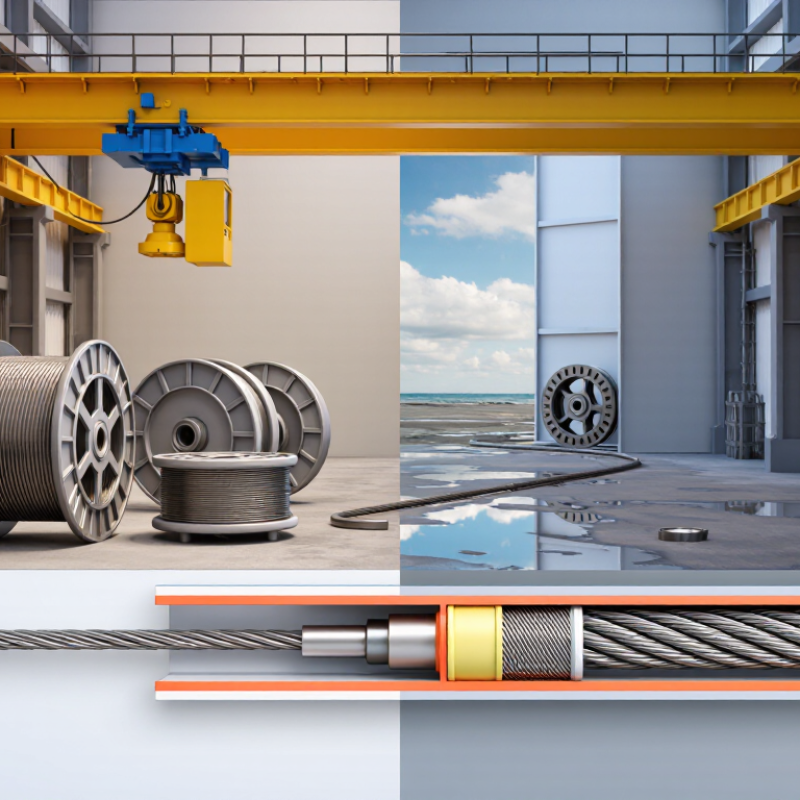
7 Overhead Crane Wire Rope Tips for Buyers

Understand the Wire Rope’s Role in an Overhead Crane

An overhead crane wire rope is more than a cable hanging from the trolley. It carries the load through a system of sheaves and winds onto a drum as the hoist lifts or lowers. Each bend changes how force is distributed across the rope’s strands. The rope’s construction, diameter, and core must match the hoist design and its working conditions.

Small details matter. A rough sheave groove can accelerate wear, while poor reeving may cause uneven loading. Buyers should check the crane’s specified rope type, rated capacity, reeving arrangement, and operating duty before comparing options. A thicker rope is not automatically a safer choice; it must fit the drum and sheaves correctly. Dust, moisture, heat, and frequent lifting can also affect service life.

Look closely during inspections. Broken wires, corrosion, flattening, kinks, or a noticeable change in diameter deserve attention. A rope can look acceptable at a glance and still need a closer check. That is easy to miss. Use the equipment supplier’s inspection criteria and arrange qualified assessment when damage is uncertain. Replacement decisions should follow the crane’s requirements, not appearance alone.


Match Rope Diameter, Length, and Strength to the Crane

Matching wire rope to an overhead crane starts with diameter, not guesswork. Check the crane manual and measure the existing rope where it is unworn. A rope that is too large may bind in the sheave groove; one that is too small can sit too deeply and wear unevenly. Small details matter. Confirm the rope construction and lay as well, since a similar diameter does not guarantee compatible behavior.

Length depends on the hoist arrangement, lift height, drum, and required dead wraps. Include the rope needed for reeving and termination, not just the distance between hook and trolley. Measure twice. A few extra feet may seem harmless, but excess rope can crowd the drum; too little can compromise the required wraps at the lowest hook position. Verify the measurement against the crane’s specified reeving diagram.

Strength selection must account for rated load and the complete rope assembly, including end terminations and operating conditions. Do not choose a higher-strength rope by breaking-load figures alone: its stiffness or diameter may not suit the sheaves or drum. Ask a qualified crane technician to confirm the specification and inspect the groove profile. It is easy to miss wear there. Record the selected diameter, length, construction, and strength rating so future replacements can be checked against the same requirements.

Choose a Rope Construction Suited to the Hoist and Duty Cycle

A hoist’s duty cycle should guide rope construction, not price alone. CMAA Specification No. 70 describes six crane service classes, A through F, based on expected use and load spectrum. That range matters: a maintenance hoist with occasional lifts does not face the same bending fatigue as a production crane running repeated shifts. Check the hoist manual for approved rope diameter, construction, lay, and minimum breaking force before comparing options.

For frequent lifting over small sheaves, a more flexible construction, such as 6×36, may reduce bending strain compared with a less flexible rope. The trade-off can be lower resistance to external wear, so dusty or abrasive service may need a different balance. Rotation-resistant ropes can help control spin on certain lifts, but they must suit the hoist’s reeving and drum arrangement. Real installations are rarely tidy. Verify the actual sheave and drum sizes on site.

Tip: Match rope construction to the hoist maker’s specification and the crane’s duty class. Record lift frequency, typical load, and rope condition. ISO 4309 provides guidance for inspection and discard criteria; visible broken wires, corrosion, or diameter loss deserve prompt assessment. A neat catalogue match is not enough. Check under working conditions.

Check Compatibility with Drums, Sheaves, and End Connections

Before ordering an overhead crane wire rope, compare its diameter and construction with the drum and sheaves. A groove that is too narrow can pinch the rope; one that is too wide may leave it poorly supported. Check the groove radius, pitch, and drum winding pattern against the rope supplier’s specifications. Also confirm the required drum-to-rope and sheave-to-rope diameter ratios for the crane’s duty. Small mismatches matter.

Review the end connection as carefully as the rope itself. A socket, wedge socket, or thimble eye must suit the rope construction, load, and available pin or attachment dimensions. Check that the termination preserves the required strength and fits the crane’s anchoring geometry. Confirm drum capacity and fleet angle, too. A rope can appear to fit while spooling unevenly under load. That detail is easy to miss.

Use recognized references when checking the selection. ISO 4308-1 covers rope selection for cranes, while ISO 4309 addresses care, inspection, and discard. For U.S. context, OSHA 29 CFR 1910.179 identifies six randomly distributed broken wires in one rope lay, or three in one strand in one lay, as discard criteria for running ropes. These are inspection triggers, not a substitute for checking fit. Verify the applicable requirements for the installation, and document rope diameter and construction before purchase.

7 Overhead Crane Wire Rope Tips for Buyers — Check Compatibility with Drums, Sheaves, and End Connections

# Compatibility Check What to Verify Practical Buyer Action
1 Confirm the rope construction Check the specified rope construction, core type, lay, and rotation characteristics. Different constructions can behave differently in the same reeving arrangement. Match the order specification and hoist documentation. If changing construction, confirm suitability for the crane’s reeving, load, and operating conditions with the equipment or rope supplier.
2 Match rope diameter to drum grooves Verify that the drum groove profile and pitch are intended for the rope’s specified diameter. A groove that is too tight can pinch the rope; one that is too wide may provide inadequate support. Check the drum drawing or maintenance specification against the rope data sheet. Inspect grooves for wear, deformation, and sharp edges before installation.
3 Check drum capacity and winding arrangement Confirm rope length, drum width, number of winding layers, and the required number of dead wraps. Multilayer winding can increase crushing and abrasion between rope layers. Use the hoist documentation to verify capacity and winding arrangement. Confirm that the replacement rope length and winding direction match the drum setup.
4 Verify sheave diameter and groove profile Check the sheave-to-rope diameter ratio (D/d) and groove profile against the crane and rope specifications. Bending over undersized sheaves can accelerate fatigue; an unsuitable groove can damage or poorly support the rope. Measure or identify the sheave diameter and inspect the groove with an appropriate gauge. Use the minimum D/d and groove requirements specified for the particular rope and crane—not a generic value.
5 Check actual rope diameter Compare the rope’s nominal diameter and permitted tolerance with the equipment specification. Rope diameter is measured across the crowns of opposite strands, rather than across the valleys between strands. Measure at multiple points on the rope using a suitable measuring tool, and compare the results with the ordered specification and applicable tolerance requirements.
6 Match the end connection to the rope Confirm that the socket, wedge socket, or other termination is designed for the rope diameter and construction. Installation details and suitability can vary by termination type and rope design. Check the termination manufacturer’s instructions and the hoist documentation. Do not assume that a fitting for the same nominal diameter is compatible with every rope construction.
7 Review reeving, rotation, and installation details Rope rotation, lay direction, reeving geometry, and end attachment can affect lifting behavior. Incorrect reeving or an unsuitable termination may contribute to twisting or rope damage. Confirm the reeving path, rope direction, and attachment arrangement before installation. Follow the equipment and rope supplier’s instructions, and document any approved substitution.

Evaluate Safety Standards, Inspection Needs, and Supplier Support

When selecting an overhead crane wire rope, begin with the crane maker’s specifications and the standards applicable to your site. Confirm rope construction, nominal diameter, grade, lay, and required minimum breaking force against the hoist documentation. Ask for material certificates and batch traceability, not just a product sheet. Small mismatches matter.

Inspection planning should be part of the purchase, because service conditions affect rope life. Consider duty cycle, load patterns, reeving, sheave condition, abrasion, corrosion, and heat exposure. Agree who will inspect, how often, and which rejection criteria apply under relevant standards and the equipment manual. Keep a baseline record of rope diameter and visible damage after installation. A checklist helps, but it cannot replace a competent inspection; that distinction is easy to overlook.

Supplier support is more than fast delivery. Look for clear installation guidance, documentation, technical responses, and advice on storage, lubrication, and replacement planning. Ask how urgent questions are handled and whether the supplier can explain recommendations in writing. If answers stay vague, pause before ordering. No purchase plan removes every uncertainty; operating history still matters.

Kontaktbox-Frau

  • CNC-STEP – Quick contact