


Top Polyester Fiber Pillow Filling Machine Suppliers
Choosing among the top Polyester Fiber Pillow Filling Machine suppliers requires more than comparing brochure prices. A well-matched machine should handle the intended fiber type, pillow size, and daily production volume. Buyers may also need adjustable filling weight, consistent airflow, and controls that operators can understand. These details affect the finished pillow, from how evenly the filling sits to how quickly staff can change production settings.
A supplier’s experience matters, but practical evidence matters more. Ask for machine specifications, a clear description of included components, and a live demonstration using a similar fiber material. Check how the supplier explains installation, operator training, spare parts, and routine maintenance. A hopper, feeding system, and filling nozzle may look straightforward, yet small design differences can affect handling and output. Details matter. Compare like with like, and request written answers when claims seem vague.
This guide introduces established suppliers and the factors that can help buyers assess them. No supplier is perfect for every workshop. A compact operation may value straightforward controls, while a larger factory may prioritize throughput and integration with existing equipment. Consider the full purchase, not only the machine price: delivery, commissioning, service response, and access to replacement parts can shape long-term value. Verify technical claims directly, and treat broad promises cautiously. A careful shortlist can save time, though choosing well still takes questions.
What Is a Polyester Fiber Pillow Filling Machine?
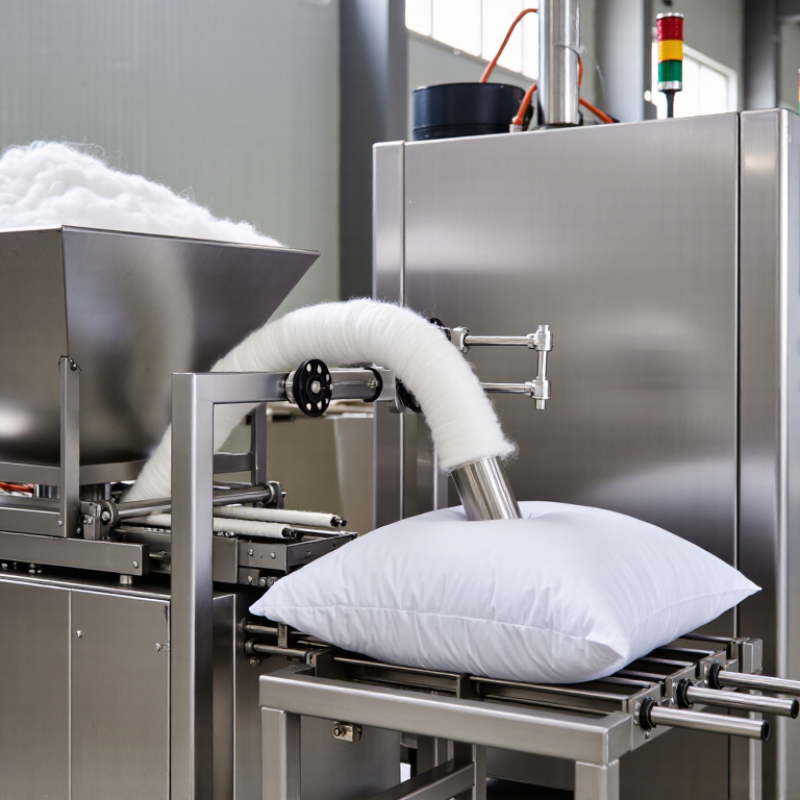
A polyester fiber pillow filling machine opens, meters, and delivers loose polyester fiber into pillow shells. A typical line uses a hopper, an opening unit, a feeding mechanism, and a filling nozzle. The opening unit separates compressed fiber tufts, while adjustable feed controls help maintain a consistent fill weight. Operators guide each shell onto the nozzle and check its shape and firmness. The machine does not decide comfort by itself; fiber quality, pillow design, and settings all matter.
Textile Exchange’s Materials Market Report 2024 estimates global fiber production reached 124 million tonnes in 2023, with polyester making up 57 percent. That scale helps explain why polyester filling equipment is common in pillow production. Still, a high output rate can create uneven pillows if fiber is poorly opened or airflow varies. I have to admit, “automatic” does not always mean consistent. Regular checks of fill weight, nozzle flow, and fiber clumping are useful.
Tips: Test a small batch before full production. Weigh several filled shells, not just one. If pillows feel lumpy, inspect fiber opening and feed settings before increasing machine speed. Keep the hopper clean, and record adjustments; memory is not a reliable process control.

How Polyester Fiber Pillow Filling Machines Work
A polyester fiber pillow filling machine starts by loosening compressed staple fiber. Feed rollers or an opener separate clumps, while a hopper meters fiber toward the filling head. Air then carries the fibers through a hose and nozzle into the pillow shell. The operator controls feed rate and airflow to reach the target weight and feel. The exact setup varies with fiber length, crimp, and shell opening.
The scale is substantial: Textile Exchange’s Materials Market Report 2024 estimates that polyester made up 57% of global fiber production in 2023, from a total of 124 million tonnes. That figure describes the wider fiber market, not pillow-filling demand. Still, it helps explain why consistent handling matters. A small change in fiber feed can leave one corner underfilled or make the pillow feel too firm.
The process looks simple. It isn’t always. Static can make fibers cling to the hose, and uneven feed can cause density differences between pillows. Operators should weigh sample fills, inspect the corners, and adjust airflow gradually. Dust extraction and routine cleaning also help keep the work area clearer. One practical caution: a machine setting that works for one fiber blend may not suit another.
| Stage or Selection Area | How It Works or What to Assess | Practical Check for Buyers |
|---|---|---|
| Fiber Loading and Opening | Polyester fiber is fed into an opening section, where mechanical action loosens compressed material so it can be conveyed and distributed more evenly. | Ask which fiber forms and feed formats the machine can handle, and whether the opening process suits your material. |
| Fiber Blending | Some production lines include blending equipment to combine different fiber types or batches before filling. This stage is optional and depends on the product recipe. | Confirm whether blending is included, how recipes are changed, and how the equipment is cleaned between materials. |
| Air Conveying and Filling | In pneumatic systems, airflow carries opened fiber through a delivery hose and nozzle into a pillow casing. The operator or an automated fixture holds the casing at the filling point. | Check nozzle options, casing compatibility, operator access, and whether the machine supports the required pillow sizes. |
| Fill-Weight Control | Depending on the machine design, filling can be controlled by a weighing system, timed operation, or another metering method. Fill weight is set according to the product specification. | Request the control method, stated accuracy conditions, and a product trial using your fiber and pillow casing; there is no single fill weight that suits every pillow. |
| Dust and Fiber Management | Opening and conveying can release loose fibers into the work area. Extraction and filtration arrangements vary between machine configurations and production sites. | Ask what extraction equipment is included, how filters are serviced, and what workplace controls are needed for the specific installation. |
| Controls and Changeover | Controls may regulate feeding, airflow, and filling cycles. Automation level and available settings differ by machine model. | Review the operator interface, recipe storage, changeover procedure, and training offered for the equipment being quoted. |
| Supplier Capability | A supplier may offer a standalone filling machine or a line with opening, conveying, weighing, and auxiliary equipment. Scope varies by quotation. | Compare written quotations item by item, including installation scope, commissioning, spare parts, warranty terms, and technical support arrangements. |
| Safety and Compliance | Machine guarding, electrical design, and safety documentation depend on the equipment and the market where it will be installed. | Specify the destination country and verify applicable local requirements, documentation, and site utilities before purchase. |
Key Machine Features to Compare
Top Polyester Fiber Pillow Filling Machine Suppliers
Key Machine Features to Compare
When comparing polyester fiber pillow filling machines, look beyond the advertised output per hour. Ask how the supplier measures capacity: with which fiber type, pillow size, and filling weight? A machine may run quickly with loose, uniform fiber but slow down when material arrives compressed or uneven. Request a production trial using fiber similar to yours. Ask for a trial.
Fiber opening and feeding affect pillow softness and consistency. Check whether the opener separates clumps without damaging the fibers, and whether the feeder maintains a steady flow into the filling nozzle. During a demonstration, watch for pauses, fiber buildup, or noticeable differences between finished pillows. A neat brochure is not enough. Ask how operators adjust fill weight, and whether controls show clear settings that staff can repeat across shifts.
Compare cleaning access, replacement-part availability, and the time needed for routine maintenance. Dust collection and guarding also deserve attention, especially in a busy production room. Request a maintenance schedule and a list of common wear parts before choosing a supplier. There is no universal best setting; fiber batches vary, and that can frustrate a clean comparison. A machine that suits one workshop may not fit another’s layout, labor skills, or daily volume. Ask for practical details, not just polished performance claims.
Leading Polyester Fiber Pillow Filling Machine Suppliers
Leading polyester fiber pillow filling machine suppliers understand that stable output depends on more than motor speed. A suitable machine should open fiber evenly, feed it without frequent clumping, and fill pillow shells to a repeatable weight. Ask suppliers how they test these steps with different fiber lengths and recycled blends. Specific answers about feed rollers, air pressure, and cleaning access are more useful than broad claims about productivity. Small details matter. A clear service plan, available wear parts, and practical operator training can reduce downtime after installation.
Before choosing a supplier, compare machines using the same fiber and pillow size. Record filling time, weight variation, and fiber left inside the feed system. These simple checks reveal differences that a showroom demonstration may hide. Request a layout drawing and confirm the required floor space, electrical supply, and compressed-air capacity with your production team. References from facilities with similar output needs can also help, though no two factories run exactly alike. Be cautious of promises that lack test conditions. Even a capable machine may need adjustment when humidity changes or fiber quality varies. That is worth discussing openly with the supplier before purchase.
How to Choose the Right Supplier for Your Needs
Top Polyester Fiber Pillow Filling Machine Suppliers
How to Choose the Right Supplier for Your Needs
Textile Exchange’s Materials Market Report 2024 estimates that global fiber production reached 124 million tonnes in 2023, with polyester making up about 57%. That scale makes machine flexibility important. Before choosing a supplier, share the exact fiber length, denier, crimp, and target pillow weight you use. Ask for a live trial with your own material, not just a demonstration using easy-to-process samples. Watch whether fibers feed evenly, whether filling weights stay consistent, and how often the operator must clear a jam. Small details matter.
A good supplier should document output under defined conditions, including fiber type, pillow size, and shift duration. Compare the tested rate with your real production plan; headline capacity alone can mislead. Ask about installation, operator training, spare-part availability, and response times for service. These affect downtime as much as the machine itself. A polished brochure is not proof. Request references from factories handling similar products, then speak with their production staff if possible. I would also check how quickly settings can be adjusted when pillow sizes change. That point is easy to overlook, and a trial may still fail to reflect a busy factory floor. Keep the test record and agreed acceptance criteria in writing before ordering.
Top Polyester Fiber Pillow Filling Machine Suppliers: How to Choose the Right Supplier
Suggested evaluation weights for comparing suppliers
Use these suggested weights as a starting point when assessing suppliers. Prioritize machine performance and after-sales support, then adjust the weighting to match your production requirements. The percentages are a decision framework, not supplier performance statistics.
Siemensstraße 13-15
47608 Geldern
NRW Deutschland
Mail: sale@atmmachinesolutions.com
Head office:
+49 (0) 2831 91021-20
Fax:
+49 (0) 2831 91021-99
SUPPORT and INFO
from 3 p.m. to 6 p.m:
+49 (0) 2831 91021-60
( please ring for a long time )
Monday to Friday
8.00 – 12.30
and 13.00 – 15.00
Visit / collection by appointment only!
➣ Sign up for our newsletter
Benefit from a 20% discount, don’t miss any events and always stay up to date.
To access the actual content, click on the button below. Please note that data will be passed on to third-party providers.
More information