


What Is a Programmable V Cut Grooving Machine for Grey Board?

A Programmable V Cut Grooving Machine For Grey Board creates controlled grooves that help thick board fold into clean, consistent corners. Instead of cutting through the sheet, its blade removes a measured channel while leaving a thin layer intact. The result can be seen in rigid gift boxes, book covers, display cases, and other products that need crisp edges. Small changes matter: a groove that is too deep may weaken the fold, while one that is too shallow can leave a bulky corner.

The word “programmable” points to a practical advantage. Operators can set groove spacing, depth, and cutting paths for repeat jobs, reducing reliance on repeated manual marking. A real setup still needs care. Board thickness, surface paper, blade condition, and grain direction can all affect the finish. Test cuts are useful. They reveal issues a screen setting cannot.

As an illustrative expert voice—not a verified quotation—greyboard converting specialist “Ethan Cole” might put the principle this way: “A precise groove is only useful when the fold stays strong.” That distinction matters on the production floor. The machine can improve consistency, but it cannot correct poor material handling or an unsuitable tool setup by itself. A clear introduction to the equipment should explain how its controls work, what affects groove quality, and where careful inspection remains essential. It should also acknowledge a limitation: no single setting suits every board or box design.
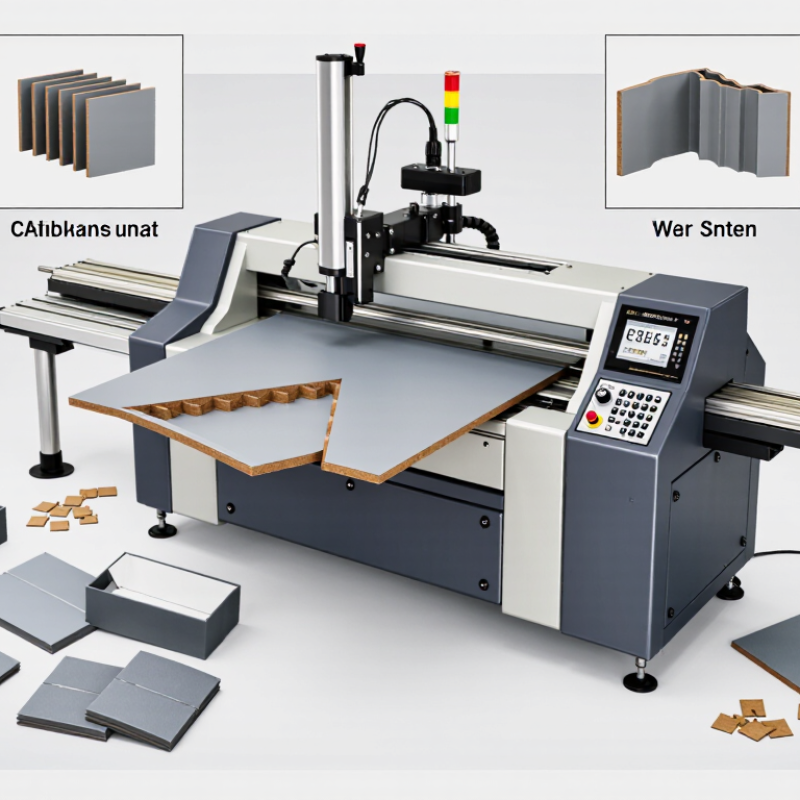
What Is a Programmable V Cut Grooving Machine for Grey Board?

Definition and Purpose of a Programmable V-Cut Grooving Machine

A programmable V-cut grooving machine makes narrow, angled channels in grey board so it can fold into clean corners. Instead of cutting through the sheet, the blade removes a controlled wedge of material and leaves a thin layer intact. That remaining layer acts as a hinge. The goal is repeatability.

Operators enter groove positions, spacing, and cutting depth through a control system. The machine then moves the board and tool according to those settings. On a packaging sample, for example, grooves may mark the corners of a rigid box lid. Accurate spacing helps the panels meet evenly, while a suitable groove depth reduces bulging at the fold.

Programmable control is useful when a job has several groove lines or needs repeated production. It can reduce manual measuring, but it cannot correct every setup mistake. Board thickness and density vary, even within a batch. A test cut is still worthwhile: inspect the fold for cracking, exposed fibres, or a loose corner, then adjust the depth if needed. Small details matter.


How the Machine Cuts V-Shaped Grooves in Grey Board

A programmable V-cut grooving machine cuts narrow, V-shaped channels into grey board so it can fold into neat corners. The operator sets groove positions, cutting depth, and angle in the machine’s controls. The board is held flat while the cutting head follows the programmed path. That matters.

During cutting, an angled blade removes a strip of board material. Its two sloping cuts meet near the bottom, leaving a thin layer intact. This layer acts as a hinge when the board is folded. A well-set groove can help form a clean corner on a rigid box or display structure. In practice, grey board thickness and density vary. Small shifts show. A groove that is too deep may weaken the fold; one that is too shallow can resist bending. Test cuts help reveal the right settings, though they do not remove every variable.

Tips: Keep the board square against its stops, and check the first groove with a sample fold. Inspect the edge for loose fibres or tearing. If the corner looks uneven, review the depth and alignment before running more sheets. Real setups are not always tidy, so record adjustments that work.

Main Components and Programmable Controls

A programmable V-cut grooving machine for grey board combines a rigid worktable, board guides, cutting tools, and a control system. The table supports the sheet while adjustable guides help keep its edges aligned. A grooving head removes material at a set angle and depth, leaving a channel that lets the board fold into a crisp corner. The exact tool arrangement varies by machine, so operators should check the equipment manual before setup.

The controls translate measurements into repeatable movements. An operator can enter groove positions, spacing, depth, and feed settings through a touchscreen or control panel. Depending on the machine, programs may be saved for recurring box dimensions. Sensors or mechanical stops can help locate the board, but they do not replace careful loading. Small shifts matter. A misaligned sheet can produce uneven folds, even when the programmed values look correct.

Before production, a practical check is to cut a sample and inspect its groove width, remaining board thickness, and fold quality. Grey board varies in density and thickness, so one setting may not suit every batch. The control system improves consistency, but it cannot judge a weak or crushed sheet. That limitation deserves attention. Keep the cutting area clean, confirm tool condition, and record settings alongside the board specification. These habits make adjustments easier to trace when results change.

Common Applications in Packaging and Bookbinding

A programmable V-cut grooving machine removes a narrow channel from grey board, helping it fold along a clean, controlled line. Operators can set groove positions and cutting depth for repeat jobs. Small details matter. A groove that is too deep may weaken the panel; one that is too shallow can resist folding.

In packaging, grooved grey board is used for rigid gift boxes, presentation cases, and protective product cartons. Multiple channels can form corners and edges, allowing flat panels to fold into a box shape. This can reduce manual scoring and help keep batches consistent. Still, board thickness and density vary. A quick test on the actual sheet is more useful than trusting a saved setting alone.

Bookbinding shops use V-grooving to prepare covers and case boards, especially when a book needs a firm spine hinge or wrapped exterior. Accurate channel placement helps the cover open without forcing the spine. It also supports neat alignment when cloth or paper is applied. Results depend on setup, blade condition, and material handling. Even a well-programmed machine cannot correct a warped board, and the first sample may need adjustment.

Key Factors for Choosing and Maintaining a Machine

Choosing a programmable V-cut grooving machine for grey board starts with the work you actually produce. Check the board’s thickness range, required groove depth, cutting angle, and sheet dimensions. These details affect whether folds form clean corners or show crushed edges. Ask for a trial using your own board, not only a sample supplied for demonstration. Inspect several cuts under normal production speed.

Repeatability matters. The control system should make stored settings easy to retrieve and adjust, while operators should be able to verify blade position and feed alignment. Check how quickly the machine handles different jobs, and whether dust extraction and guarding fit your workspace. A fast machine is less useful if setup takes too long. In practice, the first settings may need adjustment; record what works.

For maintenance, inspect blades for chips or dull edges and check alignment at intervals recommended by the manufacturer. Clean board dust from accessible areas, with the machine safely isolated before servicing. Keep feed surfaces clear, and listen for new vibration or uneven movement. These small signs can reveal wear early. A simple log of blade changes, cleaning, and faults helps teams spot patterns, though records alone cannot replace careful inspection.

What Is a Programmable V-Cut Grooving Machine for Grey Board?

A programmable V-cut grooving machine uses controlled settings to cut grooves in grey board, leaving material at the base so the board can fold into a clean angle. When choosing a machine, check its supported board thickness, groove-angle and depth adjustment, positioning accuracy, feeding method, and dust extraction. Regular maintenance helps preserve cut quality and reliable operation.

Suggested routine checks are shown as approximate intervals, not fixed requirements. Dust levels, workload, and the machine’s manual may call for more frequent cleaning or inspection.

Kontaktbox-Frau

  • CNC-STEP – Quick contact