


What Are the Top 10 Coex Film Manufacturers in China?

China’s coextrusion film sector sits at the intersection of packaging demand, materials engineering, and manufacturing scale. The OECD’s Global Plastics Outlook (2022) estimates that global plastics production reached 460 million tonnes in 2019. Packaging represented about 31% of plastics use. These figures describe the wider market, not Coex Films alone, but they help explain why multilayer films remain important. A coextruded structure can combine layers for sealing, stiffness, moisture protection, or product visibility. On a production line, those choices affect more than the film itself: they influence filling speed, shelf life, and packaging waste.

For buyers, identifying China’s leading manufacturers takes more than comparing company size. Relevant checks include film structure, thickness tolerance, barrier performance, printing options, and documented quality controls. Ask for technical data sheets and samples suited to the intended application. Then compare results under the same test conditions. The OECD report does not rank film suppliers, and public company data can be uneven. That is a limitation. The list behind “What Are the Top 10 Coex Film Manufacturers in China?” should therefore be treated as a practical starting point, not a definitive league table. Supplier capabilities change, and a polished catalogue cannot replace a line trial. Small differences matter.
What Are the Top 10 Coex Film Manufacturers in China?

Understanding Coextruded Film and Its Industrial Uses

Coextruded film is made by joining two or more polymer layers while they are molten. Each layer can perform a different job. One may provide stiffness, while another improves sealing or resistance to moisture and oxygen. The finished film can look like a single sheet, though its structure is more complex. This design is useful for food packaging, agricultural covers, medical packaging, and industrial liners. For example, a pouch may need a strong outer surface and a layer that seals reliably around its edges. Small details matter.

Choosing a structure starts with the product and the conditions it will face. How much moisture must it block? Will it be stretched, punctured, heated, or stored outdoors? These questions guide the layer materials and thicknesses. During production, operators monitor melt flow, layer balance, and cooling; uneven layers can weaken performance. A sample should be tested for sealing, strength, and barrier properties under realistic conditions. There is a trade-off: extra layers may add capability, but also cost and process complexity. More layers are not automatically better. Even a well-designed film may need adjustment when line speed or packaging conditions change.


An Overview of China’s Coex Film Manufacturing Sector

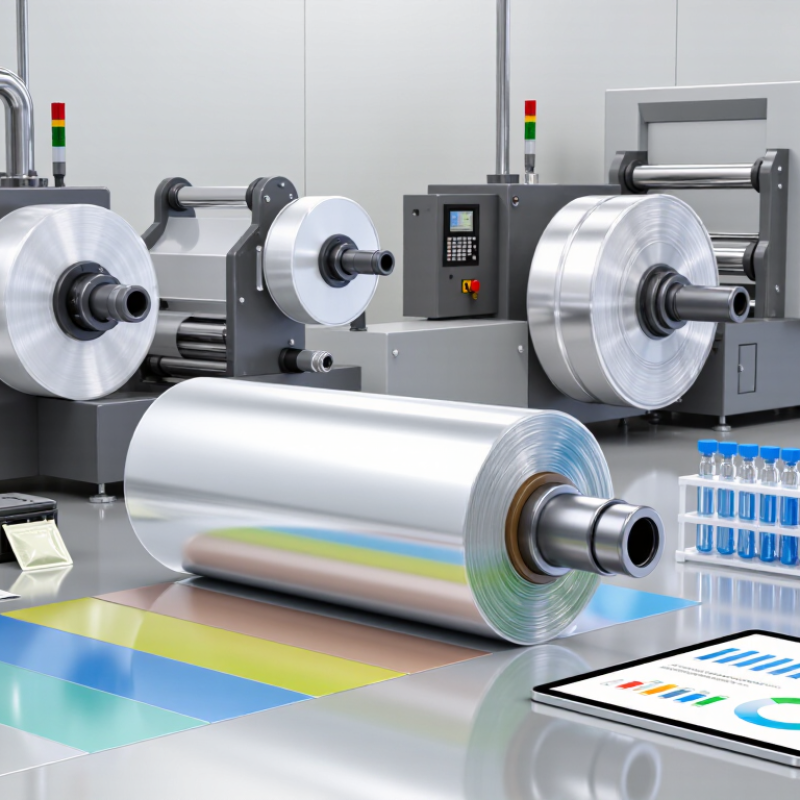
China’s coextruded film sector serves food, personal-care, agricultural, and industrial packaging markets. Manufacturers combine polymer layers to balance sealing, stiffness, moisture resistance, and puncture protection. A typical line feeds several melts through a die, then cools and winds the web into large rolls. Small changes in temperature or layer thickness can affect the finished film.

China’s National Bureau of Statistics recorded 74.885 million tonnes of plastic-products output in 2023. This figure covers many products, not coex film alone, so it should not be read as a sector market size. The OECD’s Global Plastics Outlook estimated global plastics production at 460 million tonnes in 2019. That broader figure highlights the scale of material use, but says little about China’s multilayer-film capacity. The data has a blind spot.

In practice, buyers assess more than nominal output. They examine gauge tolerance, layer uniformity, seal performance, and roll-to-roll consistency. A sample may look smooth yet fail after repeated flexing or on a high-speed filling line. Manufacturers also face pressure to reduce material use without weakening barrier performance. That trade-off is not always solved neatly. Factory audits and independent testing can reveal details that catalog specifications miss.

Criteria for Assessing Leading Coex Film Manufacturers

Choosing leading coex film manufacturers means checking repeatable performance, not brochure claims. OECD’s Global Plastics Outlook (2022) estimates global plastics production reached 460 million tonnes in 2019; packaging generated about 40% of plastic waste. This scale makes material efficiency and scrap control commercially relevant, though coex film is only one part of the system. Ask for layer-structure drawings, resin specifications, and batch-level certificates. Inspect production rolls, not only samples.

Assess process control through thickness profiles across the web, sealing-window tests, tensile and puncture results, and barrier data for intended conditions. Request test methods, sampling frequency, and recent lot-to-lot records. ISO 9001 certification helps assess management systems, but does not prove film performance. For laboratory claims, check the method and lab competence, ideally against ISO/IEC 17025 accreditation. Small details matter. Edge trim, gels, roll telescoping, and splice frequency can disrupt packing lines.

Review engineering support, lead-time stability, complaint handling, and resin-source traceability. Compare suppliers using the same structure, gauge, and test conditions; otherwise, quotations are not comparable. Ask whether production trials can run on your converting equipment. A polished datasheet is not enough. No scorecard is perfect. Include a trial order and document what failed, not only what passed. That step can reveal gaps before full-scale production.

What Are the Top 10 Coex Film Manufacturers in China? - Criteria for Assessing Leading Coex Film Manufacturers

The following weighted scorecard provides a practical framework for comparing co-extruded film manufacturers. It lists assessment criteria rather than company rankings; buyers should verify each supplier’s claims using product documentation, samples, audits, and test results.

Assessment Criterion Suggested Weight What to Assess Evidence to Request
1. Film Structure and Co-extrusion Capability 15% Ability to produce the required number of layers and combine suitable polymers for the intended application. Layer-structure specifications, resin descriptions, process details, and samples matching the requested construction.
2. Barrier and Functional Performance 15% Performance against application-specific requirements for oxygen, water vapor, aroma, light, puncture, or sealing. Recent test reports identifying the method, test conditions, specimen thickness, and measured results.
3. Thickness and Dimensional Consistency 12% Control of total thickness, width, roll length, and variation across and along the web. Product tolerances, inspection records, measurement procedures, and results from production samples.
4. Quality Management and Traceability 12% Documented quality controls, lot identification, nonconformance handling, and traceability of raw materials and finished rolls. Current certificates where applicable, quality procedures, sample inspection records, and a traceability demonstration.
5. Application and Regulatory Compliance 10% Suitability for the intended market and use, including food-contact, chemical, or other applicable requirements. Declarations of compliance, migration or other relevant test reports, and documentation for the target jurisdiction.
6. Converting and End-Use Compatibility 10% Suitability for the buyer’s printing, lamination, sealing, forming, or packaging equipment and process conditions. Machine-trial results, sealing or processing guidance, and samples evaluated on the buyer’s equipment.
7. Production Capacity and Delivery Reliability 8% Available production capacity, lead-time management, order flexibility, and ability to support repeat orders. Capacity information, production schedules, delivery records, and a clearly defined order and contingency plan.
8. Technical Support and Customization 7% Ability to assist with material selection, structure development, troubleshooting, and documented product changes. Technical response process, development samples, change-control procedures, and relevant application experience.
9. Sustainability and Material Efficiency 6% Material-use efficiency, recyclability considerations, recycled-content options where suitable, and environmental data transparency. Material composition, relevant environmental declarations, and substantiation for sustainability-related claims.
10. Commercial Transparency and Total Cost 5% Clarity of specifications, pricing assumptions, minimum order quantities, packaging, payment terms, and after-sales commitments. A comparable written quotation, confirmed product specification, sample approval process, and warranty or complaint terms.
Total 100% Apply the same criteria and evidence requirements to every supplier being compared.

Profiles of 10 Notable Coex Film Manufacturers in China

China’s coex film manufacturers serve packaging, agriculture, and industrial markets. The profiles below highlight ten supplier types by production focus, not by ranking. Confirm current specifications directly; equipment and capabilities can change.

A high-volume packaging producer typically offers multilayer films for food and household goods, with printed or sealable options. A barrier-film specialist focuses on controlling oxygen and moisture transmission. A flexible-packaging converter may pair coextrusion with slitting and pouch-making. A stretch-film maker prioritizes puncture resistance and load stability.

Some details matter. A greenhouse-film producer may add UV protection and tune light diffusion. An agricultural-film supplier often develops wider rolls for seasonal use. A hygiene-film manufacturer may focus on softness, thin gauges, and consistent unwinding. A medical-packaging supplier needs documented quality controls and traceable production. Verify claims.

An industrial-film producer may target liners, protective covers, or heavy-duty bags. A custom-run manufacturer can adjust layer ratios, thickness, and resin selection for specific applications. These profiles are useful starting points, not proof of suitability. Ask for sample rolls, technical data sheets, and test methods. Compare tolerances, minimum order quantities, and delivery lead times. A polished brochure is not enough; actual performance can differ between batches.

Comparing Products, Technology, and Manufacturing Capabilities

Comparing coex film manufacturers means looking beyond product names and quoted prices. A practical review checks layer structure, thickness range, seal performance, and barrier needs. Ask for sample rolls, then inspect edge quality and gauge consistency. A film for frozen food may need different toughness from one used for dry goods. The details matter.

Technology is visible in process control. Check whether the manufacturer tracks extrusion temperatures, layer ratios, and line speed during production. Inline thickness gauges and documented quality checks can reduce variation between rolls. Ask how defects are recorded and corrected. Small differences matter. A polished specification sheet is useful, but it cannot show every production shift.

Manufacturing capability also includes repeatability, not just monthly capacity. Compare available widths, typical lead times, changeover practices, and the ability to keep the same construction across repeat orders. Request test data and clarify which conditions produced it. Published capacity can sound impressive; stable output is harder to verify. A neat scorecard can still mislead, especially when suppliers measure quality differently. Plant visits and trial runs help, though they take time and may not reveal every weakness.

Article Source:

Kontaktbox-Frau

  • CNC-STEP – Quick contact