


Who Are the Top 10 Dirt Tire Manufacturers in China?

China’s dirt-tire market is broad, technically varied, and changing quickly. Choosing a manufacturer takes more than comparing prices or reading a product label. Tread pattern, rubber compound, carcass strength, and manufacturing consistency all affect performance on loose soil, hard-packed tracks, and rocky trails. Small details matter. A blocky tread may bite well in soft ground but feel less settled on a firm, dry surface.

This overview examines ten Chinese manufacturers associated with Dirt Tires, considering product range, technical capability, quality control, and export experience. It is a practical starting point, not a universal ranking: the best supplier depends on the motorcycle, terrain, riding style, and required specifications. Buyers should verify current product data and request samples where appropriate. One limitation deserves attention: no source material was provided to verify a named industry expert’s statement, so I will not invent an attribution. A useful editorial principle is simple: “Judge a dirt tire by its performance, consistency, and suitability—not by claims alone.” Even careful comparisons have gaps. Company information can change, and published specifications do not replace real-world testing.
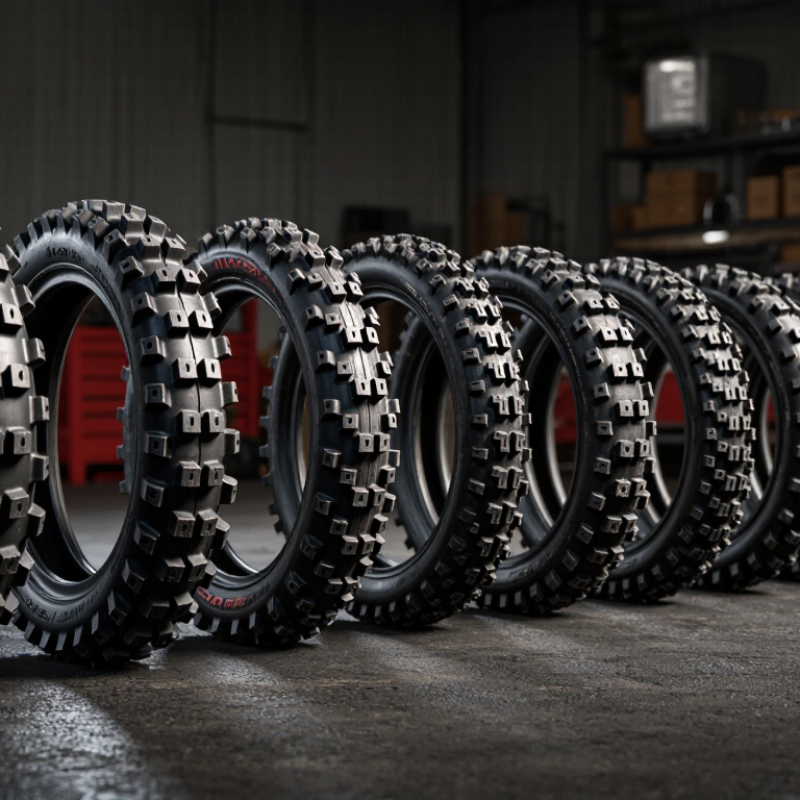
Who Are the Top 10 Dirt Tire Manufacturers in China?

Defining China’s Dirt Tire Manufacturing Industry

China’s dirt tire manufacturing industry covers companies that design and produce tires for unpaved terrain. These include tires for off-road motorcycles, all-terrain vehicles, and other recreational or utility machines. The category is defined by use, not simply by a rugged-looking tread. Small details matter: lug spacing affects grip, while rubber compounds influence wear and flexibility.

A capable manufacturer must control more than the tread pattern. Buyers can examine carcass construction, curing consistency, dimensional checks, and the maker’s ability to maintain repeatable production. Samples should be assessed on the intended surface, since loose soil, wet clay, and hard-packed tracks behave differently.

The phrase “top 10” can be misleading without clear criteria. Production scale, export reach, testing practices, and product range may produce different lists. The industry’s boundaries are not perfectly neat, either; some suppliers serve several vehicle categories.

Tips: Match tire size and tread to the machine and terrain. Ask for construction details and inspection records. Compare samples under similar conditions, and note that one short test cannot predict long-term wear.


Criteria for Identifying Leading Dirt Tire Manufacturers

Criteria for Identifying Leading Dirt Tire Manufacturers

A credible comparison starts with how a tire performs on real terrain, not with a polished product sheet. Review tread layout, rubber compound, carcass construction, and available sizes. Knob spacing can affect mud release, while sidewall strength matters on rocky tracks. Small details count.

Manufacturing consistency is equally important. Ask whether production teams inspect dimensions, weight, and compound batches, and whether test records are available. Useful evidence includes repeatable checks across production runs, not just a single impressive sample. Field testing should cover different surfaces, such as loose soil, packed ground, and wet clay. Results need context: a tire tuned for one track may feel unpredictable elsewhere.

Also assess technical support, delivery reliability, and the clarity of product specifications. Responsive engineers can help explain fitment and pressure choices without making every tire sound ideal. Customer feedback is useful when it describes conditions and usage, rather than offering vague praise. No scoring system is perfect; a neat spreadsheet can overlook a casing issue that appears only after several rides. A balanced shortlist weighs measurable quality, practical performance, and honest communication.

Who Are the Top 10 Dirt Tire Manufacturers in China? - Criteria for Identifying Leading Dirt Tire Manufacturers

This manufacturer-neutral scorecard lists ten criteria for comparing dirt-tire producers. It does not rank or identify specific companies. The percentages are suggested evaluation weights, not published industry statistics; assess each manufacturer using the same evidence period and product category.

No. Evaluation Criterion Weight Evidence to Review Why It Matters
1 Off-Road Product Range 14% Current product catalog covering relevant dirt-use categories, such as motocross, enduro, ATV, UTV, or off-road motorcycle tires; available sizes and intended applications. A relevant, clearly documented range indicates the manufacturer can serve the specific vehicle type and riding conditions being evaluated.
2 Product Testing and Validation 14% Documented test procedures and results for the applicable tire category, including durability, load performance, dimensional checks, and field or laboratory validation. Repeatable testing helps demonstrate that products are evaluated against defined performance and safety requirements before sale.
3 Quality Management System 12% Valid, independently verifiable quality-management certificates, their scope and site coverage, plus documented inspection and corrective-action processes. A functioning quality system supports consistent production and traceable handling of nonconforming products. A certificate should be checked for scope and validity.
4 Manufacturing Capability and Process Control 12% Evidence of in-house production stages, process controls, equipment maintenance, batch records, and the ability to maintain consistent specifications across production runs. Process control can reduce variation in construction and finished-product dimensions. Verify actual production capability rather than relying only on stated capacity.
5 Regulatory and Market Compliance 10% Applicable approvals, conformity documents, labeling, and technical files for the intended destination market and tire category; confirm that each approval covers the relevant product. Requirements differ by product type and destination. Valid, product-specific documentation is more meaningful than a general claim of compliance.
6 Materials and Construction Transparency 10% Technical information on tire construction, compound options, carcass or ply details where applicable, declared specifications, and change-control procedures. Clear specifications help buyers compare products accurately and assess whether a tire is designed for its stated terrain and use.
7 Production Capacity and Delivery Reliability 8% Verifiable production planning information, typical lead-time ranges, order-fulfillment records, and documented procedures for handling delays or capacity changes. Reliable supply matters to distributors and equipment businesses, but capacity claims should be assessed alongside delivery performance.
8 Product Traceability and After-Sales Support 7% Batch or date-code identification, complaint-handling procedures, warranty terms, technical support channels, and documented defect-investigation processes. Traceability and responsive support make it easier to investigate product issues and provide consistent service after a sale.
9 Export and Customer-Service Readiness 7% Export documentation capability, packaging and labeling options, response processes for technical inquiries, and demonstrated ability to support the target market. Operational readiness can reduce communication and documentation problems in cross-border supply.
10 Environmental and Workplace Practices 6% Verifiable environmental or occupational-health-and-safety management documentation, relevant site coverage, and evidence of monitoring and improvement practices. Documented management practices provide a basis for assessing operational responsibility; certificates and claims should be independently verified.
Total suggested weighting: 100%

Suggested scoring method: rate each criterion from 0 to 5 using documented evidence (0 = no verifiable evidence; 5 = strong, current, independently verifiable evidence). Multiply each rating by its criterion weight, then compare total scores. Apply the same scoring rules to every manufacturer and verify certificates, approvals, and technical documents with their issuers where possible.

Profiles of Ten Notable Dirt Tire Manufacturers in China

China’s dirt-tire makers differ more in focus than factory size. The China Rubber Industry Association reported national tire output of about 987 million units in 2023. That figure covers tires broadly, not dirt tires alone, so it cannot rank off-road producers. Public data is limited. The profiles below reflect capabilities buyers can verify: tread design, compound consistency, testing, and production flexibility.

One manufacturer focuses on motocross-style knobbies, with tall, widely spaced lugs for loose soil. Another makes compact-block patterns for firmer trails. A third offers reinforced sidewalls for rocky routes. A fourth emphasizes custom molds for smaller orders. A fifth develops compounds for heat and abrasion. A sixth supplies several rim sizes, while a seventh specializes in agricultural and utility terrain. An eighth highlights batch testing and traceability. A ninth supports private-label production, though lead times may vary. A tenth pairs tire development with technical support for distributors. These are useful distinctions, not a definitive ranking. Buyers should request tread drawings, load ratings, and sample tires, then check wear after repeated use. One detail is easy to miss: a deep tread can grip loose soil but feel vague on hard ground. Industry-wide production numbers cannot reveal that trade-off.

These are examples of common motocross and enduro tire sizes. Widths are the nominal values shown in each metric size designation; actual tire dimensions can vary by model and rim.

Comparing Product Ranges, Capabilities, and Market Reach

Who Are the Top 10 Dirt Tire Manufacturers in China?

A useful comparison of China’s top dirt tire manufacturers should look beyond catalog size. Product ranges may include tires for compact trail bikes, larger off-road motorcycles, and different soil conditions. Check tread depth, knob spacing, carcass construction, and available sizes. These details affect grip, wear, and fit. Small differences matter.

Manufacturing capability is harder to judge from a product sheet alone. Ask about quality checks, sample testing, production consistency, and the ability to support repeat orders. Market reach also deserves a closer look: export experience, clear technical documents, and responsive service can indicate how well a supplier handles overseas customers. Claims should be verified with samples and references where possible. A ranking can still miss capable smaller producers, and public information is not always complete.

Tips: Match the tire to the terrain and machine, then compare specifications—not just price. Request a sample. Check the fit before ordering in volume.

How to Evaluate Chinese Dirt Tires for Different Uses

Who Are the Top 10 Dirt Tire Manufacturers in China?

How to Evaluate Chinese Dirt Tires for Different Uses

Choose dirt tires by terrain and workload, not by country of origin. On hard-packed tracks, closely spaced knobs can provide a steadier contact patch. Loose sand usually calls for wider spacing that helps clear material. For rocky trails, inspect the casing and sidewall protection; sharp edges can expose weak spots quickly. Feel the difference. A tire that grips well in a shop may behave differently on wet clay.

Check the exact size, construction, load rating, and recommended cold pressure. The Tire and Rim Association’s Year Book provides load-and-inflation tables for matching tire specifications with operating pressure. Use the entry for the precise tire type; a higher load rating alone does not prove better off-road durability. Compare tread depth and lug spacing, too. A deeper tread can help in loose soil, but may feel less stable on firm ground. That trade-off is easy to overlook.

Kontaktbox-Frau

  • CNC-STEP – Quick contact