


China Top 10 Fiber Opening and Pillow Filling Machines?
China’s textile manufacturers serve a large and changing fiber market. Textile Exchange’s Materials Market Report 2024 estimates that global fiber production reached 124 million tonnes in 2023. That figure does not measure pillow filling alone, but it shows the scale of material handling behind modern textile production. For workshops, the practical challenge is more tangible: opening compressed fiber evenly, controlling dust, and filling each pillow to a consistent weight.
A reliable Fiber Opening And Pillow Filling Machine can help address these tasks. Yet machine names and advertised capacities do not always tell the whole story. Fiber type, target output, filling accuracy, operator access, and maintenance needs all affect real performance. A line processing polyester staple fiber may behave differently from one handling recycled fiber or blended materials. Small details matter. A blocked feed hose can stop an otherwise capable production line.
This guide introduces ten machines and suppliers associated with China’s market. It considers published specifications, application fit, and features buyers can verify with manufacturers, rather than treating a ranking as a laboratory result. No single public dataset provides a standardized, independently audited ranking of China’s pillow-filling machines, so readers should confirm current models, test results, and after-sales support directly. That limitation deserves attention. The right choice depends on the factory’s fibers, production targets, available floor space, and budget—not simply the largest capacity claim.
What Are Fiber Opening and Pillow Filling Machines?
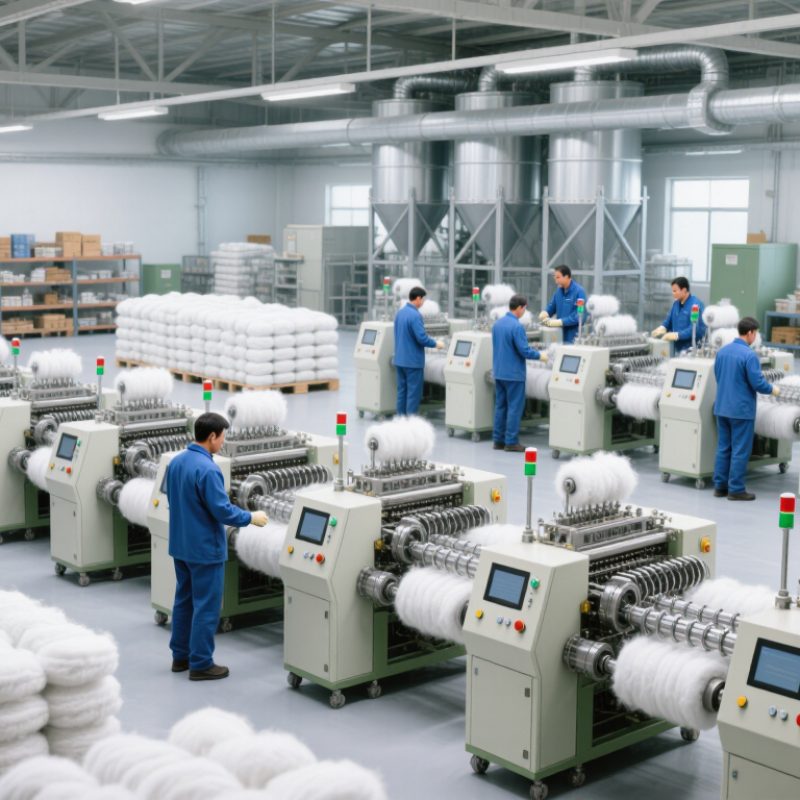
Fiber opening and pillow filling machines prepare loose filling and move it into pillow shells. An opener loosens compressed fiber tufts, separates clumps, and helps create a more even feed. Depending on the line, rollers, opening drums, and air ducts carry the material forward. The filling machine then directs measured fiber through a nozzle into the shell. Some systems use weighing controls; others rely on timed feeding. The result depends on fiber type, settings, and operator checks.
The wider material market makes this equipment relevant. Textile Exchange’s Materials Market Report 2024 estimates that global fiber production reached 124 million tonnes in 2023. That figure covers many fiber uses, not pillow filling alone. Still, it shows the scale of material handling behind textile production. For pillow makers, consistent opening matters: dense clumps can create uneven corners, while excessive opening may affect loft. There is no single setting for every fiber. Trial runs are useful, and easy to overlook.
Tips: Test the actual filling before production. Check pillow weight, corner coverage, and seam pressure across several samples. Clean screens and ducts regularly; a small blockage can change the feed. Record settings, but review them when fiber batches change.

How Do Fiber Opening and Pillow Filling Machines Work?
Fiber opening and pillow filling machines handle two connected tasks. The opener loosens compressed polyester or other suitable filling fibers. Material enters through a hopper, where rollers or beaters separate clumps into a lighter, more even mass. The exact mechanism varies by machine and fiber type. The fibers may then travel through a duct, often moved by airflow, toward the filling station.
At the filling station, an operator places a pillow shell over a nozzle. Air carries the prepared fiber into the shell while the operator controls the feed. Some systems use timed filling; others rely on weight or volume settings. The operator checks the pillow’s shape and firmness, then adjusts the settings if needed. In practice, the result is not always perfectly even. Static, tangled fibers, or a poorly positioned shell can affect filling consistency.
Tips: Keep the hopper feed steady, and check for clumps before filling. Weigh sample pillows regularly to catch drift. Follow the machine’s operating instructions, keep guards in place, and disconnect power before clearing a blockage. Small adjustments can help, but fiber behavior still varies.
What Criteria Matter When Comparing Chinese Machine Suppliers?
When comparing Chinese fiber opening and pillow filling machine suppliers, start with the material, not the brochure. Ask whether the machine has been tested with your fiber type and length. Request a short trial using a sample of your own material. Details matter. Check whether opened fiber looks even and whether filling weights stay consistent across repeated cycles. A high stated output means little if your workshop cannot feed or pack material at that speed.
Review the machine’s construction, controls, guarding, and access points for cleaning. Ask for clear specifications, operating videos, and a parts list. Check what the quoted price includes, such as installation, training, shipping, and essential spare parts. Ask how quickly the supplier responds to technical questions, and whether common parts can be shipped reliably. Keep records of answers. Not every gap signals poor quality, but vague answers deserve follow-up. A factory visit or independent inspection can reveal practical details that polished photos miss. I would not choose on price alone; still, a more expensive option is not automatically better. Compare the machine against your actual workload and the support you can verify.
China Top 10 Fiber Opening and Pillow Filling Machines? — What Criteria Matter When Comparing Chinese Machine Suppliers?
There is no universal ranking of fiber-opening and pillow-filling machines: the right configuration depends on the fiber, production process, and finished product. Use the machine types and verification points below to compare suppliers. Ask for specifications and test results for the material you intend to process.
| # | Machine type or configuration | Typical process role | Key comparison criteria | What to verify with the supplier |
|---|---|---|---|---|
| 1 | Bale opener | Separates and loosens compressed fiber before downstream processing. | Feed method, opening action, usable fiber types, and consistency of output. | Request a trial using your supplied fiber; inspect for uneven feeding, fiber damage, and residual unopened clumps. |
| 2 | Coarse opener | Performs an initial opening step on fibers that need further separation. | Roller or beater arrangement, feed control, access for cleaning, and compatibility with the next stage. | Ask for a process-flow diagram and confirm that the machine is suitable for your fiber form and intended line speed. |
| 3 | Fine or secondary opener | Further separates opened fiber to support a more uniform feed for later processing. | Adjustability, fiber breakage, cleaning access, and performance with the specified fiber blend. | Compare before-and-after samples from a witnessed test; ask how settings are adjusted for different fibers. |
| 4 | Multi-stage opening line | Combines successive opening stages to process fiber from bulk feed toward a more open state. | Stage sequence, transfer between machines, control integration, footprint, and line balance. | Request the complete equipment list, layout, electrical requirements, and a full-line test rather than evaluating one unit alone. |
| 5 | Fiber blending or mixing unit | Combines fiber components to help produce a consistent blend before filling or further processing. | Batch or continuous operation, dosing method, mixing consistency, and cleanout between blends. | Confirm the intended blend ratios and ask how the unit controls or checks the feed proportions. |
| 6 | Dust extraction and filtration module | Collects airborne lint and dust generated during fiber handling, where included in the line. | Extraction points, filter access, cleaning method, and compatibility with the installation environment. | Request airflow and filter documentation for the proposed setup; confirm applicable workplace and local safety requirements. |
| 7 | Storage hopper with level control | Buffers opened fiber and supplies it to a downstream machine or filling station. | Hopper capacity, bridging prevention, level-sensing method, and feed consistency. | Check how the hopper handles your fiber’s bulk behavior and whether level controls are included in the quoted scope. |
| 8 | Weighing or dosing unit | Measures or meters fiber before it is delivered to a pillow-filling station, if precise dosing is required. | Target-weight range, repeatability, calibration procedure, and integration with the filling cycle. | Ask for test records at your target pillow weight and clarify how the stated weighing tolerance is defined. |
| 9 | Pneumatic pillow-filling machine | Uses an air stream to convey loose fiber through a filling tube into a pillow casing. | Air supply requirements, filling-tube design, operator controls, dust handling, and consistency between fills. | Test with the intended fiber and pillow casing; confirm compressor requirements and whether dust collection is included. |
| 10 | Mechanical or conveyor-assisted filling station | Feeds fiber mechanically to a filling point; the specific mechanism and workflow depend on the machine design. | Feed mechanism, casing handling, fill control, changeover time, and operator safety features. | Ask for a live demonstration using the required pillow dimensions and fiber type, and verify the actual staffing and handling steps. |
Comparison reminder: Production capacity, power use, dimensions, and output quality depend on the specific machine model, fiber type and condition, process settings, and line configuration. Compare like-for-like quotations and request written specifications, a material test, installation requirements, safety documentation, warranty terms, and spare-parts support.
Which 10 Chinese Companies Lead the Fiber and Pillow Filling Machine Market?
China’s fiber and pillow-filling machine market includes manufacturers with different strengths, rather than one universally accepted top-ten ranking. Without a consistent public dataset, naming ten leaders as fact would be misleading. A useful comparison looks at ten supplier profiles: fiber-opening specialists, pillow-stuffing equipment makers, integrated-line builders, compact workshop-machine producers, high-output factory suppliers, custom automation firms, recycled-fiber equipment makers, export-focused manufacturers, service-oriented regional firms, and companies offering complete production layouts.
For buyers, the machine’s actual performance matters more than a polished catalog. Ask for a sample run using your fiber, then check whether the feed rollers handle clumps evenly and whether filling weight stays consistent. Observe dust control, guarding, adjustment access, and how quickly operators can clear a jam. Request written details on output, power use, spare parts, and service response times. A supplier’s videos can help, but they do not replace a live test. This picture is not perfectly neat: smaller firms may offer useful customization, while larger operations may provide broader support. Compare evidence, not labels. A short trial can reveal more than a long sales presentation.
China Top 10 Fiber Opening and Pillow Filling Machines? Which 10 Chinese Companies Lead the Market?
Global Fiber Production Mix: Industry Context for Pillow-Filling Machinery
Polyester accounted for approximately 57% of global fiber production in 2023. This provides raw-material context for fiber-opening and pillow-filling equipment; it is not a ranking or market-share estimate for Chinese manufacturers.
Source: Textile Exchange, Materials Market Report 2024 (2023 global fiber production data).
How Can Buyers Select the Right Machine and Supplier?
Selecting a fiber opening and pillow filling machine starts with the material, not the advertised speed. Compare the fiber type, required output, and pillow weight you actually produce. Ask suppliers to run your fiber through a trial. Watch for uneven opening, clumps, and filling that varies between samples. A fast line is not useful if it creates inconsistent pillows.
Check how operators adjust filling weight and clear blockages. Review the layout, guarding, dust collection, and access to wear parts. Request a written capacity estimate based on your fiber and target weight, rather than a best-case figure. Also ask who handles installation, training, and spare parts. These details matter during a busy shift. There is no perfect machine for every workshop; a smaller unit may suit limited space, while a larger line can bring higher setup and maintenance demands. I would not choose on price alone.
Tips: Bring sample fiber and pillow shells to the supplier’s test. Record filling time and weight variation. Ask for references from similar production settings, and check how quickly service questions receive practical answers. A demo can still miss real-world issues, so leave room to reassess.
Siemensstraße 13-15
47608 Geldern
NRW Deutschland
Mail: sale@atmmachinesolutions.com
Head office:
+49 (0) 2831 91021-20
Fax:
+49 (0) 2831 91021-99
SUPPORT and INFO
from 3 p.m. to 6 p.m:
+49 (0) 2831 91021-60
( please ring for a long time )
Monday to Friday
8.00 – 12.30
and 13.00 – 15.00
Visit / collection by appointment only!
➣ Sign up for our newsletter
Benefit from a 20% discount, don’t miss any events and always stay up to date.
To access the actual content, click on the button below. Please note that data will be passed on to third-party providers.
More information