Top 10 CNC Aluminum Profile Manufacturers Worldwide?
Choosing a reliable Cnc Aluminum Profile manufacturer requires more than comparing website claims. This guide introduces ten recognized suppliers worldwide, based on practical and verifiable criteria. These include extrusion capacity, alloy options, dimensional accuracy, surface finishing, quality control, tooling support, and delivery performance. We also consider whether manufacturers provide clear technical data, factory information, certifications, and responsive engineering assistance. A strong supplier should handle more than standard lengths. It should support cutting, drilling, anodizing, powder coating, and custom profile development when required.
Real production details matter. A sample profile should show clean edges, consistent wall thickness, and an even anodized surface. Engineers may also examine tolerance records, packaging methods, and communication during trial orders. These details often reveal more than polished marketing language. Customer industries, export experience, and documented production capabilities add further context. However, rankings are not permanent. A manufacturer serving automotive projects may not suit a small automation workshop. A low quoted price may also hide tooling fees, longer lead times, or limited after-sales support.
A ranking is never permanent.
This article therefore treats the top ten as a practical starting point, not an absolute verdict. Market conditions, material costs, regional logistics, and factory investments can change quickly. Readers should verify current certifications, production capacity, sample quality, and commercial terms before selecting a partner. Careful comparison remains essential, especially when a Cnc Aluminum Profile will support structural frames, machine guards, conveyor systems, or precision equipment.
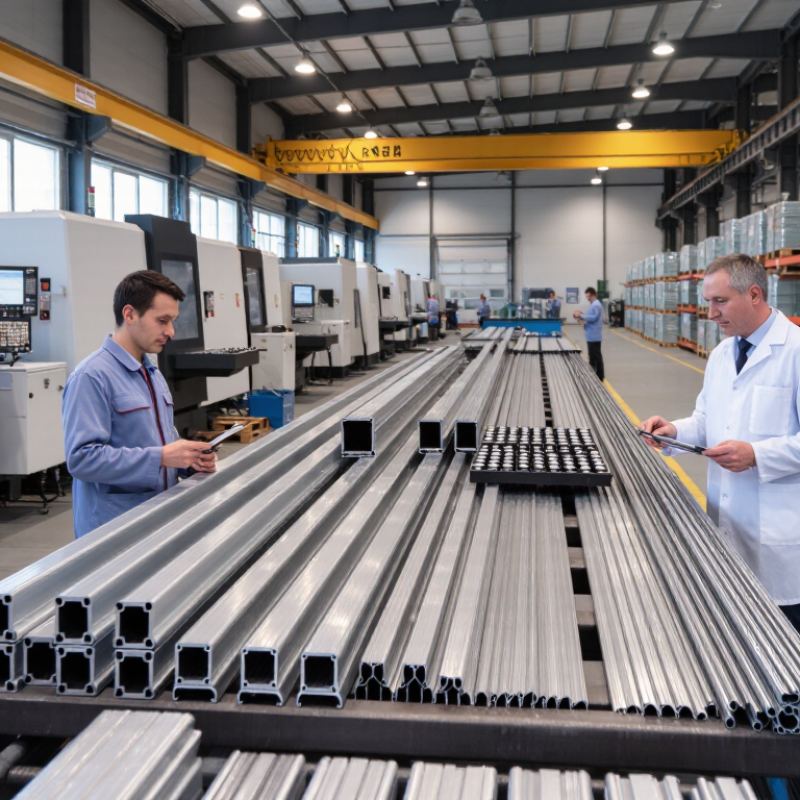
What Defines a Leading CNC Aluminum Profile Manufacturer
What Defines a Leading CNC Aluminum Profile Manufacturer
A leading CNC aluminum profile manufacturer combines precise engineering with dependable production control. The process begins with suitable alloy selection, accurate extrusion sourcing, and clear drawings. Experienced engineers check wall thickness, cutting direction, and machining access before production starts. These details reduce distortion, burrs, and unnecessary material waste.
Quality must be visible, not merely promised. Skilled teams use calibrated measuring tools, coordinate measuring machines, and in-process inspections. They verify dimensions, hole positions, surface finish, and thread quality. Traceable inspection records make problems easier to investigate. Reliable manufacturers also explain realistic tolerances, production limits, and delivery schedules. Overpromising is a warning sign.
Tips: Request a sample, inspection report, and material certificate. Ask how tools are maintained and replaced. Confirm packaging for long profiles. Small details matter.
Strong communication is another defining feature. Technical questions should receive specific answers, not vague sales language. A capable manufacturer can suggest design improvements without changing the customer’s purpose. However, perfection is rare. Even a well-managed factory may face tool wear, shipping delays, or inconsistent surface requirements. What matters is honest reporting and practical correction. I would also review several production records, because one successful sample proves very little.
Key Criteria for Comparing Global CNC Aluminum Profile Suppliers
Comparing the top 10 CNC aluminum profile manufacturers requires more than checking website claims. Start with alloy control, machining tolerance, equipment, and inspection methods. A reliable supplier should explain its material certificates and production records clearly. Ask whether profiles are cut, drilled, tapped, and milled in one controlled process. This can reduce alignment problems during assembly.
Experience matters on the factory floor. Request samples with measured dimensions, surface photographs, and a first-article inspection report. Check critical tolerances, hole positions, flatness, and edge quality.
A polished sample proves little if production consistency is weak. I have seen attractive prototypes fail during repeated machining. That remains an uncomfortable but useful warning.
Production capacity also deserves careful review. Confirm monthly output, tooling availability, maintenance practices, and realistic lead times. Certifications can support credibility, but traceability and transparent communication matter more.
Tips:
Compare suppliers using the same drawing and acceptance standard. Ask for three sample batches, not one. Review packaging details, especially corner protection and moisture control. Discuss nonconforming parts before placing an order. Clarify who pays for rework, replacement, and additional inspection. Price should be assessed beside scrap rates, delivery stability, and engineering support. A lower quotation may hide thinner process control. Keep written records of every technical change. Small misunderstandings can become expensive after tooling begins. Also check whether the supplier can support design adjustments without losing tolerance control.
Be practical. Be skeptical.
Regional Overview of the Worldwide CNC Aluminum Profile Industry
The worldwide CNC aluminum profile industry is shaped by regional strengths, not one universal manufacturing model. The top 10 manufacturers are usually found across East Asia, Europe, North America, and selected Middle Eastern and Southeast Asian markets. Each region serves different customer priorities, including price, delivery speed, engineering support, and certification requirements.
East Asian producers often combine large extrusion capacity with automated CNC machining. They commonly support electronics housings, solar frames, factory equipment, and modular construction. European manufacturers tend to emphasize tight tolerances, traceability, energy efficiency, and complex finishing. Their production may suit medical equipment, transport systems, and industrial automation. North American suppliers often focus on rapid prototyping, local technical service, and low-volume customized orders. Regional strengths differ.
Emerging manufacturing hubs are gaining attention because they offer flexible capacity and competitive labor costs. However, buyers should examine more than hourly pricing. Important checks include alloy consistency, profile straightness, machining accuracy, surface treatment, inspection records, and packaging quality. A reliable supplier should provide measurable tolerance data, material certificates, and clear sampling procedures. Factory visits can reveal practical details, such as chip control, fixture stability, and operator training.
Data remains uneven. Some rankings rely heavily on export volume and overlook engineering depth. A smaller producer may deliver better dimensional control for a demanding project. No regional model is perfect. Procurement teams should compare verified production evidence, communication speed, and after-sales responsibility before choosing among leading manufacturers.
Top 10 CNC Aluminum Profile Manufacturers Worldwide — Regional Industry Overview
Primary aluminum production is used as a transparent regional proxy for the raw-material and extrusion ecosystem supporting CNC aluminum profile manufacturing. In 2023, East Asia represented the largest production base, followed by Europe and the Middle East. Values are approximate million metric tons compiled from U.S. Geological Survey aluminum production estimates.
Profiles of the Top 10 CNC Aluminum Profile Manufacturers
The top 10 CNC aluminum profile manufacturers worldwide are best judged by production depth, not advertising alone. Leading suppliers usually combine precision extrusion, five-axis machining, drilling, tapping, and surface finishing. Their profiles serve automation frames, cleanroom equipment, lighting systems, and industrial enclosures.
Each manufacturer has a different strength. Some produce complex hollow sections with tight dimensional control. Others specialize in rapid prototyping, large structural rails, or anodized architectural profiles. Reliable factories share inspection data, alloy certificates, and clear tolerance tables. They also explain how they manage warping, burrs, and tool marks. These details reveal practical experience. A polished catalog is not enough. In my view, delivery consistency often matters more than a slightly lower quotation. Still, public information can be incomplete, so rankings should remain flexible.
Tips: Request a sample profile before placing a large order. Measure slot width, wall thickness, straightness, and surface color. Ask whether CNC tolerances are inspected after finishing. Confirm packaging, replacement procedures, and realistic lead times. A small test can expose hidden weaknesses. Also, compare drawings carefully. Some suppliers list extrusion tolerances, but not machining tolerances. That difference may create assembly problems. One overlooked detail is chip removal inside narrow channels. I have seen clean-looking parts fail during fitting because internal residue was never checked.