Who Are the China Top 12 Fiber Optic Cable Suppliers?
Choosing a fiber optic cable supplier in China involves more than comparing quoted prices. Buyers need to assess product specifications, manufacturing capacity, quality controls, and support after delivery. This guide introduces 12 Fiber Optic Cable suppliers and offers a practical starting point for comparing them. It is not a definitive ranking; supplier capabilities and product ranges can change over time.
Look closely at the details. Ask for current datasheets, relevant test reports, and clear explanations of fiber type, cable construction, attenuation, and operating conditions. Where possible, confirm production capabilities through a factory visit or independent audit. Check whether the supplier has experience with projects similar to yours, such as data centers, campus networks, or outdoor installations. Not every supplier fits every project.
A reliable comparison also considers communication, lead times, customization, packaging, and how concerns are handled after shipment. Treat broad claims with care, and verify certifications or performance statements against original documents. A polished catalog can help, but it cannot replace technical evidence or consistent service. Some information may be difficult to compare directly, especially when suppliers describe similar products differently. That is worth acknowledging.
The profiles that follow are intended to help procurement teams ask better questions, narrow their options, and identify suppliers for further review. Use the list as a research tool, then confirm the details that matter for your application before making a purchase decision.
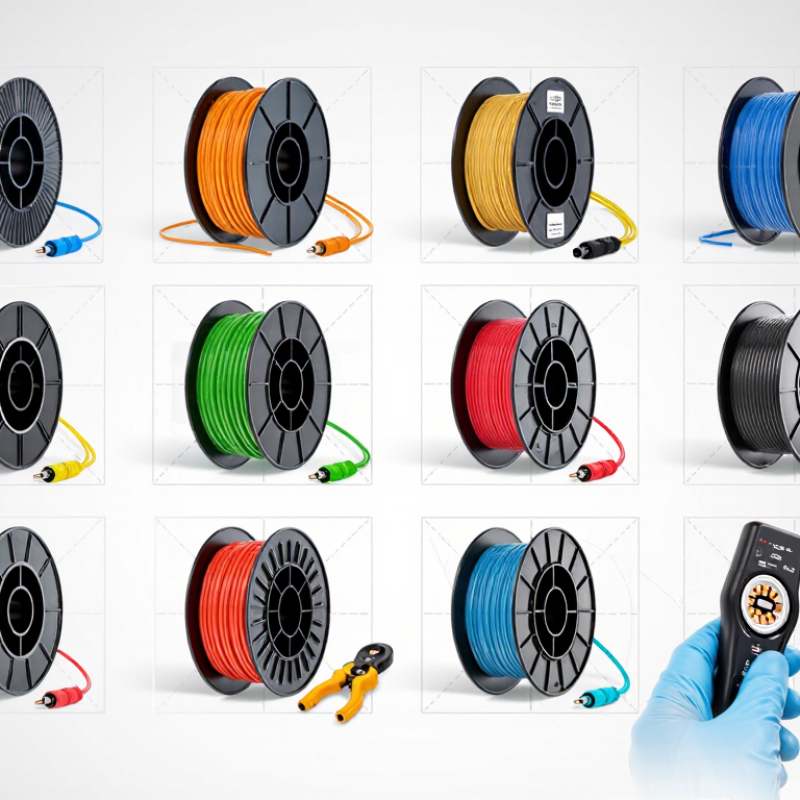
China’s Fiber-Optic Cable Industry: Products, Applications, and Market Structure
China’s fiber-optic cable industry serves telecom networks, data centers, utilities, transport systems, and industrial sites. Products range from single-mode cables for long-distance links to indoor, armored, ribbon, and aerial designs. Each construction solves a different problem: tight ducts, outdoor moisture, electrical interference, or limited installation space. The supply chain spans glass preforms, drawn fiber, cable assembly, testing, and network deployment. It is not just a cable business.
The Ministry of Industry and Information Technology reported 620 million FTTH/O subscribers in China at the end of 2023, about 97.2% of fixed broadband users. Its annual communications bulletin also recorded 64.32 million kilometers of optical cable lines. These figures show the scale of the installed network, but they do not measure cable quality or supplier market share. That distinction matters. Buyers often compare attenuation, tensile strength, bend radius, environmental ratings, and traceable test records—not output volume alone.
Tip: Match the cable structure to the installation route. For a long outdoor span, check weather exposure and mechanical load; for a data-center tray, prioritize bend performance and connector density. Ask for test reports tied to the delivered lot. A specification can look complete, yet still leave room for interpretation.
Fiber Types Explained: ITU-T G.652.D, G.657.A1, and Multimode Standards
Fiber choice starts with the route, not the supplier list. ITU-T Recommendation G.652.D defines single-mode fiber with a usable wavelength range of 1260–1625 nm, supporting common access and transport links. Its low water-peak profile helps keep more wavelengths available. G.657.A1 is designed for tighter bends and specifies a 10 mm minimum bend radius under defined test conditions. It is often useful near cabinets, wall outlets, and compact enclosures. Still, the installed cable’s datasheet matters; a category label cannot describe every cable construction.
Multimode fiber serves different distances and equipment designs. IEC 60793-2-10 gives 850 nm modal bandwidth benchmarks of 2,000 MHz·km for OM3 and 4,700 MHz·km for OM4. More bandwidth is not a universal upgrade. The transceiver and link length must match the fiber grade. Small detail. It matters. I would also check connector cleanliness and bend conditions before blaming the fiber: tiny losses can accumulate. Standards provide a reliable starting point, but real installations can be less tidy than a specification sheet.
How to Assess Suppliers: Capacity, Quality Systems, Certifications, and Export Reach
A supplier’s brochure can list impressive production capacity, but buyers should verify what that capacity means in practice. Ask how many cable lines are operating, what products they can make, and whether production slots are available for your order. A factory visit or live video tour can reveal details that a catalog misses, such as maintained equipment and orderly material storage. Request recent test records for attenuation, tensile strength, and bending performance. Good answers should connect test results to specific batches.
Quality systems matter when an order needs consistent performance, not just a successful sample. Check how the supplier tracks fiber, materials, and finished reels, and ask how it handles failed tests or customer complaints. Review current certificates directly, confirming their scope, issuing body, and expiry date. A certificate alone is not proof of every product’s suitability. Export experience deserves equal scrutiny: ask about destination-market documentation, reel labeling, moisture protection, and shipment references. Details matter.
Tips: Request a small trial order and compare its measurements with the approved sample. Ask for a capacity plan in writing, including lead times and peak-season limits. Keep questions specific. Some buyers, myself included, focus too heavily on price; that can leave important gaps in after-sales support and traceability. Verify the details before committing.
Profiles of 12 Leading Chinese Fiber-Optic Cable Suppliers and Their Specialties
China’s fiber-optic cable suppliers often specialize rather than serving every installation equally. One supplier profile may focus on long-haul backbone cables, while another concentrates on metropolitan networks. Others make access cables for neighborhood distribution or compact drop cables for home connections. Some specialize in ribbon designs that support dense fiber counts. Others produce indoor cables with flexible jackets for tight building routes. Details matter.
The remaining profiles may center on ADSS cables for aerial spans, OPGW cables for power-line routes, submarine cables, microduct products, rugged cables for industrial sites, or custom high-count assemblies. These specialties suggest where each supplier may fit, but they do not prove product performance. Check current datasheets, test reports, production capacity, and experience with projects similar to yours. Ask for evidence. A product description alone is not enough.
Tips: Match the cable structure to the route, environment, and installation method. Request samples when practical, and confirm fiber type, attenuation limits, jacket material, and delivery terms in writing. Supplier claims can change; verify details directly. I would not treat any “top 12” list as a permanent ranking.
Who Are the China Top 12 Fiber Optic Cable Suppliers?
Technical reference: common operating wavelengths used across fiber-optic products
These reference wavelengths are commonly associated with multimode (850 nm) and single-mode (1310 nm and 1550 nm) fiber systems. They provide technical context for comparing supplier specialties and are not supplier-specific measurements or rankings.
Technical Benchmark: G.657.A1 Limits Bend Loss to 0.25 dB at a 15 mm Radius
Who Are the China Top 12 Fiber Optic Cable Suppliers?
G.657.A1 fiber is designed to tolerate tighter bends than conventional single-mode fiber. A useful benchmark is a maximum bend-induced loss of 0.25 dB at a 15 mm radius under specified test conditions. The figure is not a guarantee for every finished cable or installation. Wavelength, bend turns, cable construction, and measurement method all matter. Small details matter here.
When comparing suppliers, ask for test reports that identify the fiber category, wavelength, bend radius, and number of turns. Check that reported results apply to the delivered cable, not just a bare fiber sample. Review attenuation, dimensions, jacket materials, and batch traceability as well. A neat specification sheet helps, but it cannot replace consistent production records. I would also confirm how the cable performs after handling; that step is easy to overlook.
Tips: Keep bends gradual during installation, and avoid pinching cable against sharp edges. Compare like-for-like test conditions before ranking suppliers. If a quoted loss lacks test details, ask for clarification rather than assuming it meets the benchmark.
Who Are the China Top 12 Fiber Optic Cable Suppliers? - Technical Benchmark: G.657.A1 Limits Bend Loss to 0.25 dB at a 15 mm Radius
Supplier-neutral technical screening benchmarks for comparing fiber-optic cable offers.
| No. | Technical dimension | Reference benchmark | Test condition or standard |
| 01 | G.657.A1 macrobending attenuation | ≤ 0.25 dB | 10 turns; 15 mm bend radius; 1550 nm; ITU-T G.657 |
| 02 | G.657.A1 macrobending attenuation | ≤ 1.0 dB | 10 turns; 15 mm bend radius; 1625 nm; ITU-T G.657 |
| 03 | G.657.A2 macrobending attenuation | ≤ 0.5 dB | 10 turns; 7.5 mm bend radius; 1550 nm; ITU-T G.657 |
| 04 | G.657.A2 macrobending attenuation | ≤ 1.0 dB | 10 turns; 7.5 mm bend radius; 1625 nm; ITU-T G.657 |
| 05 | G.652.D fiber attenuation | ≤ 0.4 dB/km | 1310 nm; ITU-T G.652 |
| 06 | G.652.D fiber attenuation | ≤ 0.3 dB/km | 1550 nm; ITU-T G.652 |
| 07 | Mode field diameter | 8.6–9.2 µm | At 1310 nm for G.652 fiber; ITU-T G.652 |
| 08 | Zero-dispersion wavelength | 1300–1324 nm | G.652 fiber; ITU-T G.652 |
| 09 | Chromatic dispersion at 1550 nm | 13.3–18.6 ps/(nm·km) | G.652 fiber; ITU-T G.652 |
| 10 | Cable cutoff wavelength | ≤ 1260 nm | G.652 fiber; ITU-T G.652 |
| 11 | Cladding diameter | 125 ± 0.7 µm | G.652 fiber geometric specification; ITU-T G.652 |
| 12 | Core-to-cladding concentricity error | ≤ 0.5 µm | G.652 fiber geometric specification; ITU-T G.652 |
These are standards-based reference limits, not supplier-specific test results or a ranking of suppliers. Confirm the applicable standard edition and request product datasheets and test reports when evaluating a particular cable.