What Are the Top Assembly Machine Types in 2026?
In 2026, the best Assembly Machine is not automatically the fastest machine. It is the machine that fits the product, workforce, floor space, and production risk.
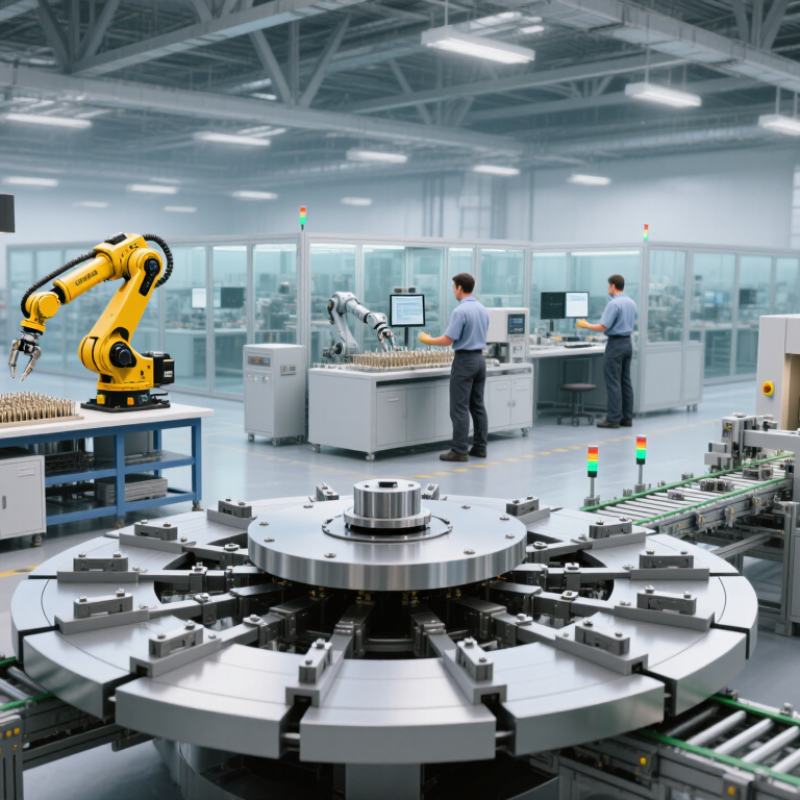
Manufacturers are choosing among rotary indexing machines, linear transfer systems, modular platforms, robotic cells, and cobot-assisted stations. Vision-guided Assembly Machine systems are also gaining ground. They can inspect tiny connectors, align irregular parts, and record quality data at each cycle. Servo-driven platforms offer precise motion. Flexible robotic cells support frequent product changes. High-volume plants may still prefer dedicated rotary systems, especially when every second matters.
The details are practical. A rotary machine can reduce handling time, but tooling changes may be expensive. A modular cell can adapt faster, yet programming and integration require skilled technicians. Cobot systems appear approachable. They still need careful risk assessment, fixture design, and operator training.
Robotics authority Professor Henrik Christensen has said, “Robots are not going to take your job, but someone using a robot will take your job.” His point remains relevant for assembly planning. The strongest factories will combine automation with human judgment, not treat technology as a complete replacement.
This guide examines the top Assembly Machine types expected to shape production in 2026. It compares speed, flexibility, accuracy, maintenance, integration, and total ownership cost. The ranking is not absolute. A medical-device producer needs different equipment from an automotive supplier. Some predictions may age quickly, too. Component shortages, software updates, and changing product designs can overturn a careful plan. That uncertainty deserves attention.
Assembly Machine Taxonomy: Manual, Semi-Automatic, and Fully Automatic Cells
In 2026, assembly cells generally fall into three practical types: manual, semi-automatic, and fully automatic. Manual cells use operators for loading, fastening, inspection, and adjustment. They fit low-volume products or frequent design changes. Their flexibility is valuable, but output depends heavily on training, fatigue, and workstation design.
Semi-automatic cells combine human judgment with controlled equipment.
A worker may load parts, while machines handle dispensing, pressing, screwdriving, or testing. This model often offers a realistic balance between cost and repeatability. The International Federation of Robotics reported 541,302 new industrial robots installed worldwide in 2023. That figure signals growing automation, but it does not mean every process needs a robot.
Fully automatic cells suit stable, high-volume production.
They connect feeding, assembly, inspection, and data collection with limited operator intervention. Cycle times can be consistent. However, tooling changes may become expensive and slow. I have seen teams over-automate early, then struggle with minor product variations. That mistake deserves more attention.
Tips: Map the process before selecting the machine. Record cycle time, defect sources, changeover minutes, and operator reach distances. Use the 2024 IFR robotics data as market context, not as a substitute for plant-level evidence. A semi-automatic cell may outperform a fully automatic design when product demand remains uncertain. Keep a manual fallback for maintenance and training. Small details matter.
Rotary Indexing Machines: Throughput, Cycle Time, and OEE Metrics
What Are the Top Assembly Machine Types in 2026?
Rotary indexing machines remain strong choices for high-volume assembly in 2026. They move parts between fixed stations through repeatable rotary steps. A typical system may load, fasten, inspect, and unload each component within one revolution. This layout reduces transfer distance and supports stable cycle times. Cycle time matters. Engineers often measure the complete index cycle, not only the active assembly motion. For example, a six-second cycle can theoretically produce 600 units per hour with one cavity.
Throughput depends on more than speed. A practical calculation subtracts planned breaks, changeovers, minor stops, and rejected parts. Overall Equipment Effectiveness combines availability, performance, and quality. A machine running at 92% availability may still deliver weak OEE if inspection rejects rise. Sensors should record station stops, index delays, and incomplete transfers separately. These details help maintenance teams find the real constraint.
In factory assessments, rotary systems often perform best when tooling remains simple and accessible. Poorly balanced fixtures can create vibration, noise, and inconsistent fastening. That assumption needs testing. A faster index may increase output, yet it can reduce positioning accuracy. Engineers should compare measured cycle data with manual observations. A clean dashboard is useful, but it cannot explain every hesitation at the loading station. Operators may notice patterns that the control system misses.
2026 Selection Matrix: Throughput, MTBF, Payback, and Safety Standards
What Are the Top Assembly Machine Types in 2026?
In 2026, rotary indexing machines suit stable, high-volume products with repeated fastening or pressing tasks. Linear assembly systems offer easier access and flexible station changes. Robotic cells handle varied parts, vision inspection, and frequent product updates. Collaborative systems support lower-volume work, but their speed can disappoint when safety limits reduce operating space.
A practical selection matrix should compare throughput, MTBF, payback, and safety standards together. Throughput must reflect changeovers, rejects, loading time, and planned maintenance. MTBF helps estimate reliability, although supplier figures may use ideal factory conditions. Ask for service records from similar applications. Payback should include tooling, integration, training, energy, spare parts, and downtime. A low purchase price can become expensive after one missed production week.
Safety needs more than a protective fence. Review risk assessment, guarding, emergency stops, control reliability, and validated safety functions against ISO 12100, ISO 13849-1, and IEC 60204-1. Local requirements still matter. Never assume compliance from a certificate alone.
Tips: Score each machine from one to five, then weight the factors by business priority. Test real parts at target speed. Measure noise, jams, access time, and recovery steps. I have seen promising trials fail because operators found replenishment awkward. That detail deserved more attention.
What Are the Top Assembly Machine Types in 2026?
2026 Selection Matrix: Throughput, MTBF, Payback, and Safety Standards
| Machine Type | Typical Throughput
(units/hour) | Planning MTBF
(hours) | Typical Payback
(months) | Relevant Safety Baseline |
| Pick-and-Place | 2,400 | 22,000 | 16 | ISO 12100, ISO 13849-1, IEC 60204-1 |
| Linear Transfer | 1,800 | 25,000 | 24 | ISO 12100, ISO 13849-1, ISO 14119 |
| Rotary Indexing | 1,200 | 20,000 | 18 | ISO 12100, ISO 13849-1, IEC 60204-1 |
| SCARA Assembly | 900 | 30,000 | 14 | ISO 10218-1, ISO 12100, ISO 13849-1 |
| Cartesian Assembly | 600 | 35,000 | 12 | ISO 12100, ISO 13849-1, IEC 60204-1 |
The chart uses representative 2026 planning midpoints for common industrial assembly architectures, not company or brand performance claims. Throughput depends on product complexity, cycle time, changeover, quality requirements, and line balance. MTBF and payback should be validated with supplier reliability records, a site-specific ROI model, FAT/SAT results, and a documented risk assessment. Safety standards define design and validation requirements; they do not automatically certify a complete machine.