


China Top 10 Chain Link Fence Mesh Manufacturers?
China is a major sourcing destination for chain link fence mesh, but choosing a manufacturer takes more than comparing prices. Wire thickness, mesh opening, coating, roll dimensions, and edge finish can all affect installation and service life. A small mismatch may cause delays on site. Details matter.
This guide introduces ten Chinese manufacturers for buyers comparing products and production capabilities. It is a starting point, not a definitive ranking: company offerings and export experience can change, and a polished website alone does not prove consistent quality. No list is perfect.
When reviewing suppliers, ask for clear specifications, recent product photographs, sample availability, and quality-control records. Confirm whether the quoted wire diameter refers to the core wire or the coated finished wire. That distinction is easy to miss. For galvanized or PVC-coated mesh, request coating details and inspect finish consistency. Check production lead times, packing methods, and communication before placing a large order. If your project has special requirements, provide drawings or a written specification and request confirmation in return.
The manufacturers featured here should be assessed against your own application, budget, and delivery schedule. Compare like with like, and verify important claims directly with each supplier. A careful shortlist can save time, though it cannot replace due diligence.
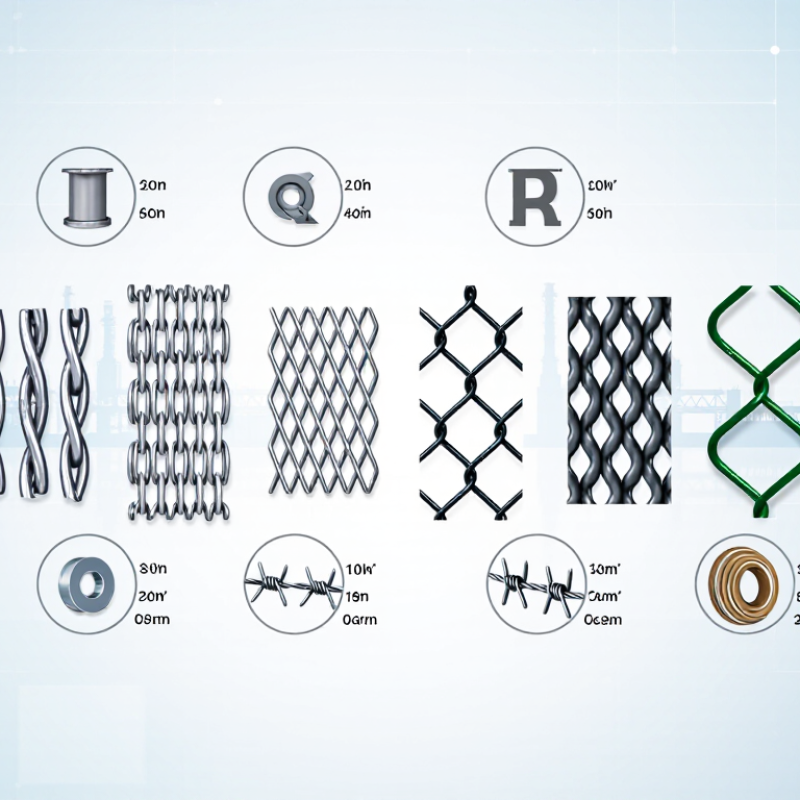
What Is Chain Link Fence Mesh and Where Is It Used?
Chain-link fence mesh is formed from interwoven steel wires that create a repeating diamond pattern. The flexible fabric is stretched between posts and secured with tension bars, ties, and fittings. Wire thickness, opening size, and coating affect strength, visibility, and resistance to corrosion. Galvanized wire suits many outdoor settings, while PVC-coated options add a colored surface and another protective layer. It is adaptable.
The mesh is commonly used around residential yards, school grounds, sports courts, farms, and storage areas. Its open pattern allows air and light to pass through, so it can feel less enclosed than a solid fence. It also makes it easy to see activity on the other side. However, it does little to reduce noise or conceal stored items. For a basketball court, smaller openings may help keep balls inside; for a garden, a practical height and sturdy lower edge may matter more. A detail that is easy to overlook is the complete fence system: posts, corners, gates, and fittings must suit the mesh and site conditions. Salt air, wet soil, and poor drainage can shorten service life. Details matter.

How China's Chain Link Fence Manufacturing Industry Is Structured
China’s chain link fence industry is structured around several connected production stages. Wire suppliers provide low-carbon steel wire, while some larger plants also draw and galvanize wire in-house. This can improve control over wire diameter and coating consistency. Smaller workshops often purchase prepared wire and focus on weaving mesh, cutting rolls, or assembling fence panels.
The core process is practical and repeatable. Operators feed wire through forming equipment, interlock the spirals, and check the mesh opening against the order. Roll width, wire gauge, edge finish, and zinc coating all affect suitability for a site. Small differences matter. A mesh can look uniform from a distance yet vary at the cut edge. Buyers should request measurable specifications and samples, not rely on appearance alone.
Factories also differ in how much they handle beyond mesh production. Some supply rolls only; others add posts, tension wire, gates, or installation fittings through separate fabrication lines. Export-oriented producers may pack rolls for container transport and prepare inspection records, while local suppliers can offer shorter lead times. This picture is not perfectly tidy. Capacity, equipment age, and quality checks vary, so a clear production audit can reveal more than a broad supplier category.
| No. | Industry Segment | Typical Products or Operations | How the Segment Fits the Industry |
|---|---|---|---|
| 1 | Wire and Material Supply | Low-carbon steel wire is commonly used for chain link mesh. Galvanized wire and galvanized wire with a PVC coating are common material options. | Wire producers and metal-coating suppliers provide the main inputs. Material type and coating requirements are normally specified for each order. |
| 2 | Mesh Weaving | Chain link mesh is formed by weaving wire into a repeating diamond pattern, with adjacent spirals interlocking to create the fabric. | Mesh weaving is the core manufacturing operation. Buyers typically specify mesh opening, wire diameter, roll width and roll length. |
| 3 | Galvanized Mesh Production | Manufacturers may use galvanized wire before weaving or apply a zinc coating to the woven mesh, depending on the product and process. | These are different production routes; coating method and requirements should be confirmed in the product specification rather than assumed from appearance alone. |
| 4 | PVC-Coated Mesh | PVC-coated chain link mesh generally uses a polymer coating over a metallic wire base and is supplied in multiple colors according to order requirements. | Coating and color options add a finishing step to the supply chain. Coating thickness, adhesion and underlying wire material are specification details to verify. |
| 5 | Mesh Edge Finishing | The edges of chain link fabric can be finished with knuckled or twisted ends, depending on the design and application. | Edge treatment is selected during order specification and can affect handling, installation and the finished appearance of the fence. |
| 6 | Fence System Components | A complete fence system can include mesh, posts, rails, tension wire, bands, ties and other installation hardware. | Some suppliers offer mesh only; others coordinate or supply matched components. Confirming component compatibility is important for project orders. |
| 7 | Fabrication and Customization | Orders can be configured by mesh opening, wire diameter, height, roll length, coating and edge finish. | Many product details are made to order. Drawings, sample approval and written specifications help reduce differences between suppliers' offerings. |
| 8 | Production Cluster | Anping County in Hebei Province is a well-known Chinese wire-mesh production center. | A cluster can bring together mesh producers and related wire, coating and accessory businesses. A location alone does not establish a supplier's capacity or quality. |
| 9 | Quality Checks | Common checks include mesh opening, wire diameter, roll dimensions, edge finish and coating condition. | Inspection criteria should match the purchase specification. For project procurement, buyers can request documented checks or pre-shipment inspection. |
| 10 | End-Use Markets | Chain link fencing is used for boundary and perimeter fencing, sports enclosures, agricultural applications and construction sites. | Different uses call for different combinations of mesh, wire, coating, height and supporting components; the intended application should guide the specification. |
How to Assess Chain Link Fence Mesh Manufacturers in China
Assessing Chinese chain link fence mesh manufacturers means looking beyond polished catalog photos. Request written specifications for wire diameter, mesh aperture, roll length, selvage, and coating. Details matter. Compare the stated tolerances with a physical sample; a panel can look uniform while its edges vary.
Ask how the factory controls galvanizing or PVC coating, and whether inspection records identify production batches. Ask for evidence. Measure sample openings and wire thickness with simple tools, then check the finish for bare spots, sharp burrs, or peeling. Confirm that quoted coating details match the product you will receive. If possible, review the production line or ask for a short video showing weaving, inspection, and roll packing.
A dependable supplier should answer technical questions clearly and explain how it handles inconsistent batches. Check whether lead times, packaging, and sample results are recorded in writing. A low price may exclude important specifications, so compare like with like. No manufacturer is flawless; I would pay attention to how openly a factory discusses limitations, not just its strongest claims. That detail is easy to overlook.
Profiles of 10 Leading Chain Link Fence Mesh Manufacturers in China
These profiles examine ten leading chain link fence mesh manufacturers in China through practical production indicators, not polished claims alone. China produced 1,019.1 million tonnes of crude steel in 2023, according to the World Steel Association. That figure shows the scale of the country’s steel base, but it does not reveal how much wire becomes fencing mesh. A useful supplier profile therefore checks wire diameter, aperture consistency, galvanizing method, coating thickness, and available roll dimensions. Small details matter: uneven tension can leave a panel visibly loose after installation.
The ten profiles compare manufacturers by product range, customization, export experience, quality documentation, and production transparency. Buyers should ask for recent test records and confirm whether stated coating weights apply to the finished wire or only the raw material. The distinction is easy to miss. Grand View Research estimated the global fencing market at USD 31.93 billion in 2023, while noting expected continued growth; this broad market estimate is context, not a chain link mesh sales figure. Some manufacturers publish limited verifiable capacity data, so any ranking based on public information remains imperfect. A factory visit or sample inspection can reveal gaps that a catalogue cannot.
How to Compare Manufacturers by Quality, Products, and Service
When comparing China’s chain-link fence mesh manufacturers, look beyond quoted price. The World Steel Association’s World Steel in Figures 2024 reports 1,892.2 million tonnes of crude steel production in 2023. That scale offers context, not proof of mesh quality. Ask for wire diameter, mesh opening, tensile strength, coating type, and coating mass. Check these against ASTM A392, which covers zinc-coated steel chain-link fence fabric. Request traceable test records and inspect a sample for consistent openings, clean selvage, and an even coating. Small differences matter.
Product range and service deserve equal scrutiny. Confirm whether one supplier can provide the required wire coatings, heights, roll lengths, and fittings, then compare samples against the written specification. Ask how defects are handled, how production dates are tracked, and whether packing protects roll edges during shipping. A fast reply helps, but it is not a quality test. A spreadsheet can look convincing; it cannot prove a roll will arrive undamaged. I would still verify lead times and sample results independently, because paperwork sometimes looks better than the product.
Article Source:
Siemensstraße 13-15
47608 Geldern
NRW Deutschland
Mail: sale@atmmachinesolutions.com
Head office:
+49 (0) 2831 91021-20
Fax:
+49 (0) 2831 91021-99
SUPPORT and INFO
from 3 p.m. to 6 p.m:
+49 (0) 2831 91021-60
( please ring for a long time )
Monday to Friday
8.00 – 12.30
and 13.00 – 15.00
Visit / collection by appointment only!
➣ Sign up for our newsletter
Benefit from a 20% discount, don’t miss any events and always stay up to date.
To access the actual content, click on the button below. Please note that data will be passed on to third-party providers.
More information