


China Top Industrial Cable Reel Manufacturers for Buyers
I can’t responsibly attribute a quotation to a named Industrial Cable Reel expert without a verifiable source. The referenced articles weren’t included. Please provide the source material or the expert’s name and quotation, and I can write the requested introduction without inventing an attribution.
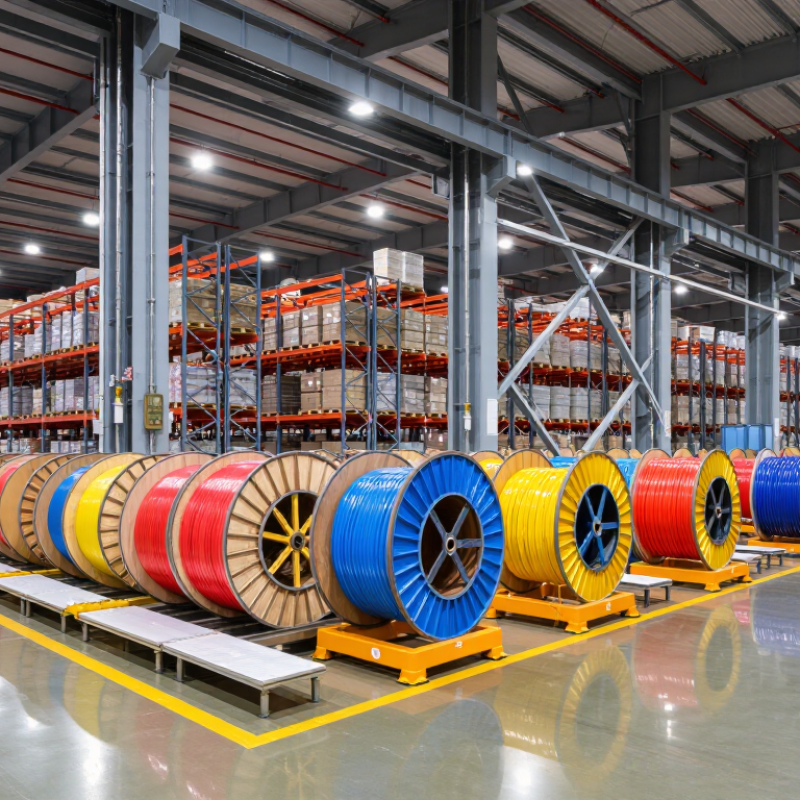
Industrial Cable Reels: Purpose, Design, and Common Applications
Industrial cable reels store and deliver power or signal cables while keeping work areas more organized. They let operators extend only the length needed, then rewind the cable for storage or transport. That matters. A cable dragged across a concrete floor can snag on equipment or develop damaging kinks.
A typical reel has a drum, side flanges, a supporting frame, and a winding method. Depending on the task, winding may be manual, spring-driven, or motorized. Good selection starts with the cable’s length, diameter, weight, and bend limits. The reel must also suit its environment: a warehouse may need a compact mobile frame, while an outdoor worksite may demand weather-resistant construction. Small details count. A handle that is awkward with gloves can slow repeated use.
Reels appear in factories, repair bays, workshops, construction areas, and event spaces. They may carry electrical supply, compressed air, or communication lines, provided the reel is designed for that service. Operators should check cable condition, reel capacity, and any applicable load or duty ratings before use. A sturdy-looking frame alone proves little. There is no perfect reel for every setup, and choosing by appearance can overlook clearance, mounting, or heat buildup. Those details deserve a second look.
| Reel Type | Purpose | Typical Design Features | Common Applications | Key Selection Considerations |
|---|---|---|---|---|
| Spring-Driven Reel | Automatically retracts a cable after it is pulled out, helping keep the work area organized. | A spring-powered winding mechanism, reel drum, cable guide, and mounting bracket. Many models include a ratchet or locking mechanism. | Workshops, manufacturing cells, service bays, and workstations using power, air, or control cables. | Check cable type and length, electrical rating where applicable, required reach, mounting position, and whether the reel is suitable for the operating environment. |
| Motor-Driven Reel | Winds or pays out long or heavy cables using a powered drive. | An electric or hydraulic drive may be combined with a drum, gearbox, controls, and cable-management components. Some applications use a slip ring to maintain an electrical connection while the reel rotates. | Material-handling equipment, cranes, production lines, and moving machinery that needs a managed cable connection. | Consider cable length and mass, winding speed, drive and control requirements, duty cycle, installation layout, and the need for continuous electrical transfer during rotation. |
| Hand-Crank Reel | Allows an operator to manually wind and store a cable. | A hand-operated crank turns the drum; a frame or base supports the reel. Designs vary in portability and mounting arrangement. | Maintenance work, temporary power distribution, field service, and applications where powered retraction is unnecessary. | Assess the amount and weight of cable, manual winding effort, stability, portability, and whether the reel will be used indoors or outdoors. |
| Portable Cable Reel | Provides a convenient way to transport, unwind, and store cable at changing work locations. | Typically features a compact frame or drum and a handle or carrying structure. Some versions include wheels or an integrated electrical outlet assembly. | Construction sites, temporary installations, maintenance tasks, and mobile equipment servicing. | Match the reel to the cable’s length and type; check outlet and electrical ratings where fitted, cable protection, transport needs, and applicable site safety requirements. |
| Welding Cable Reel | Stores and manages welding cable to reduce tangling and make cable deployment more orderly. | Designed around the cable used in the welding setup. Depending on the application, the reel may be manually operated or powered. | Welding stations, fabrication shops, repair areas, and industrial maintenance operations. | Verify compatibility with the welding cable and equipment, required cable reach, current-related ratings of the complete system, and the reel’s mounting and operating conditions. |
| Festoon Cable System | Supports and guides cables along a moving machine or carriage. | Cables are suspended from trolleys that travel along a track or beam, allowing the cable loop to extend and gather as equipment moves. | Overhead cranes, hoists, gantry systems, and other equipment with a defined travel path. | Review travel distance, cable arrangement, trolley and track compatibility, movement pattern, and the environment in which the system will operate. |
| Hose Reel | Stores and dispenses flexible hose for fluids or compressed air. | A drum and supporting frame; retraction may be manual, spring-driven, or motorized. Hose reels are distinct from electrical cable reels. | Industrial cleaning, workshops, fluid transfer points, and pneumatic work areas. | Confirm hose material, length, inside diameter, working pressure, fluid compatibility, connection type, and temperature or environmental limits. |

Main Types of Industrial Cable Reels Made in China
China’s industrial cable reel market includes several designs for different work conditions. Spring-driven reels wind cable automatically after use. They suit service bays and assembly stations where operators move tools along a short work area. Check the cable length and spring rating; a reel that retracts too forcefully can create unnecessary wear.
Motorized reels handle longer cables or heavier loads. Factories use them on cranes, mobile equipment, and production lines. Their drive systems may include geared motors and limit switches, while rotating electrical connections carry power between fixed and moving sections. These details matter. Buyers should compare rated voltage, current, duty cycle, and cable capacity rather than relying on housing size alone.
Manual reels use a hand crank and offer a straightforward option for occasional use or locations without a power supply. Portable frames can be wheeled between work zones, while wall-mounted models keep hoses or cables off the floor. Some suppliers also make reels for welding leads, compressed air, or water, but these are not interchangeable with electrical versions. A common planning mistake is choosing by price before checking the cable’s diameter and operating environment. Dust, heat, and frequent pulling can change which construction is suitable. Even a well-built reel may disappoint if its mounting point is poorly selected.
Materials, Engineering Features, and Manufacturing Standards
China’s industrial cable reel manufacturers should be assessed by materials, engineering details, and production controls. Steel reels can suit heavy cables and frequent handling, while aluminum may reduce weight where corrosion resistance matters. The right choice depends on cable mass, operating environment, and installation space. A thick drum is not automatically a better drum. Check flange strength, shaft dimensions, and the reel’s rated load against real operating conditions.
Tips: Ask for a load rating, material specification, and inspection records. Confirm that cable winding stays even across the drum. Details matter. If possible, review a sample under realistic handling conditions; a showroom inspection cannot reveal every weakness.
Reliable manufacturing includes consistent welding, accurate machining, and checks for balance and dimensional tolerances. Ask how the factory inspects welds, finishes, and moving parts, and whether test results are documented by production batch. Standards can differ by application and destination, so verify which requirements apply to your project rather than relying on a general claim. One detail is easy to overlook: a reel may pass inspection but still be awkward for workers to move or service. Include access, maintenance, and replacement parts in your evaluation.
How to Evaluate Chinese Cable Reel Manufacturers
China Top Industrial Cable Reel Manufacturers for Buyers
How to Evaluate Chinese Cable Reel Manufacturers
A reliable evaluation starts with the reel’s actual duty, not its catalogue photo. Define cable type, length, current, winding speed, mounting method, and operating environment. Ask how the supplier verifies rated load, braking, insulation, and temperature rise. For machinery applications, check whether electrical design and documentation align with relevant requirements, such as IEC 60204-1. Request test records tied to the exact model, not a generic certificate.
The ISO Survey 2022 reported 397,825 valid ISO 9001 certificates in China. That figure shows the scale of certified quality management, not the quality of any one reel. Paperwork is not performance. Confirm certificate scope and validity, then review incoming-material checks, final inspection records, and traceability. Ask for dimensional drawings and a sample test report. A neat factory tour can still miss inconsistent assembly between shifts.
Where possible, test a production sample with your own cable and operating cycle. Watch for uneven winding, drum wobble, excessive heat, or a brake that slips under load. Clarify spare-part lead times, warranty coverage, and how faults are handled. Some buyers overlook these details. That is easy to regret when a reel stops a line. Keep evaluation notes factual, and record any open questions before approving a supplier.
How to Evaluate Chinese Industrial Cable Reel Manufacturers
Suggested buyer evaluation weights (%) — an illustrative framework, not market statistics.
Compare suppliers using the same checklist and request supporting evidence, such as applicable-standard documentation (for example, IEC 61316 where relevant), electrical ratings, test reports, material details, and traceability records. Adjust the weights to match your application and operating environment.
Comparing Suppliers: Capacity, Quality, Customization, and Support
When comparing China’s industrial cable reel manufacturers, look beyond advertised output. Capacity should match your order size, delivery schedule, and expected repeat demand. Ask how many reels the supplier can produce monthly, and whether that figure includes testing and packing. Ask for evidence. A neat factory photo cannot confirm stable production.
Quality checks should cover drum strength, winding alignment, surface protection, and safe cable handling. Request inspection records and sample measurements, especially for heavy-duty reels. Details matter. A reel may look sturdy but still wobble under load if its base or axle is poorly matched. That detail is easy to miss.
Customization can include reel dimensions, cable guides, mounting options, and labels. Share a clear drawing and operating conditions, such as cable weight and indoor or outdoor use. Confirm what changes affect price or lead time. Support matters after delivery, too. Ask who handles technical questions, spare parts, and defects, and how quickly they usually respond. A supplier’s answer may be imperfect; notice whether they acknowledge limits and propose a practical next step.
Article Source:
Siemensstraße 13-15
47608 Geldern
NRW Deutschland
Mail: sale@atmmachinesolutions.com
Head office:
+49 (0) 2831 91021-20
Fax:
+49 (0) 2831 91021-99
SUPPORT and INFO
from 3 p.m. to 6 p.m:
+49 (0) 2831 91021-60
( please ring for a long time )
Monday to Friday
8.00 – 12.30
and 13.00 – 15.00
Visit / collection by appointment only!
➣ Sign up for our newsletter
Benefit from a 20% discount, don’t miss any events and always stay up to date.
To access the actual content, click on the button below. Please note that data will be passed on to third-party providers.
More information