

China Top Sewer Line Cleaning Machine Supplier?
China has become a major manufacturing base for municipal and industrial water infrastructure. As urban drainage networks expand, buyers need reliable equipment for blocked pipes, sediment, grease, and root intrusion. The UN World Water Development Report 2024 highlights continuing global pressure to improve wastewater management and protect limited water resources. This demand makes supplier selection more important than a low purchase price.
A professional Sewer Line Cleaning Machine supplier should demonstrate practical manufacturing experience, stable quality control, and responsive technical support. Buyers should examine pump pressure, water-flow capacity, hose length, nozzle design, chassis strength, and engine efficiency. A machine working beside a narrow roadside drain must be easy to transport and operate. Factory testing records matter. So do spare-parts availability and operator training.
China offers many manufacturers, but “top supplier” should not mean the largest advertising budget. Reports such as the China Urban Construction Statistical Yearbook show the continuing development of urban drainage infrastructure, although published figures can vary by reporting year and city classification. That limitation deserves attention. No supplier is perfect. Therefore, this guide will compare production capability, certifications, customization, export experience, warranty terms, and after-sales service. ISO 9001 quality systems can support consistency, while relevant machinery safety and electrical requirements should be verified for each destination market. A careful comparison can reveal whether a supplier delivers dependable cleaning performance or only attractive specifications. Real experience often appears in small details: reinforced hose connections, accessible filters, clear control panels, and fast answers after installation.
What Is a Sewer Line Cleaning Machine?
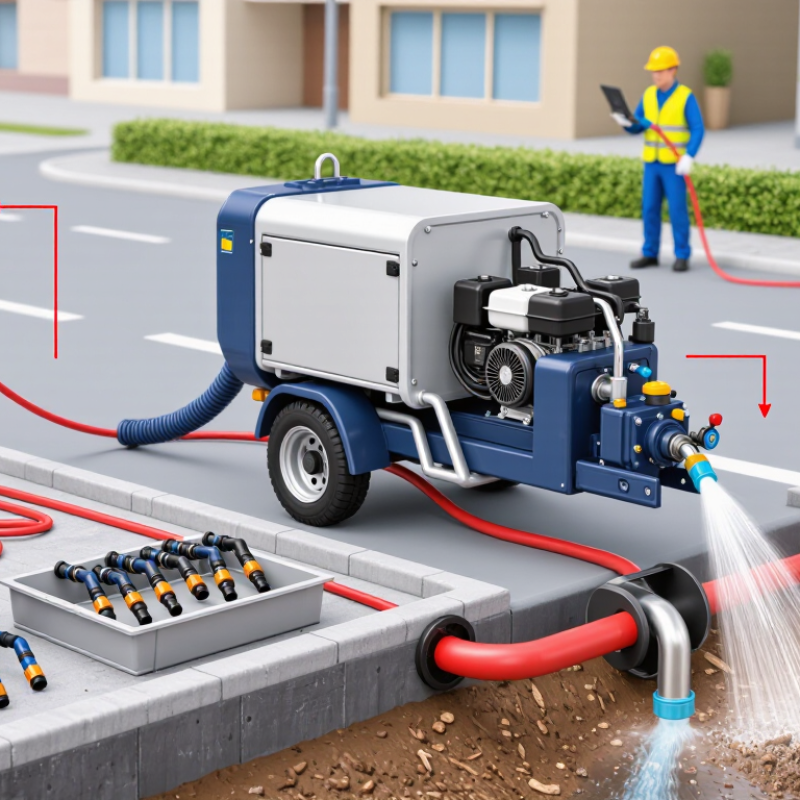
A sewer line cleaning machine is equipment designed to remove blockages and buildup from underground drainage pipes. It typically uses a rotating cable, flexible rod, or high-pressure water jet. The chosen method depends on pipe diameter, material, blockage type, and access conditions.
In practical maintenance work, operators may face grease, roots, sand, scale, or hardened waste. A rotating cable can break through compacted obstructions near household connections. Water jetting can wash residue from longer pipe sections. The machine usually includes a motor, drive system, control panel, hose or cable, and protective housing. Some models use adjustable speed settings. This helps reduce pipe damage during cleaning.
Safety matters every time. Trained workers should inspect the access point, confirm pipe direction, and wear eye, hand, and body protection. Ventilation is also important because sewer spaces may contain dangerous gases. Reliable equipment needs stable torque, emergency controls, durable components, and clear maintenance records. These details often matter more than impressive power ratings.
No machine fits every drain. I have seen operators choose excessive pressure and worsen fragile pipes. That mistake is easy to repeat. A careful inspection should guide the cleaning method. Performance also depends on correct cable handling, water flow, and regular servicing. Even a powerful machine becomes unreliable when its hose is cracked or its cutting head is worn.
What Is a Sewer Line Cleaning Machine?
A sewer line cleaning machine removes blockages and buildup from drainage pipes by using high-pressure water jets or mechanical cutting cables. The chart shows representative operating pressures commonly used for different cleaning applications.
Higher-pressure equipment is generally selected for larger municipal lines and tougher deposits, while compact machines are more suitable for household drains and smaller commercial pipes. Actual pressure requirements vary according to pipe diameter, blockage type, nozzle design, and flow rate.
How Sewer Line Cleaning Machines Work
China Top Sewer Line Cleaning Machine Supplier?
A sewer line cleaning machine removes blockages by combining controlled force, water, and mechanical movement. Jetting machines push pressurized water through a flexible hose. A specialized nozzle sends streams forward and backward. The forward stream breaks apart grease, soil, and compacted waste. The rear streams pull the hose through the pipe.
Cable machines use a rotating steel cable instead. A cutting head enters the pipe and breaks dense obstructions into smaller pieces. The operator adjusts rotation speed according to pipe material and blockage resistance. Too much force can damage old joints. That detail is easy to overlook. Some systems use sectional rods, which provide stronger pushing power in longer or wider lines.
Technicians usually inspect the pipe before and after cleaning. A small camera can reveal cracked walls, displaced joints, or roots that water pressure cannot solve. The machine should match the pipe diameter, blockage type, and access point. Practical results also depend on hose length, nozzle angle, water flow, and operator judgment. In real work, the process is not as tidy as diagrams suggest. Debris may return suddenly, and a second pass may be necessary. Protective equipment, stable hose handling, and controlled pressure help reduce avoidable risks.
Key Types and Features of Sewer Line Cleaning Machines
China Top Sewer Line Cleaning Machine Supplier?
When evaluating a China-based sewer line cleaning machine supplier, focus on machine types before comparing prices. High-pressure water jetters remove grease, sand, and soft blockages through targeted water flow. Cable machines use rotating steel cables to break tougher obstructions inside narrow pipes. Rod machines provide strong pushing force for long, straight sewer sections. Combination jet-vacuum units clean lines and remove wastewater in one operation. Portability matters.
Key features should match the working environment. A reliable jetter needs adjustable pressure, stable flow, a durable hose reel, and nozzles for different blockage types. Electric models suit indoor or low-noise work, while diesel units support remote construction sites. Cable machines should offer variable rotation speed, overload protection, and quick-access drums. Corrosion-resistant frames are valuable because sewage exposure is harsh and constant. Small details matter.
Field technicians often discover that maximum pressure is not always the best choice. Excessive force may damage aging pipes or weak joints. I once underestimated hose flexibility; a powerful pump was less useful when the hose resisted tight bends. Clear controls, emergency stops, service access, and available replacement parts improve daily reliability. Ask suppliers for performance data under realistic conditions, not only laboratory figures. Check test videos, electrical standards, weld quality, and operator training materials before placing an order.
China Top Sewer Line Cleaning Machine Supplier? - Key Types and Features of Sewer Line Cleaning Machines
| Machine Type | Primary Cleaning Method | Typical Pipe Diameter | Typical Working Reach | Common Power Source | Key Features | Best-Suited Applications | Main Limitations |
|---|---|---|---|---|---|---|---|
| Drum-Type Electric Drain Cleaner | Rotating flexible cable with cutting, boring, or auger heads | Approx. 40–100 mm | Approx. 7–30 m | Electric motor, commonly 230 V or 110 V depending on market | Compact design, enclosed cable drum, portable operation, interchangeable cleaning heads | Indoor drains, sinks, floor drains, kitchens, bathrooms, and short branch lines | Limited reach and torque compared with larger machines; cable handling requires care |
| Sectional Cable Sewer Cleaner | Rotating detachable cable sections with specialized cutting heads | Approx. 50–150 mm | Approx. 15–90 m, depending on cable sections and blockage conditions | Electric motor | High torque, replaceable cable sections, strong blockage penetration, flexible working distance | Commercial buildings, long branch drains, grease blockages, roots, and heavy deposits | Manual cable assembly is time-consuming; exposed rotating cables require strict safety procedures |
| Flexible Shaft Drain Cleaning Machine | Rotating flexible shaft inside a protective outer casing | Approx. 50–150 mm | Approx. 15–60 m | Electric motor | Cleaner operation than exposed cables, controlled rotation, suitable for repeated professional use | Building drainage systems, service companies, and maintenance work in occupied facilities | Higher purchase and maintenance cost; shaft selection must match pipe size and blockage type |
| High-Pressure Water Jetting Machine | Pressurized water delivered through a flexible hose and jetting nozzle | Approx. 75–600 mm or more, depending on pump and hose configuration | Approx. 30–150 m | Electric motor, gasoline engine, or diesel engine | Removes grease, sludge, scale, and loose deposits; cleans the full internal pipe circumference | Municipal sewers, commercial drains, grease-clogged lines, and preventive maintenance | Requires water supply and waste-water control; may be unsuitable for damaged or structurally weak pipes |
| Trailer-Mounted Water Jetter | High-pressure water jetting from a mobile trailer unit | Approx. 100–600 mm or more | Approx. 60–150 m | Gasoline or diesel engine, with a high-pressure pump | Large water tank, high flow rate, long hose capacity, suitable for remote outdoor work | Municipal lines, industrial sites, campuses, roads, and large commercial drainage networks | Requires towing vehicle, staging space, and trained operators; less suitable for confined indoor areas |
| Truck-Mounted Sewer Jetting Unit | High-volume, high-pressure water jetting combined with a large onboard tank | Approx. 150–1,200 mm or more | Approx. 100–300 m, depending on system configuration | Vehicle engine or dedicated auxiliary engine | Large water capacity, high productivity, vacuum recovery options, and long-duration operation | Large municipal sewers, storm-water systems, industrial pipelines, and scheduled utility maintenance | High capital and operating cost; requires trained personnel, vehicle access, and substantial working space |
| Root-Cutting Cable Machine | Rotating cable fitted with root saws or root-cutting blades | Approx. 100–300 mm | Approx. 20–90 m | Electric motor or hydraulic drive | Designed for intrusive roots, heavy obstruction cutting, and use with different blade shapes | Older sewer lines affected by tree-root intrusion and severe mechanical blockages | Removes roots temporarily but does not repair pipe defects; incorrect blade selection may damage fragile pipes |
| Hydraulic Sewer Rodder | Powered steel rods pushed and rotated through the pipe | Approx. 150–600 mm | Approx. 50–150 m | Hydraulic system driven by a vehicle or dedicated power unit | High pushing force, strong performance against compacted obstructions, suitable for larger pipes | Large sewer mains, culverts, and blockages that resist flexible cable equipment | Large footprint, specialized operation, and possible risk to deteriorated or offset pipe sections |
| Portable Water Jetting Machine | Pressurized water delivered through a compact hose and nozzle | Approx. 40–150 mm | Approx. 15–60 m | Electric motor or small gasoline engine | Lightweight, easy to transport, rapid setup, and effective against grease and soft deposits | Restaurants, residential properties, small commercial buildings, and service vehicles | Lower flow and water capacity than trailer or truck-mounted units; less effective against very hard obstructions |
| Combination Sewer Cleaner | High-pressure jetting plus vacuum extraction of water, sludge, and debris | Approx. 150–1,200 mm or more | Approx. 100–300 m | Truck-mounted hydraulic system and auxiliary power equipment | Performs cleaning and debris recovery in one operation; reduces secondary flooding and handling work | Municipal networks, catch basins, wet wells, storm drains, and industrial sewer maintenance | High acquisition cost, large vehicle size, and increased maintenance requirements |
| Note: Pipe diameter, cleaning reach, pressure, flow rate, and power requirements are typical industry ranges. Actual performance depends on pipe material, blockage type, pipe condition, access points, hose or cable configuration, and local electrical or safety requirements. | |||||||
How to Evaluate Chinese Sewer Line Cleaning Machine Suppliers
China has a broad manufacturing base for sewer line cleaning equipment. However, supplier selection needs more than a low quotation. The U.S. EPA’s 2022 Clean Watersheds Needs Survey reported about 630.1 billion dollars in wastewater infrastructure needs over 20 years. This pressure increases demand for dependable maintenance machines. Ask suppliers for measured water flow, working pressure, cable torque, hose length, and cleaning diameter. Request test videos showing a real pipe, not only a factory floor.
Experience matters during evaluation. Check whether the manufacturer has supplied equipment for municipal, industrial, or commercial drainage work. Review factory quality procedures, production records, spare-parts availability, and operator manuals. ISO 9001 certification can support process control, but it does not prove field performance.
Inspect welding, frame thickness, wheel stability, emergency stops, and motor protection. A machine may look strong yet struggle with grease, roots, or long horizontal runs. That weakness is easy to miss.
Tips: Compare three suppliers using the same technical checklist. Request a live demonstration with your typical pipe diameter and blockage material. Confirm noise, power supply, warranty response, and replacement-part delivery times in writing. Ask for independent inspection before shipment. Do not rely on certificates alone. I would also calculate total operating cost, including water use, cables, fuel, and downtime. The cheapest machine can become expensive after one difficult season. No supplier is perfect, so document every unanswered question before purchasing.
Applications, Maintenance, and Safety Considerations
China Top Sewer Line Cleaning Machine Supplier?
Sewer line cleaning machines support municipal networks, commercial drains, construction sites, and industrial pipelines. High-pressure water jetters remove grease, silt, and soft deposits. Cable machines can break compacted blockages in smaller lines. Vacuum units collect loosened waste and reduce spill risks. Selection should match pipe diameter, blockage type, access conditions, and daily workload. A powerful machine is not always the correct machine.
Maintenance starts before the first job. Inspect hoses, couplings, nozzles, guards, and emergency controls. Check pump oil, filters, belts, and water levels according to the service schedule. Flush the pump after use, especially when water contains grit. Store hoses clean and protected from sharp edges. Keep clear records. Small leaks often become expensive failures. Operators sometimes skip nozzle inspection, and that mistake can reduce cleaning performance.
Safety requires trained operators and a controlled work area. Wear face protection, gloves, waterproof footwear, hearing protection, and suitable work clothing. Never direct a pressurized hose toward people. Confirm underground utility locations before excavation or access work. Confined spaces may contain toxic gases or low oxygen, so testing and a formal entry procedure are essential. Use lockout procedures during repairs. Wastewater and removed material must be handled under local environmental rules. A checklist helps, but it cannot replace judgment; conditions may change after heavy rain or pipe damage.
Article Source:
Siemensstraße 13-15
47608 Geldern
NRW Deutschland
Mail: sale@atmmachinesolutions.com
Head office:
+49 (0) 2831 91021-20
Fax:
+49 (0) 2831 91021-99
SUPPORT and INFO
from 3 p.m. to 6 p.m:
+49 (0) 2831 91021-60
( please ring for a long time )
Monday to Friday
8.00 – 12.30
and 13.00 – 15.00
Visit / collection by appointment only!
➣ Sign up for our newsletter
Benefit from a 20% discount, don’t miss any events and always stay up to date.
To access the actual content, click on the button below. Please note that data will be passed on to third-party providers.
More information