What Are the Top CNC Router Types in 2026?
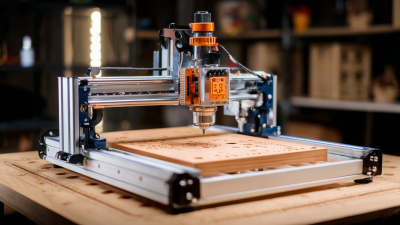
In 2026, choosing a CNC router is less about finding one “best” machine and more about matching its design to the work. A compact desktop model can handle signs, small panels, and careful hobby projects. A larger gantry router offers more room for cabinet parts and full sheets. Industrial machines may add automatic tool changing, stronger spindles, or systems for continuous production. These features matter only when the workload justifies their cost and setup.
This guide compares the top CNC router types by work area, frame rigidity, spindle capability, tooling, and typical use. It covers desktop and hobby machines, gantry and industrial routers, nesting systems, and 5-axis models. A standard 3-axis router suits many flat or shallow-cut jobs; a 5-axis machine can reach angled surfaces, but demands more skill and programming. Actual results depend on the material, tool, feed settings, and machine condition. The categories can overlap. That matters. A machine marketed for production may still be a poor fit for a small workshop with limited space or dust collection. We will look at practical strengths and trade-offs, not just impressive specifications. Before choosing, consider the parts you make, how often you make them, and the support available after purchase. A slower machine that is easy to maintain may serve a shop better than a faster one. There is no perfect answer, and the right choice sometimes takes a closer look.
CNC Router Types Classified by Machine Structure
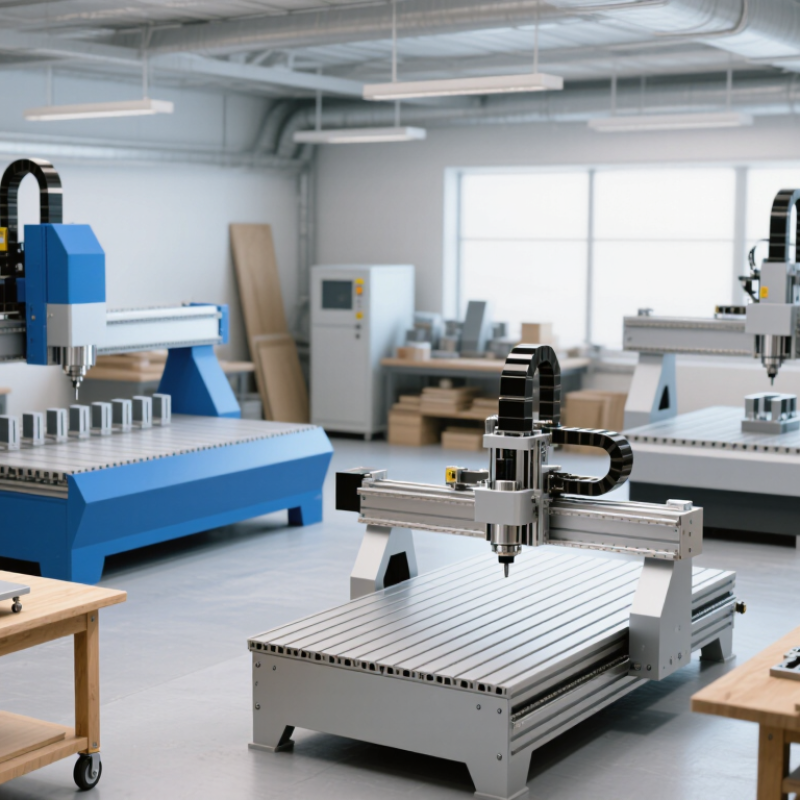
CNC router types are often easiest to compare by asking what moves: the table, the bridge, or the cutting head. That choice affects stiffness, working area, access, and the space needed around the machine. A rigid frame can help maintain accuracy during long cuts, but it does not automatically make every setup suitable for every material.
On a moving-gantry router, the workpiece usually stays on a fixed bed while the bridge travels along the machine. This layout suits large sheets because operators do not need to move a heavy table and workpiece together. The gantry’s crossbeam and supports must resist vibration, especially when cutting near the edges. A fixed-bridge design keeps the bridge stationary and moves the table beneath it. It can offer strong rigidity, though the moving table needs clear travel space. That matters.
Cantilever routers support the cutting head from one side, leaving more open access for loading parts. They can be practical for smaller work areas, but the unsupported side may flex under heavy cutting forces. Hybrid layouts also exist, so labels alone can be misleading. Real workshops are messier. Compare the frame, travel distance, load capacity, and intended material, then inspect how the machine handles a test cut. A tidy specification sheet cannot show every vibration or setup inconvenience.
Top CNC Router Types in 2026: Classified by Machine Structure
Moving-gantry, fixed-bridge/moving-table, and cantilever routers commonly use three linear axes (X, Y, and Z). Five-axis gantry routers add two rotational axes. Axis count describes a typical configuration, not a limit imposed by the structure; rotary fourth-axis options can be available on several layouts.
CNC Router Types Classified by Number of Axes
CNC router types are often classified by their number of axes, which describes how the tool or workpiece can move. A three-axis router travels along X, Y, and Z: across the table, along its length, and up or down. It suits flat panels, sign blanks, and pocket cuts. For example, it can cut a shallow channel across a cabinet door without rotating the workpiece.
A four-axis router adds rotary movement, commonly around a cylindrical workpiece. This can help carve a chair leg or produce grooves around a column. The exact setup varies, so check whether the rotary axis replaces table space or works alongside it. That detail affects the size and shape of parts a machine can handle.
Five-axis routers add two rotational movements, letting the cutting tool approach a part from different angles. They can machine curved surfaces and reduce repositioning, but programming and setup become more demanding. More is not always better. A shop making mostly flat parts may gain little from extra axes. One planning mistake is choosing by axis count alone; part geometry, required tolerances, and operator skill matter just as much. Axis labels can also differ between machine designs, so confirm the actual motions before comparing specifications.
What Are the Top CNC Router Types in 2026? - CNC Router Types Classified by Number of Axes
| Axis Count |
Typical Configuration |
How the Axes Move |
Common Applications |
Key Advantages |
Main Considerations |
| 3-axis |
X, Y, and Z linear axes |
The tool moves across the workpiece in two directions and up or down in the third. The tool orientation normally stays fixed. |
Sign making, 2D profiling, pocketing, drilling, and 3D relief carving in wood, plastics, and sheet materials. |
Straightforward programming, broad availability, and a practical fit for flat or moderately contoured work. |
Undercuts and features requiring the tool to approach from multiple angles usually need repositioning or additional setups. |
| 4-axis |
X, Y, and Z linear axes plus one rotary axis, commonly A |
The rotary axis turns the workpiece or, on some machine designs, the tool assembly. It may index between cuts or rotate during machining. |
Carved columns, chair legs, cylindrical parts, and machining around the sides of a workpiece. |
Can machine multiple sides or curved surfaces with fewer manual repositioning steps than a basic 3-axis setup. |
The usable part size and machining access depend on the rotary attachment, machine clearance, and workholding arrangement. |
| 5-axis |
X, Y, and Z linear axes plus two rotary axes, often A and C or B and C |
The tool or workpiece can tilt and rotate as well as move linearly. Machines may use simultaneous motion or position the rotary axes before cutting. |
Complex 3D forms, angled surfaces, molds, sculpted furniture components, and parts that benefit from machining in multiple orientations. |
Provides greater tool access and can reduce repeated setups; simultaneous motion can produce complex contours in a continuous path. |
Requires compatible CAM programming and careful collision checking. Machine geometry and rotary-axis travel affect accessible shapes. |
| 6-axis |
Three linear movements and three rotational movements; often implemented as an articulated robot system |
Multiple joints orient and move the cutting tool through a wide range of positions. The exact axis layout depends on the machine architecture. |
Specialized trimming, sculpting, and machining of large or irregular parts where flexible tool orientation is important. |
Offers extensive reach and orientation flexibility for complex paths and large workpieces. |
Less typical than gantry-style routers. Rigidity, accuracy, toolpath planning, calibration, and work-cell safety need careful evaluation. |
Axis labels, rotary-axis layouts, and available motion modes vary by machine design. A higher axis count can expand tool access, but the right choice depends on part geometry, material, required accuracy, programming capability, and production volume.
Specialized CNC Routers for Industrial Applications
What Are the Top CNC Router Types in 2026?
Specialized CNC Routers for Industrial Applications
Industrial CNC routers are selected by material, part geometry, and production volume. A large-format gantry router suits sheet goods, plastics, and composite panels. Automatic tool changing reduces pauses between cutting, drilling, and finishing. For curved parts, a five-axis router can reach angled surfaces with fewer setups. That can improve consistency, but programming and calibration demand skilled operators. No machine fits every job.
The International Federation of Robotics reported 4,281,585 industrial robots operating worldwide in 2023, a 10% increase from 2022. This figure reflects broader factory automation, not router sales. Still, it highlights why manufacturers increasingly plan routers as part of connected production cells. Vacuum tables can hold broad panels steady, while effective dust extraction protects visibility and equipment. Stone and foam work may require different spindles, tooling, and cooling arrangements. Details matter.
Tips: Match the router to the hardest material and tightest tolerance you expect to run regularly. Check tool-change time, workholding, extraction capacity, and service access before comparing cutting speed. Keep a sample part nearby during testing. A perfect-looking specification sheet can still disappoint on the shop floor.
How to Compare CNC Router Types for 2026 Projects
Comparing CNC router types begins with the part, not the machine’s headline speed. A desktop router suits signs, small panels, and light-duty prototypes, but its limited work area can make larger jobs awkward. A moving-gantry router handles full sheets and general cabinet work. Check the usable cutting area, frame stiffness, and spindle power together; a large table alone does not guarantee clean cuts.
For repeated production, an automatic tool-changing router can reduce manual pauses between cutters. It may not pay off for occasional projects, though. A five-axis machine reaches angled surfaces and complex shapes, but programming and setup demand more skill. For flat-sheet work, compare a nesting router’s vacuum hold-down with your material and part sizes. Narrow pieces may still need tabs or mechanical clamps. That detail matters.
Ask suppliers for realistic feed rates on your intended material, not just maximum spindle speed. Review sample cuts, dust collection needs, service access, and available floor space. A short test cut can reveal chatter or edge tear-out before a full sheet is wasted. Specifications can be confusing, and I would treat any single “best” type with caution. The right comparison depends on workload, operator experience, and the cost of setup time.