Top 10 Gear Drive Motor Types for Global Buyers?
Global buyers are rethinking how machines transmit power, especially under rising energy costs and stricter efficiency expectations. The International Energy Agency reports that electric motor systems consume nearly half of global electricity. Industrial motor systems represent an even larger share of factory electricity use. Small design choices can create large operating differences.
This guide examines the Top 10 Gear Drive Motor types used across manufacturing, logistics, agriculture, packaging, and process equipment. Grand View Research identifies steady growth in the global gear motor market, driven by automation, material handling, and energy-efficient machinery. MarketsandMarkets also highlights demand for compact, high-torque drive solutions. These reports show market direction, not guaranteed performance. Application details still matter.
Austin Hughes, author of Electric Motors and Drives, describes the motor as “the heart of the drive system.” His observation remains practical. A motor may look powerful on a specification sheet, yet fail under shock loads, poor ventilation, or frequent reversing. A dusty conveyor room tells a different story than a clean packaging line. Buyers should compare torque, speed ratio, duty cycle, thermal capacity, noise, sealing, service access, and lifecycle cost.
No ranking fits every plant. That is the uncomfortable part. A helical Gear Drive Motor may deliver excellent efficiency, while a worm gearbox may offer simpler right-angle installation. Helical-bevel, planetary, inline, and shaft-mounted designs each solve different mechanical problems. This overview combines reported market evidence with engineering judgment, helping global purchasers question attractive specifications before approving a purchase.
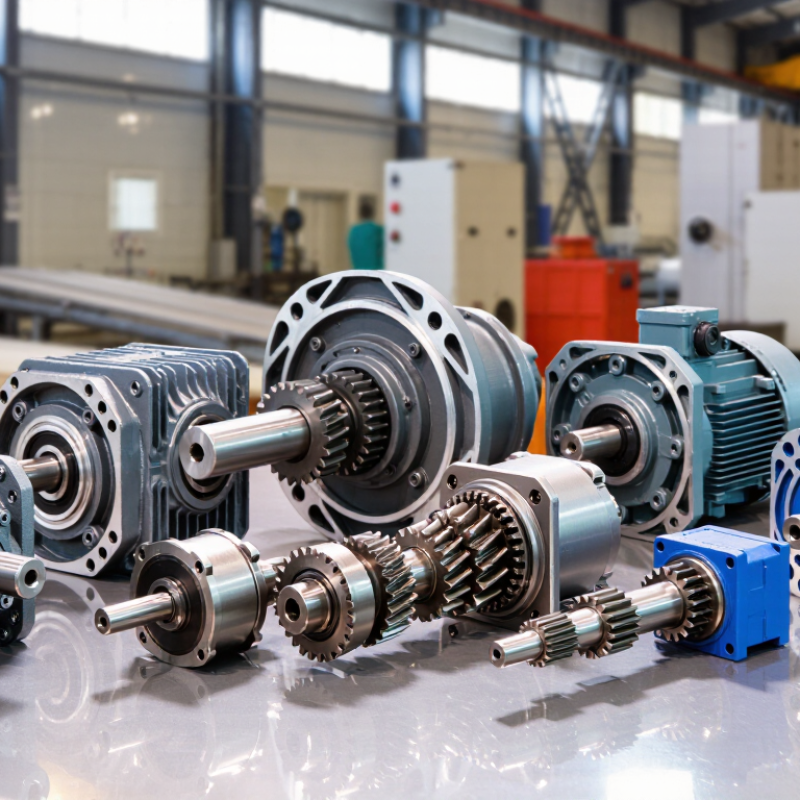
What Is a Gear Drive Motor and How Does It Work?
A gear drive motor combines an electric motor with a gearbox. The motor creates rotation, while the gears reduce speed and increase usable torque. A small motor may spin quickly, but a conveyor usually needs slower, steadier movement. The gearbox makes that conversion possible through connected gears, shafts, bearings, and seals.
In practical installations, the motor turns an input gear first. That gear drives a larger gear, reducing output speed. Several gear stages can provide higher reduction ratios. Helical, spur, bevel, worm, planetary, cycloidal, and parallel-shaft designs serve different operating conditions. Their differences affect efficiency, noise, heat, backdriving, and installation space.
A right-angle gearbox may fit neatly beside a conveyor, while a planetary unit handles high torque in a compact housing.
Selection should begin with load torque, output speed, duty cycle, mounting position, and starting frequency. Check the service factor, shaft direction, thermal limits, and enclosure protection. Moisture near a washdown area can damage poor seals quickly. An undersized gearbox may overheat, even when its rated speed looks suitable. That mistake is common.
Classification is not always perfectly clean. Some manufacturers use overlapping names for similar structures. Buyers should compare drawings, torque curves, lubrication requirements, and test data rather than rely on labels alone. During commissioning, listen for unusual vibration and check the housing temperature after several hours. Small details often reveal a larger mismatch.
The Ten Main Gear Drive Motor Types Explained
Top 10 Gear Drive Motor Types for Global Buyers?
The ten main gear drive motor types serve different loads, speeds, and installation spaces. Spur gear motors use straight teeth and offer simple, economical power transmission. Helical gear motors run more quietly because angled teeth engage gradually. Double-helical designs handle higher loads while reducing axial force. Bevel gear motors redirect motion, often at 90 degrees. They fit conveyors, mixers, and compact machinery.
Worm gear motors provide strong speed reduction and useful holding ability. However, their efficiency can fall under heavy reduction ratios. Planetary gear motors distribute torque across several gears. They deliver high torque in a small housing. Cycloidal gear motors resist shock loads and suit demanding industrial cycles. Harmonic gear motors provide very low backlash, which benefits positioning equipment. Their cost and sensitivity deserve careful review. Hypoid gear motors offer quiet, right-angle transmission with good torque density. Parallel-shaft gear motors work well where long, narrow layouts limit mounting space.
A reliable selection starts with measured data, not a catalog headline. Check output torque, duty cycle, ambient temperature, lubrication, and allowable backlash. A dusty workshop may require stronger sealing. A food-processing area may need easy cleaning and suitable surface materials. I have seen buyers choose maximum torque, then discover poor low-speed control. That choice was not completely wrong, but it missed the real operating profile. No gear type wins every application. Installation space, maintenance skill, voltage standards, and local safety requirements can change the answer.
Top 10 Gear Drive Motor Types for Global Buyers
Typical mechanical efficiency comparison of the ten main gear drive motor types
Helical, planetary, and parallel-shaft gear motors generally provide high efficiency for continuous industrial operation. Worm and harmonic gear motors typically trade efficiency for compactness, high reduction ratios, or precise positioning. Actual performance varies with gear ratio, load, lubrication, speed, and operating conditions.
How Gear Geometry Affects Motor Performance and Efficiency
Top 10 Gear Drive Motor Types for Global Buyers
Gear geometry often decides whether a motor runs smoothly or wastes energy as heat. Spur gears offer simple, affordable power transmission, but their straight teeth can create noticeable impact noise. Helical gears overlap gradually. They usually reduce vibration and improve load sharing, although axial forces require stronger bearings.
Bevel gears redirect torque through an angle, while hypoid gears provide compact right-angle transmission with added sliding friction. Worm drives can deliver high reduction ratios and holding capability, but their sliding contact commonly lowers efficiency.
Planetary systems distribute torque across several gears, producing high power density and stable output speed. Cycloidal designs tolerate shock loads well. Harmonic drives offer exceptional reduction in limited spaces, yet their flexible elements need careful load control.
Geometry changes contact pressure, lubrication needs, and operating temperature. A practical evaluation should measure input power, output torque, noise, and housing temperature under the same load. For example, a 90-degree gearbox running at 1,500 rpm may reveal efficiency losses that a no-load test hides. Small alignment errors matter.
Not every efficient design fits every machine. Rack-and-pinion systems suit linear motion, while parallel-shaft helical units handle continuous industrial loads effectively. Tooth width, pressure angle, and surface finish also influence service life. I have seen specifications look excellent on paper, then disappoint because lubricant viscosity was ignored. Gear selection still needs real load data, not assumptions.
Choosing the Right Gear Drive Motor for Different Applications
Choosing the Right Gear Drive Motor for Different Applications
Global buyers often compare gear drive motors by torque, speed, and installation space. Those numbers matter, but they rarely tell the whole story. A helical gear motor suits conveyors and packaging lines because it runs efficiently and quietly. A bevel gear motor works well when power must turn ninety degrees. Worm gear motors offer compact designs and useful self-locking behavior, but they may lose efficiency during continuous operation.
For heavy loads, planetary and cycloidal gear motors provide strong torque in small frames. Spur gear motors can support simple, cost-sensitive machinery. Parallel-shaft models fit narrow conveyor systems. Hypoid, harmonic, and right-angle designs serve more specialized equipment. Selection should include duty cycle, shock loads, ambient temperature, mounting position, and required output speed. In field installations, poor ventilation often causes more trouble than an incorrect torque calculation. That detail is easy to miss.
Tips: Start with the driven machine, not the motor catalog. Measure real starting loads and repeated stops. Leave a reasonable service factor, but avoid excessive oversizing. Check shaft direction, flange dimensions, brake needs, and lubrication requirements. Ask for noise and efficiency data at your actual operating speed. A motor that looks efficient on paper may perform differently under dust, heat, or frequent reversing. I have found that application notes help, but direct testing remains more reliable. Small assumptions can become expensive revisions.
Key Buying Standards for Global Gear Motor Purchasers
Choosing among ten gear drive motor types starts with the load, not the catalog image. Your load decides.
Helical, bevel, worm, planetary, and parallel-shaft designs suit different operating conditions. I usually record required torque, output speed, duty cycle, and starting frequency before comparing suppliers. A motor running a conveyor for sixteen hours needs different thermal capacity from one used for short valve movements. Calculate service factor carefully. Real machines rarely follow ideal duty charts.
Efficiency matters, but it is not the only buying standard. A worm gearbox may offer compact installation and strong holding performance, while a planetary unit can provide high torque density and low backlash. Check rated torque at the actual ratio, not only the maximum catalog value. Confirm voltage, frequency, insulation class, cooling method, and enclosure protection for the destination site. A dusty outdoor plant may require sealed protection and corrosion-resistant finishes. I have seen buyers choose higher efficiency and overlook starting torque. That mistake becomes expensive.
Global purchasers should request dimensional drawings, test records, noise data, warranty terms, and spare-parts availability. Ask whether replacement seals, bearings, and terminal components can be sourced locally. Verify shaft tolerances, mounting position, brake requirements, and permissible radial loads. Regional certification and import documentation also deserve early review. Delivery promises can change. Keep written acceptance criteria. One practical weakness remains: published data may not reflect real alignment, ambient heat, or maintenance quality. A small pilot installation can reveal vibration, temperature rise, and noise before a large order.