Top IPE Beam Suppliers for Global Buyers?
Choosing among IPE BEAM suppliers can influence safety, project cost, and delivery confidence. Global buyers need more than a low quotation. They need verified steel grades, accurate dimensions, dependable documentation, and realistic shipping commitments.
Professor David Nethercot, a widely respected steel-structures expert, has said, “Structural behaviour must guide design decisions, not convenience alone.” This principle also applies to procurement. A supplier should provide EN 10365 dimensional data, EN 10025 material certificates, heat numbers, and traceable inspection records. Buyers should examine flange width, web thickness, straightness, mass tolerance, and surface condition. Small differences become visible when beams arrive at a busy fabrication yard.
Practical experience matters here. A reliable supplier explains production capacity, minimum order quantities, cutting services, bundling methods, and port arrangements. Clear answers usually reveal stronger operations. Unclear answers deserve caution. Packaging also matters. Moisture trapped beneath poor wrapping can leave rust marks before installation. That detail is easy to overlook.
This guide compares leading IPE BEAM suppliers for international buyers. It considers manufacturing capability, quality control, export experience, response speed, and after-sales support. Price remains important, but it should not dominate the decision. The cheapest offer may exclude testing, protective coating, or inland transportation.
No supplier is perfect. Even experienced exporters can face mill delays, vessel changes, or documentation errors. Buyers should allow contingency time and confirm every specification in writing. This article cannot replace independent technical verification, but it can improve the questions buyers ask before placing an order.
What IPE Beams Are and Why Global Buyers Use Them
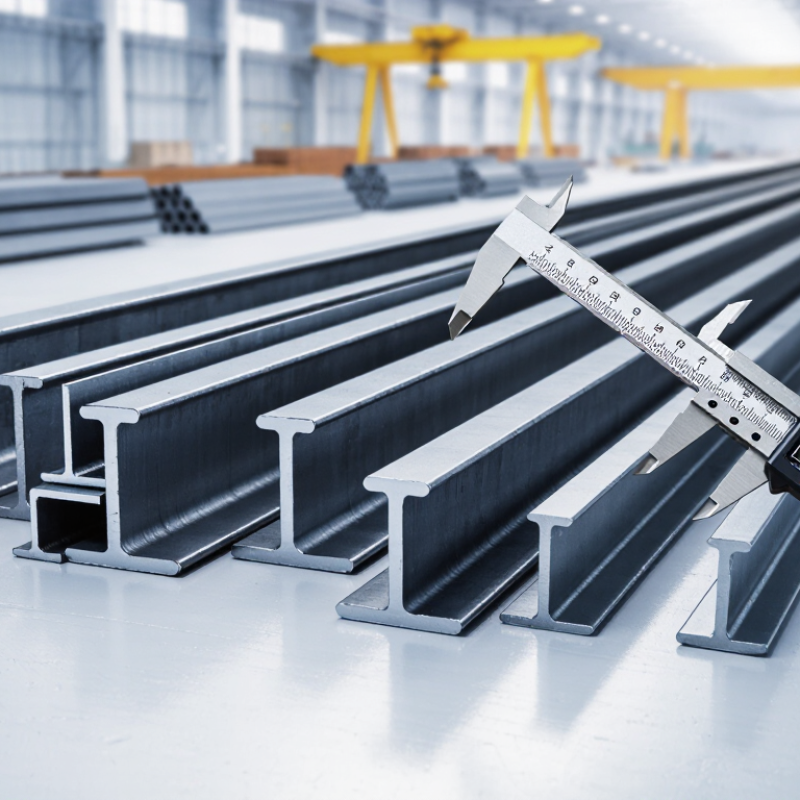
IPE beams are hot-rolled steel sections with an I-shaped profile and parallel flanges. The web carries much of the shear force, while the flanges resist bending. This geometry delivers useful strength without excessive steel weight. Common sizes include IPE 200, IPE 300, and IPE 400, with dimensions defined by recognized European standards.
Global buyers use IPE beams in warehouses, industrial platforms, bridges, and building frames. Their consistent profiles simplify structural calculations and connection design. Parallel flanges also make bolting, welding, and fitting more predictable on site. For long-distance projects, standardized dimensions can support easier sourcing across different markets. That convenience matters.
Still, selection should not rely on size alone. Engineers review span, load, lateral stability, corrosion exposure, and connection details before ordering. A lighter beam may reduce shipping costs, but it can increase deflection or require stronger bracing. That trade-off is easy to miss. Buyers should check the applicable grade, dimensions, tolerances, and mill test certificates. Standards such as EN 10365 and EN 10025 can help verify section geometry and steel quality. Independent inspection may also confirm markings, surface condition, and quantity before shipment. Real projects are rarely perfect. Drawings change, tolerances accumulate, and site handling can damage edges. Careful documentation remains practical protection.
How to Identify Leading IPE Beam Suppliers Worldwide
Top IPE Beam Suppliers for Global Buyers
Identifying leading IPE beam suppliers requires more than comparing prices. Reliable suppliers show consistent production records, clear specifications, and verifiable quality documents. Ask whether the beams are produced in their own facility or sourced through traders. This difference can affect traceability, lead times, and accountability.
Review mill certificates against the requested steel grade, dimensions, weight, and mechanical properties. Certificates should match the actual batch, not a generic sample. Check dimensional tolerances carefully, especially flange width, web thickness, and straightness. Independent inspection can reveal problems before loading, although it adds cost and time. That expense may prevent larger losses later. Also examine packaging, corrosion protection, and loading methods for long-distance transport. A supplier with strong technical staff should explain these details clearly.
Tips: Request recent production photos, batch records, and customer references from similar markets. Compare at least three quotations using the same delivery terms and inspection requirements. Verify export experience, production capacity, payment procedures, and communication speed. Online reviews can help, but they are not proof. Some suppliers look impressive online yet provide weak documentation. Ask direct questions and record every answer. A small test order may be wiser than trusting a large promise. Suppliers should also understand the standards required at your destination, because local compliance can differ from the manufacturing standard.
Top IPE Beam Suppliers for Global Buyers?
How to Identify Leading IPE Beam Suppliers Worldwide
This comparison shows the nominal mass per metre of commonly traded IPE sections, based on standard European IPE dimensions specified in EN 10365. Global buyers can use section mass as a practical reference when comparing quotations, calculating shipping weight, checking material declarations, and evaluating supplier consistency. A qualified supplier should also provide the applicable steel grade, dimensional tolerances, mill test certificates, and traceability documentation.
Which Standards and Quality Checks Matter Most
For global buyers, IPE beam quality begins with the applicable standard, not the supplier’s sales brochure. EN 10025-2 defines key requirements for non-alloy structural steel, including strength, chemical composition, and impact performance. Buyers should confirm the exact grade, usually S275 or S355, before comparing prices. A lower-cost beam can become expensive when its documentation is incomplete.
Independent inspection matters. Require dimensional checks for height, flange width, web thickness, straightness, and mass per metre. Mill certificates should follow EN 10204, preferably type 3.1, with heat numbers matching the delivered bundles. Tensile testing should follow ISO 6892-1, while impact testing may follow ISO 148-1 when specified. ISO’s 2023 survey recorded more than 1.26 million ISO 9001 certificates worldwide, but certification alone does not prove every beam is defect-free. That distinction is often missed.
Traceability is practical, not decorative. A heat number should remain visible after cutting, handling, and loading. Check ultrasonic testing when internal discontinuities could affect welded or heavily loaded structures. The World Steel Association reported global crude steel production of about 1.89 billion tonnes in 2023, showing the scale of the supply chain, but scale does not guarantee consistency. In my experience, sampling plans can be too optimistic. Buyers should review nonconformance records, calibration certificates, and packing photographs before shipment.
The awkward question remains: who pays when an undocumented substitution reaches the jobsite?
How Pricing, Lead Times, and Shipping Affect Purchases
Top IPE Beam Suppliers for Global Buyers?
When comparing IPE beam suppliers, price is only the starting point. A lower quotation may exclude cutting, bundling, inspection, or export packing. Ask whether the price is based on each metric ton, the actual weight, or a theoretical table weight. These details can change the final invoice. Request a clear offer with steel grade, beam length, tolerances, and payment terms. Do not rely on a polished spreadsheet alone.
Lead time also affects project cost. Standard sizes may be ready within two to four weeks, while unusual dimensions can require production scheduling. Confirm when the clock starts: deposit receipt, technical approval, or contract signing. Ask for a realistic production plan, not only a promised shipping date. Mill certificates and third-party inspection may add several days. Small delays matter.
Shipping needs equal attention. Twelve-meter beams require careful loading, suitable vessels, and practical port access. Compare freight, insurance, terminal handling, customs documentation, and possible demurrage charges. A supplier offering FOB terms may look cheaper than one quoting delivered costs. The comparison is incomplete without destination expenses. Check bundle weight and container restrictions early. Even careful forecasts fail sometimes. Weather, port congestion, and steel price changes remain difficult to predict. Build a modest time and budget allowance, then record every assumption in writing.
How to Choose the Best IPE Beam Supplier for Your Project
How to Choose the Best IPE Beam Supplier for Your Project
Choosing an IPE beam supplier requires more than comparing unit prices. Confirm the supplier’s experience with your required section sizes, steel grades, coatings, and delivery region. EN 10365 defines IPE dimensions, while EN 10025-2 covers hot-rolled structural steel grades.
Request mill test certificates, heat numbers, dimensional inspection records, and evidence of traceability. These documents help engineers verify yield strength, chemical composition, and impact performance before installation.
Capacity matters, but consistency matters more. The World Steel Association reported 1,892.2 million tonnes of crude steel production in 2023, showing a highly competitive global market. Large output does not automatically mean reliable beam quality.
Ask about production tolerances, straightness control, packing methods, and replacement procedures for damaged sections. Independent inspection can reduce uncertainty, especially for international shipments.
It adds cost.
Logistics deserve equal attention.
UNCTAD’s Review of Maritime Transport 2024 notes that maritime shipping carries over 80% of world merchandise trade by volume. Confirm the loading port, estimated transit time, customs documents, and protection against seawater exposure.
A supplier should explain how beams are bundled, marked, and checked before dispatch. Compare total landed cost, not only the quoted steel price.
Some procurement teams overlook this detail.
No checklist is perfect. Recheck assumptions against your engineer’s drawings, project schedule, and local construction requirements.