


Who Is the Best Hard Drive Manufacturer in China?
Choosing the best Hard Drive manufacturer in China depends on what “best” means for your project. A home user may value quiet operation and a clear warranty, while a data center needs predictable performance, endurance, and dependable support. China has a large storage supply chain, but the companies selling drives are not always the companies that manufacture the recording mechanisms inside them. That distinction matters.
Look beyond the logo. Check whether the product is an HDD or SSD, its capacity, interface, workload rating, warranty terms, and the availability of local service. For business use, ask for documented reliability data and confirm that the model suits continuous operation. A low price can be useful, but it says little about long-term consistency. Small details count. A readable label, sealed packaging, and serial-number verification can help buyers avoid confusion when comparing products.
There is no single winner for every buyer. Some Chinese suppliers focus on complete storage systems, while others sell branded drives sourced through broader manufacturing networks. Product lines and support can change, so verify current specifications with the manufacturer or authorized distributor before ordering. I would also treat impressive claims cautiously unless independent testing supports them. That takes a little more effort. This guide compares practical criteria to help identify a suitable manufacturer for your budget, workload, and service needs, without pretending one brand fits every situation.
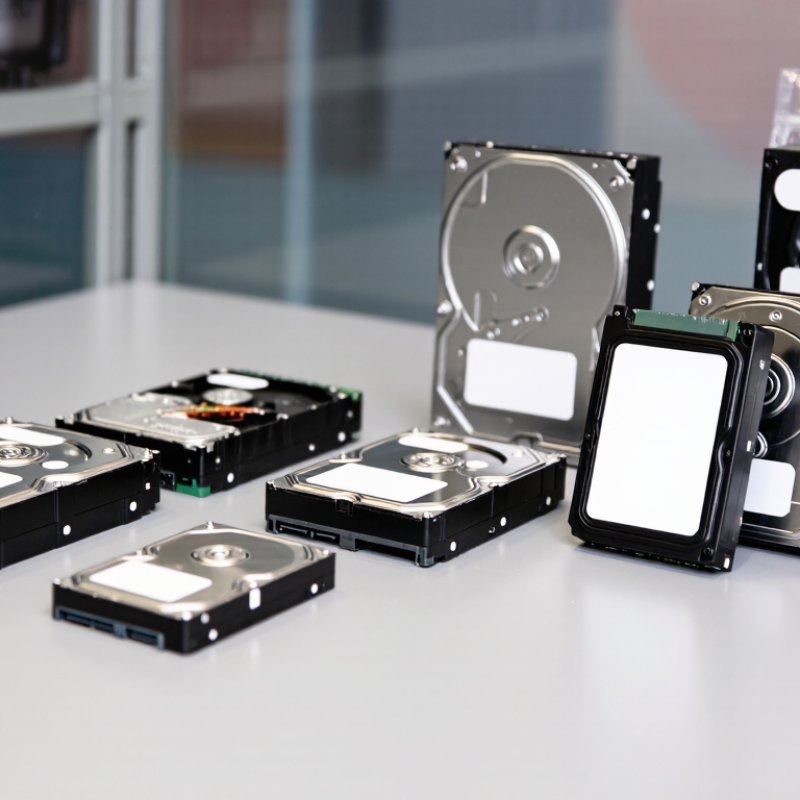
What Defines the Best Hard Drive Manufacturer in China?
“Best” should mean consistent performance under a clearly stated workload, not simply high capacity or a low purchase price. Buyers should examine sustained read and write speeds, vibration tolerance, power use, warranty terms, and firmware support. Ask for test results from drives after extended operation, not just factory pass rates. Small details matter: a drive in a warm, tightly packed server may behave differently from one on a quiet office desk.
Reliability needs context. Backblaze’s 2023 Drive Stats report analyzed 268,840 hard drives and recorded a 1.70% annualized failure rate across its eligible fleet. That figure reflects a specific operating environment; it is not a direct ranking of Chinese manufacturers. Still, it shows why buyers should request failure data by model, workload, and operating hours. A useful supplier should explain how it tests temperature, vibration, and long-duration operation—and share the limits of its data. No test is perfect.
Manufacturing quality also depends on traceability and support after delivery. Look for batch-level inspection records, a clear process for handling defects, and access to technical staff who can investigate unusual noise or rising error counts. Independent validation helps, but it should match the intended use. I would also check how quickly replacement units can be supplied. That detail is easy to overlook, and factory claims alone cannot prove long-term reliability.

China’s Hard Drive Manufacturing Landscape
China’s hard-drive manufacturing landscape is best understood as a supply network, not a simple ranking of domestic makers. Production depends on precision components, magnetic-media expertise, clean-room processes, and extensive testing. China contributes industrial capacity and component supply, while final assembly and sourcing can span several countries. That distinction matters. A product’s shipping origin alone does not reveal where its critical parts were made.
Trendfocus estimated that roughly 127 million HDDs shipped worldwide in 2023, reflecting a substantial year-on-year decline. The figure describes global shipments, not China’s share of production, and should not be treated as a measure of local manufacturing strength. Meanwhile, the Ministry of Industry and Information Technology reported that China’s total computing power reached about 230 exaflops by the end of 2023. Growing data-center demand supports storage needs, but it does not automatically translate into more locally made hard drives.
For buyers, manufacturing depth shows up in details: stable supply of precision parts, consistent vibration testing, and clear warranty support. These are more useful indicators than a broad “made in China” label. Market articles sometimes blur the difference between HDDs and solid-state drives; that weakens their comparisons. I have seen procurement discussions make the same mistake. It is worth checking. Trendfocus shipment estimates and MIIT computing-power statistics describe different parts of the market, so neither alone identifies the best manufacturer.
Who Is the Best Hard Drive Manufacturer in China? - China’s Hard Drive Manufacturing Landscape
| Manufacturing Area | Typical Products or Processes | China’s Industry Role | What Buyers Should Evaluate |
|---|---|---|---|
| HDD assembly and testing | Assembly, firmware loading, inspection, and functional testing of hard disk drives. | China participates in the global electronics manufacturing and assembly supply chain. HDD production depends on specialized designs and components sourced across multiple regions. | Factory location, traceability, quality-control procedures, production consistency, and warranty support. |
| Precision mechanical components | Drive enclosures, brackets, precision-machined parts, and other mechanical components. | China has a broad precision-manufacturing base serving domestic and international electronics supply chains. | Dimensional tolerances, material specifications, process controls, and supplier qualification records. |
| Electronics and printed circuit boards | Circuit-board fabrication and assembly, connectors, and supporting electronic modules. | Electronics production is a significant part of China’s manufacturing ecosystem; the exact role varies by product and supplier. | Component sourcing, electrical testing, change-control procedures, and compliance documentation. |
| Magnetic recording components | Recording media and head-related components used in HDDs. | These are highly specialized technologies within a global supply chain; availability and manufacturing location depend on the specific component and product generation. | Documented component origin, qualification status, supply continuity, and product-level performance validation. |
| External drive integration | Integration of storage drives with enclosures, interfaces, cables, and packaging. | China’s contract-manufacturing and consumer-electronics supply chains support the production of many types of external storage products. | Interface compatibility, enclosure thermal design, drop and vibration testing, and after-sales service. |
| SSD manufacturing (separate category) | Solid-state drives built with NAND flash memory and a controller; these contain no spinning magnetic disks. | China has a growing storage-device and electronics manufacturing ecosystem, but SSD capability should not be treated as evidence of HDD manufacturing capability. | NAND sourcing, controller and firmware validation, endurance ratings, and independent performance testing. |
| Overall supplier assessment | A product-specific review of design responsibility, manufacturing scope, testing, and support. | “Best” cannot be determined from country of manufacture alone; capabilities differ by product, facility, and supply-chain arrangement. | Request the exact product specification, manufacturing-site details, reliability data, certifications, warranty terms, and a sample for evaluation. |
Leading Chinese Hard Drive Manufacturers and Their Products
China’s storage industry includes manufacturers and contract producers serving consumer, business, and industrial markets. Their product ranges commonly include portable external drives, desktop storage units, network-attached storage systems, and solid-state drives. Some suppliers focus on drive enclosures and assembly rather than producing every internal component. That distinction matters. A polished case does not prove the drive inside will suit every workload.
For home use, portable drives often prioritize compact size and simple USB connections. Surveillance models are designed for continuous recording, while enterprise products emphasize workload ratings, vibration control, and service support. Chinese suppliers also produce SSDs for laptops and data centers, where controller quality and endurance specifications deserve close attention.
Check capacity, interface, warranty terms, and independent test results before buying. Ask who handles repairs, too. Product pages can be vague, and that is a real limitation.
Even a capable manufacturer may offer uneven documentation across product lines. A careful buyer should compare the exact model, not just the supplier’s broad claims.
How Chinese Hard Drive Manufacturers Compare
Who Is the Best Hard Drive Manufacturer in China?
How Chinese Hard Drive Manufacturers Compare
Comparing Chinese hard drive manufacturers requires more than checking a product label. Some firms design drives, while others assemble or distribute products using components made elsewhere. Ask for the drive’s origin, workload rating, warranty terms, and service arrangements. Then compare like with like: a desktop drive is not a fair match for a model built for continuous operation. Small details matter. A clear serial-number policy and accessible failure records can be more useful than polished marketing claims.
Reliability data also needs context. The 2023 Drive Stats report tracked nearly 275,000 drives and reported a fleet-wide annualized failure rate of 1.70%. That figure describes one operator’s drive population, not every Chinese manufacturer or every use case. Compare published test methods, sample sizes, and operating hours before drawing conclusions. For a local supplier, request test results for the exact model and batch. Independent verification is stronger than a single impressive claim.
Tip: Ask for a sample unit, check its label and warranty, then test transfer speed and temperature under your own workload. Keep the results. Manufacturers may provide incomplete details, and that should count against confidence.
Choosing the Best Manufacturer for Different Needs
Choosing a Chinese hard drive manufacturer starts with matching the product to its workload, not comparing headline capacity alone. For a home NAS, check continuous-operation ratings, vibration tolerance, and warranty terms. For surveillance, prioritize sustained writing and predictable replacement support. For portable storage, shock protection and enclosure quality may matter more than a fast benchmark. Small details matter later.
Ask whether a supplier makes the drive, assembles an enclosure, or resells components. Request a current datasheet, sample units, and written details on testing, firmware updates, serial-number traceability, and returns. A credible supplier should explain drive type, workload limits, and failure-rate data in context, rather than promise “zero failures.” For business deployments, test samples under your own temperature and workload conditions before committing. Even these checks are imperfect; a good sample cannot guarantee every later batch.
Price still matters. But a low quote can hide short warranty coverage, slow replacement, or unclear component sourcing. Compare total cost over the warranty period, including downtime and migration effort. Test samples first. No single factory fits every buyer.
Article Source:
Siemensstraße 13-15
47608 Geldern
NRW Deutschland
Mail: sale@atmmachinesolutions.com
Head office:
+49 (0) 2831 91021-20
Fax:
+49 (0) 2831 91021-99
SUPPORT and INFO
from 3 p.m. to 6 p.m:
+49 (0) 2831 91021-60
( please ring for a long time )
Monday to Friday
8.00 – 12.30
and 13.00 – 15.00
Visit / collection by appointment only!
➣ Sign up for our newsletter
Benefit from a 20% discount, don’t miss any events and always stay up to date.
To access the actual content, click on the button below. Please note that data will be passed on to third-party providers.
More information