

What Is the Best CNC Wood Cutting Machine from China?

Choosing the best cnc wood cutting machine from China requires more than comparing spindle power and online prices. Workshops need repeatable accuracy, stable software, safe operation, and dependable technical support. Recent market studies explain why this equipment attracts attention. Grand View Research identifies automation and computer-controlled production as major growth drivers in the CNC machine market. MarketsandMarkets connects woodworking machinery demand with furniture manufacturing, customization, and shorter delivery cycles. The 2024 International Federation of Robotics World Robotics report also shows continuing investment in industrial automation.

These trends sound persuasive. Yet forecasts differ because research firms define markets differently. A responsible buyer should test real samples before accepting a supplier’s specifications. Cut a 1220 × 2440 millimeter plywood sheet, inspect edge quality, and measure repeated holes with calipers. Check whether the vacuum table holds thin board securely. Ask for spindle runout data, positioning accuracy, controller details, and maintenance records. Request videos of similar materials, not only polished showroom footage.

China offers a wide range of machine builders, from export-focused factories to smaller integrators. Their prices can vary sharply. The cheapest quote may exclude installation, training, dust extraction, or software support. Certification documents also require verification for the buyer’s destination and workplace conditions. This article compares machine types, working areas, spindle configurations, control systems, service capacity, and total ownership costs. It does not assume one model fits every workshop. That would be convenient, but probably wrong. The strongest choice is the machine that performs consistently on your materials, matches your production volume, and remains supportable after the sale.
What Is the Best CNC Wood Cutting Machine from China?

What Defines the Best CNC Wood Cutting Machine from China?

China’s best CNC wood cutting machine is not the one with the largest spindle. It is the one that converts measured accuracy into repeatable, clean production. Grand View Research valued the global CNC machine market at about $83.9 billion in 2022. Its forecast suggests a 9.5% CAGR through 2030, signaling rapid equipment development. That growth makes specifications easier to advertise, but harder to compare. Look beyond horsepower.

An independent test should check positional accuracy, repeatability, edge finish, and cycle time on the buyer’s actual plywood. ISO 230-2 provides a credible framework for testing positioning performance. A strong machine holds calibration after repeated cutting, not only during a showroom demonstration. Measure dust capture at the tool, because fine particles can damage finish quality and shorten maintenance intervals. Record kWh per panel, reject rate, spindle temperature, and recovery time after an emergency stop. Small details matter.

The best Chinese supplier also provides readable electrical diagrams, verified manuals, training, spare-part lead times, and remote diagnostics. The International Federation of Robotics recorded 541,302 industrial robot installations worldwide in 2023. Connected automation is becoming normal. No machine is perfect. Still, I would not trust a brochure alone. A modestly priced machine with stable service can outperform a faster machine that waits weeks for a critical control board. The uncomfortable question is whether the factory can maintain it every day.

Key Machine Types and Their Woodworking Applications

What Is the Best CNC Wood Cutting Machine from China?

Key Machine Types and Their Woodworking Applications

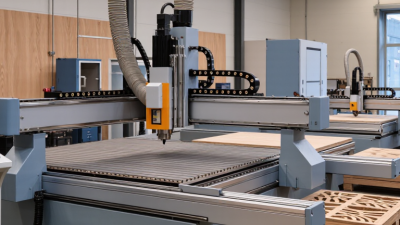
A three-axis CNC router is the common starting point for wooden signs, cabinet panels, doors, and plywood sheets. Its X, Y, and Z movements handle flat cutting, drilling, pocketing, and shallow relief work. A 2.2 kW spindle suits lighter boards, while thicker hardwood often needs higher torque and slower feed rates.

For furniture factories, an automatic tool-changing router reduces manual setup. It can switch between drills, compression bits, and carving tools during one program. Nesting CNC machines arrange cabinet parts tightly on full sheets, reducing offcuts. Grand View Research reports that furniture remains a major application area in the global woodworking machinery market, driven by factory automation and customized production.

More complex work may require a four-axis machine. It can cut curved chair legs, columns, and three-dimensional components with fewer repositioning errors. However, it costs more and requires better programming skills. A 2024 Fortune Business Insights report valued the global woodworking machinery market at about USD 4.7 billion, with continued growth linked to construction and furniture manufacturing.

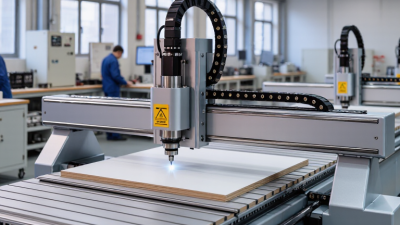
Check the machine bed carefully. A vacuum table should hold thin plywood without visible vibration. Dust extraction also matters; fine wood dust can quickly cover linear rails and sensors. Test samples should include your real board thickness, not only clean showroom plywood. Report definitions vary, and some market figures combine CNC and conventional equipment. That weakness deserves attention.

Essential Features for Comparing Chinese CNC Woodcutting Machines

Choosing the best CNC wood cutting machine from China requires measured comparison, not attractive catalog photos. Start with the working area, spindle power, table structure, and positioning accuracy. For cabinet panels, a 1300 × 2500 mm bed is practical. A 3.5 to 6 kW spindle usually handles plywood, MDF, and solid wood efficiently. Check whether the supplier reports repeatability under a recognized test method, such as ISO 230-2.

Control quality matters. The 2024 World Robotics report recorded 541,302 new industrial robot installations worldwide in 2023. This growth reflects stronger demand for stable automation and easier programming. A useful CNC system should support tool libraries, nesting, automatic height sensing, and recovery after power interruption. Ask for cutting samples using your own board thickness. A polished demonstration may hide vibration, dust buildup, or poor edge quality. Small details matter.

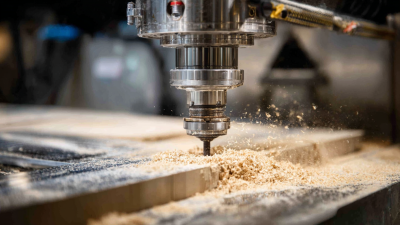
Dust extraction is not optional. The U.S. Occupational Safety and Health Administration identifies combustible wood dust as a serious workplace hazard. Compare airflow, hose diameter, enclosure design, and filter maintenance requirements. Energy use also deserves attention. The International Energy Agency continues to identify industrial efficiency as a major pathway for reducing electricity demand. In practice, an oversized spindle can waste power during light routing. I would also inspect linear rails, cable protection, lubrication access, and after-sales response times. Published specifications are useful, but supplier evidence is better. A factory video helps less than a documented acceptance test.

What Is the Best CNC Wood Cutting Machine from China? - Essential Features for Comparing Chinese CNC Woodcutting Machines

Comparison of Typical Chinese CNC Wood Cutting Machine Configurations
Comparison Dimension Compact CNC Router Standard Production Router Heavy-Duty Production Router What to Compare
Typical working area 600 × 900 mm to 900 × 1200 mm 1300 × 2500 mm 1500 × 3000 mm or larger Select a bed size that supports the largest regular sheet with enough clamping space.
Common materials Plywood, MDF, solid wood, acrylic and plastic Plywood, MDF, hardwood, softwood, laminates and composites Thick hardwood, laminated panels, timber components and repeated production work Confirm cutting depth, dust generation and tooling requirements for each material.
Spindle power 1.5–3.0 kW 3.0–6.0 kW 6.0–9.0 kW or higher Higher power supports larger cutters and deeper passes, but increases electrical and cooling needs.
Spindle speed range 8,000–24,000 rpm 6,000–24,000 rpm 6,000–24,000 rpm Variable speed helps match cutter diameter, material and feed rate.
Maximum travel speed 12–18 m/min 18–24 m/min 20–30 m/min Compare working speed under load, not only the advertised rapid-traverse speed.
Positioning accuracy Approximately ±0.05–0.10 mm Approximately ±0.03–0.08 mm Approximately ±0.02–0.05 mm Ask how accuracy is measured and request a test-cut report using the intended material.
Drive and motion system Ball screws or rack-and-pinion drive Rack-and-pinion on long axes; ball screw commonly used on the Z-axis Precision rack-and-pinion with supported linear guides Check backlash, guide protection, lubrication access and long-axis rigidity.
Table type T-slot, vacuum or combination table Vacuum table, T-slot table or combined vacuum/T-slot design Multi-zone vacuum table with a heavy steel support structure A multi-zone vacuum system is useful when processing small parts or mixed sheet sizes.
Automatic tool changing Usually optional or manual tool changing Commonly available with an 8–12 tool carousel Commonly available with an 8–16 tool carousel or linear tool rack ATC reduces setup time for drilling, grooving, profiling and nesting jobs.
Dust collection Single dust port; external collector normally required Dual-port dust hood; typically paired with a 2.2–4.0 kW collector Large dust hood and higher-capacity centralized extraction system Match airflow and filtration capacity to the cutter, material and local safety requirements.
Control and file compatibility USB or network transfer; standard G-code workflows DSP or industrial controller; common CAD/CAM post-processors Industrial controller with nesting, tool management and network connectivity Verify compatibility with the CAD/CAM software and file formats used in production.
Electrical supply Commonly single-phase, subject to configuration Often three-phase for the machine, vacuum pump and dust collector Normally three-phase with a higher installed load Confirm voltage, frequency, phase, breaker size and total connected load before ordering.
Best use case Prototyping, sign making, craft work and small workshops Furniture panels, cabinet components, doors and general woodworking Continuous production, thick stock and high-volume nesting The best machine is the one that meets required output, accuracy and service conditions.

Note: Specifications shown are typical configuration ranges for Chinese CNC wood cutting machines. Actual performance depends on machine construction, tooling, material, cutting parameters, electrical configuration and operator setup.

How to Evaluate Quality, Accuracy, Safety, and Reliability

What Is the Best CNC Wood Cutting Machine from China?

Choosing a CNC wood cutting machine requires more than comparing prices. In a real workshop, I inspect the welded frame, gantry movement, spindle runout, and cable protection. A rigid frame reduces vibration during deep cuts. Smooth rails and properly adjusted ball screws improve edge quality. Ask for cutting samples using your actual wood thickness and design files. Photos are not enough.

Accuracy should be measured, not promised. Request a repeatability test, such as ten identical cuts, and check size differences with a caliper. Inspect corners, small holes, and curved edges. A powerful spindle can still produce poor results if the table is uneven. I have seen attractive samples hide inconsistent calibration. That mistake is costly.

Safety and reliability deserve equal attention. The machine should include a reachable emergency stop, enclosed moving parts where practical, overload protection, and clear electrical documentation. Confirm grounding, dust extraction requirements, and the safety standards applicable in your location. Test the vacuum table under working conditions, not only when empty. Ask how quickly spare parts arrive and whether remote support is available. Keep written records of test results, maintenance intervals, and operator training. No machine is perfect. Even a well-built unit may need recalibration after transport. A cautious inspection before payment can prevent months of frustration.

Choosing the Right Machine for Your Materials and Production Needs

Choosing the right CNC wood cutting machine from China starts with the material, not the machine’s price. MDF cuts easily but creates fine dust. Hardwood needs greater spindle torque and a rigid frame. Plywood may expose weak vacuum holding when its surface is uneven. Test your actual boards before placing a large order.

Match the working area to your largest panel, with limited extra space. A 1325 millimeter bed suits many furniture panels, but smaller workshops may need less. Choose a spindle around 3.5 to 6 kilowatts for regular wood production. Higher power is not always better. It can increase heat, noise, and tool wear. Check whether the machine supports automatic tool changing, dust collection, and reliable vacuum zones. These features reduce handling time during repeated cabinet or door work.

Production volume should guide the drive system, frame, and control software. For daily cutting, inspect linear rails, screw or rack drives, electrical cabinets, and emergency-stop functions. Ask for cutting samples using your wood, thickness, and design files. Request measurements for edge quality, cutting speed, and repeat accuracy. I once underestimated dust extraction, and cleanup consumed more time than cutting. That mistake changed my buying checklist. Supplier communication also matters. Confirm training, spare parts, wiring standards, and response times in writing. A polished demonstration can hide practical weaknesses. Review test results carefully, and allow room for honest doubt.

What Is the Best CNC Wood Cutting Machine from China?

Typical spindle-power starting ranges for selecting a CNC router according to the material being cut

A 3.0–4.0 kW spindle is commonly suitable for plywood, MDF, and softwood production, while dense hardwood usually benefits from approximately 5.5 kW or more. Final machine selection should also consider material thickness, cutting-tool diameter, feed rate, worktable size, dust extraction, and required production volume. These values are practical starting ranges rather than fixed machine limits.

Kontaktbox-Frau

  • CNC-STEP – Quick contact